Regional Crisis Threatens Global Trade
Middle East Conflict Widens as Red Sea Shipping Disruptions Push Oil Prices Up
Anonymous
Key Points
1
The report says crude oil prices exceeded $108 a barrel and links the increase to the threatened Red Sea shipping route, arguing that the disruption could affect global markets.
2
The account claims that roughly 12% of global goods pass through the Bab el-Mandeb Strait and says Houthi forces also seized Perim Island and threatened the East-West oil pipeline.
3
The report alleges that satellite imagery showed excavation and nuclear expansion at Iran’s fortified underground sites, adding a nuclear-infrastructure dimension to the crisis.
4
According to the report, Saudi Crown Prince Mohammed bin Salman called President Trump twice in one day to request direct U.S. strikes against the Houthis, but Trump declined.
5
The Lebanon commentary specifically argues that headlines often describe destruction without identifying Israel as the actor and use terms such as “evacuation” instead of addressing allegations that displacement was coercive; it also says Amnesty International’s findings of unlawful transfer receive limited mainstream attention.
The Iran confrontation is intensifying across multiple fronts, with crude oil prices surging to $108 a barrel as Houthi forces advance along Yemen's Red Sea coast. Iranian ballistic missiles struck a U.S. air base in Jordan on September 9, while Saudi Crown Prince Mohammed bin Salman pressed President Trump twice in one day for direct American airstrikes against the Houthis. Trump rejected the request, saying he wants to keep focus on Iran itself. The crisis has disrupted critical shipping lanes and divided the Trump administration and Gulf allies over how aggressively to respond.
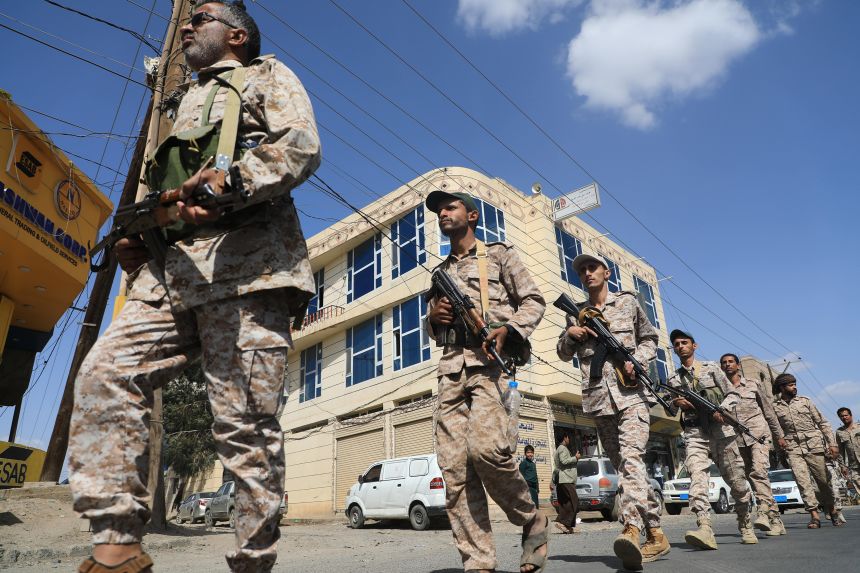
The Houthi seizures of Perim Island and the port city of Mocha have tightened control over the Bab el-Mandeb Strait, through which roughly 12% of global maritime trade passes. U.S. officials said Iran is pushing Gulf states toward closer ties with Israel, while Washington offered intelligence support rather than committing U.S. forces to direct combat operations against the Houthis.
Trump Claims No Damage While Evidence Contradicts Him
President Trump said the Iranian missile strikes on Muwaffaq Salti Air Base in Jordan caused no aircraft damage and that Iran is "desperate to try and affect the election." But CBS News reported that one A-10 Thunderbolt II suffered major damage — a severed wing — and approximately eight F-15 fighter jets sustained lighter damage. U.S. forces fired over 30 Patriot interceptor missiles to defend the base, with Jordanian military officials confirming that 18 of 20 ballistic missiles were intercepted.
Houthis Seize Key Red Sea Chokepoints, Disrupt Trade
On September 11, Yemeni government sources confirmed that Houthi forces seized Perim Island and Dhubab, securing full control over critical chokepoints in the Bab el-Mandeb Strait. The advance threatens one of the world's most important shipping lanes. The strait connects the Red Sea to the Gulf of Aden and Indian Ocean and roughly 12% of global maritime trade flows through it. U.S. Energy Secretary Chris Wright said Saudi Arabia's East-West Pipeline would resume operations within days after attacks by Iran-aligned groups forced a temporary shutdown.
Oil Prices Hit $108 as Markets Fear Worse Disruption
Crude oil prices surged to $108 a barrel, with analysts warning prices could climb to $120 if the Bab el-Mandeb Strait remains restricted. The spike comes as U.S. officials expressed concern about the rapid depletion of Patriot interceptor missile stockpiles. Sustained high energy prices are pushing President Trump's domestic approval ratings to record lows ahead of the U.S. midterm elections. UN Special Envoy Hans Grundberg warned that the Houthi advance pushes Yemen into a "new and more dangerous phase". Commercial shipping lanes face severe threats, forcing global trade vessels to consider rerouting around the Horn of Africa — adding weeks to journeys and raising transportation costs worldwide.
Saudi Arabia Breaks With Policy, Seeks Direct U.S. Intervention
Saudi Crown Prince Mohammed bin Salman called President Trump twice on September 10, pressing for direct U.S. military strikes against Houthi forces. The dual appeal marks a sharp policy shift — previously, Saudi Arabia had attempted to manage the Yemeni conflict independently. U.S. Central Command Admiral Brad Cooper traveled to Saudi Arabia on September 10 for talks, while a senior administration official told Reuters that Washington remains focused on "protecting our core national security interests" while "empowering our regional partners to take the lead". Trump's rejection of the Saudi request signals Washington prefers targeting Iranian decision-makers rather than ground forces in Yemen. Gulf Arabs are now seeking other options after U.S. bases failed to deter Iran, according to regional reporting.
Sentiment
Mostly NegativeNEGATIVENEUTRALPOSITIVE
Publishers
34
Articles
19
Reach
53
A
AnonymousAuthor


