Free Car-Seat Safety Checks
Police and fire departments nationwide offer free car-seat inspections during Child Passenger Safety Week.
Anonymous
Key Points
1
South Carolina’s child-passenger law requires children under 2 to remain rear-facing until reaching the seat manufacturer’s limits; children who outgrow rear-facing seats must use forward-facing seats in the back seat, while children 4 and older may transition to booster seats. Children may use adult lap-and-shoulder belts at age 8 or when they reach 57 inches tall.
2
New York technicians replaced more than 300 unsafe car seats last year, in addition to inspecting seats for installation, fit and expiration dates.
3
South Carolina maintains year-round car-seat inspection stations statewide, available by appointment beyond the special events held during Child Passenger Safety Week.
4
The Des Moines inspection event will include family resources and an opportunity to meet with an Iowa State Patrol trooper; it is scheduled for Sept. 26 from 10 a.m. to 1 p.m. at the Iowa Department of Public Safety on East Seventh Street.
5
In Hornell, New York, the police department and Steuben County Sheriff’s Office are partnering on a Sept. 20 inspection from 8 to 11 a.m. at the Hornell Police Department, 110 Broadway.
Police and fire departments nationwide are launching free car-seat inspections during Child Passenger Safety Week, Sept. 20–26, to catch dangerous installation errors before crashes happen. NHTSA data shows that an average of three children died and 439 were injured daily in vehicle crashes during 2024, yet most families don't realize their car seats are installed wrong — between 60% and 90% of inspected seats in South Carolina and New York fail inspection.
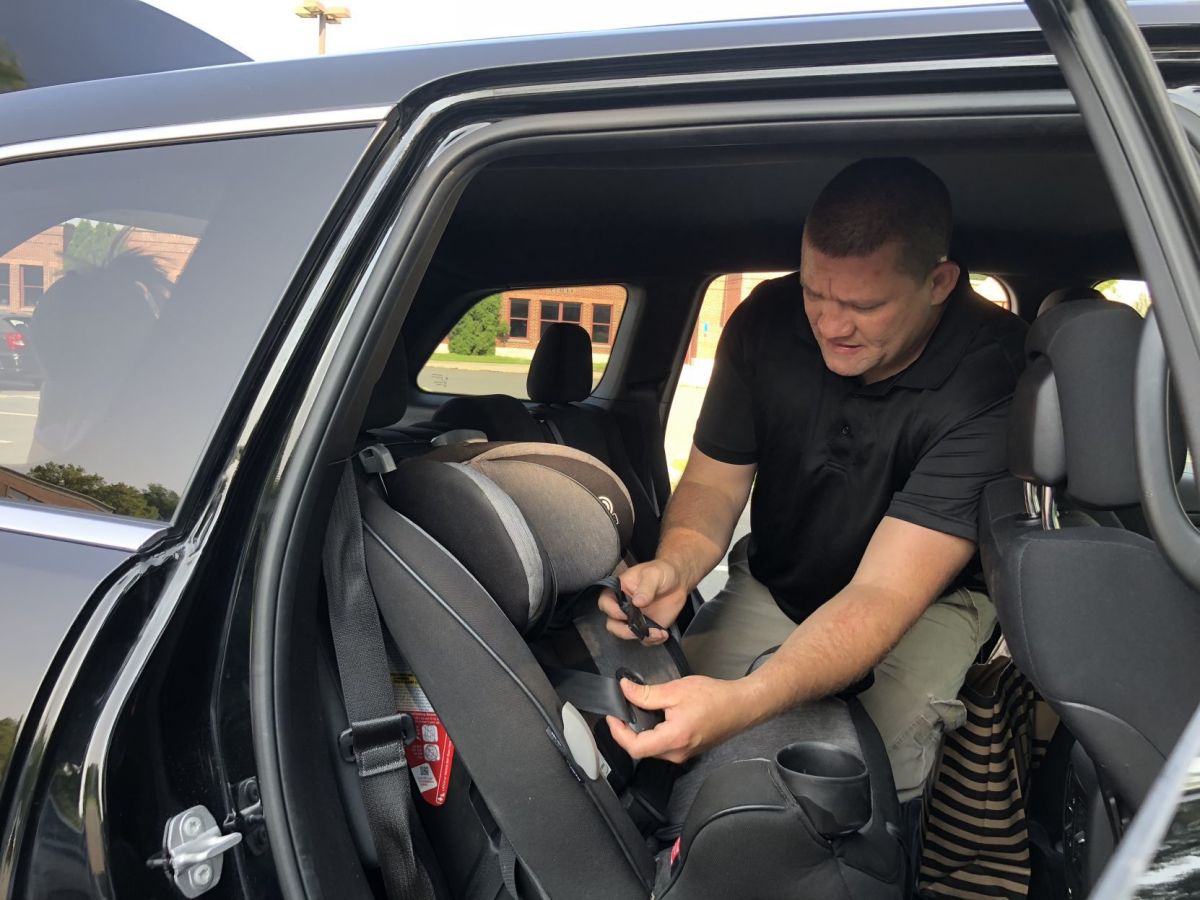
Certified technicians will check whether seats fit a child's age, size and weight, are installed correctly, have proper harnesses, and haven't expired. In some cases, agencies will replace unsafe seats for free. Events are happening across New York, South Carolina, Iowa, Illinois, Pennsylvania and Tennessee — most without requiring an appointment ahead of time.
Most Car Seats Are Installed Incorrectly
More than 60% of inspected car seats in South Carolina are improperly installed or used, according to safety officials. In New York, the problem is even worse — between 80% and 90% fail inspection. Baby Safety Alliance Director Joe Colella explained the core issue: "A car seat protects a child best when it's the right seat, installed correctly, and adjusted correctly." Most mistakes stem from confusing manuals and rushed setups, not parental carelessness.
Properly Installed Seats Cut Crash Deaths Sharply
When car seats are used correctly, they slash the risk of fatal injuries by 71% for infants and 54% for toddlers ages 1–4, according to safety data. Yet many parents transition children to adult seat belts far too early. AAA spokesperson Ragina Ali noted: "Parents spend years making safety decisions for their children, and that responsibility doesn't end as they grow older. If a seat belt doesn't fit properly, a booster seat is still the safest option." National data shows 86.5% of children evaluated are moved to adult belts before they're ready.
Free Inspections and Replacement Seats Available Nationwide
In New York, certified technicians replaced more than 300 unsafe car seats last year during inspections. New York State Police are conducting free checks from 4 p.m. to 7 p.m. throughout the week. On Sept. 20, the Hornell Police Department and Steuben County Sheriff's Office are teaming up from 8 a.m. to 11 a.m. at 110 Broadway in Hornell.
In Des Moines, Iowa's Department of Public Safety will host inspections Sept. 26 from 10 a.m. to 1 p.m. at East Seventh Street, with Iowa State Patrol troopers on hand to answer questions. Pennsylvania State Police and the Pennsylvania Turnpike Commission are offering inspections Sept. 21 at the Oakmont Plum Service Plaza. South Carolina maintains year-round inspection stations statewide beyond this week's events.
Age and Height Rules Change How Kids Should Sit
South Carolina's law shows why the rules matter. Children under 2 must stay rear-facing until they hit the seat maker's size limits. Once they outgrow that, they move to forward-facing seats in the back. At age 4, kids can switch to booster seats. Finally, at age 8 or 57 inches tall, they can use an adult lap-and-shoulder belt. Jumping to adult belts too early is the most common mistake parents make.
Sentiment
Mostly NegativeNEGATIVENEUTRALPOSITIVE
Publishers
38
Articles
12
Reach
50
Topics
A
AnonymousAuthor