Brazil-Korea Rare Earths
POSCO and Meteoric Sign Brazil-Korea Rare Earth Deal for EV Supply Chain
Anonymous
Key Points
1
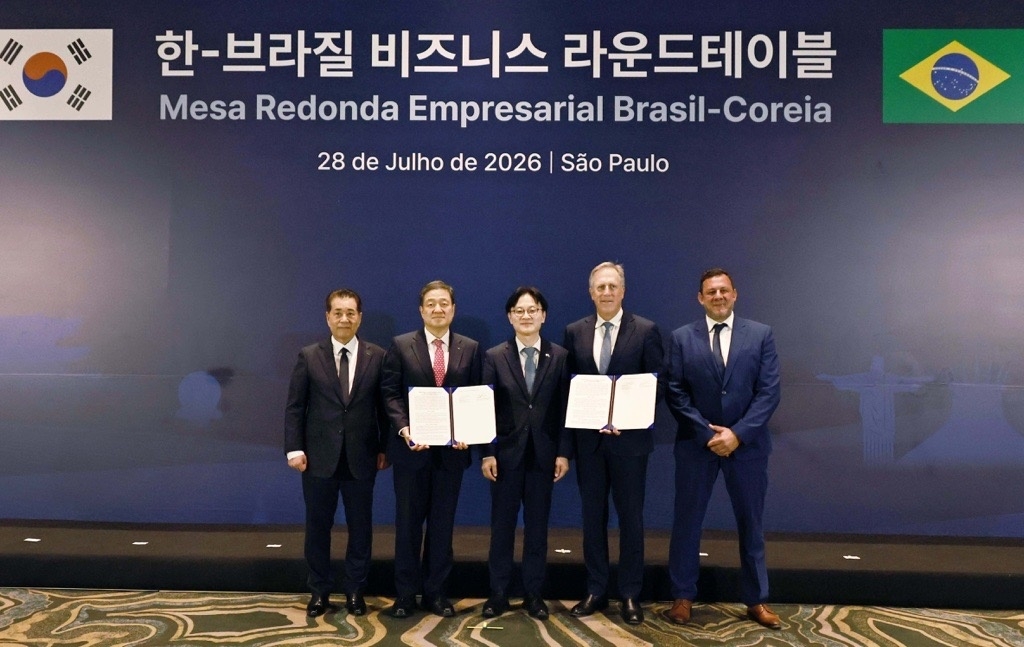
Signing ceremony in Sao Paulo for the POSCO–Meteoric MOU was attended by high-level officials, including Korea's Minister of Trade, Industry and Energy Kim Jung-kwan, POSCO Group Chairman Chang In-ho, POSCO International President Lee Kye-in, and Meteoric Resources CEO Stuart Gale, signaling strong government and corporate backing for the Brazil–Korea rare earth collaboration.
2
POSCO International plans to produce rare earth oxides through its own separation and refining business, which is currently under construction, enabling potentially tighter integration of upstream processing with downstream magnet production.
3
The financing framework may include support from Korean export credit agencies (KEXIM and K-SURE) and possible equity investment by POSCO in Meteoric, subject to due diligence and the finalization of agreements.
4
Pricing terms are expected to be linked to independent indices, with the potential for price floors and upside-sharing mechanisms as commercial terms are negotiated in future definitive agreements.
5
Meteoric Resources management framed Caldeira as a world-class, large-scale, low-impurity ionic absorption clay resource, providing a credible platform for long-term offtake, financing, and Brazil–Korea supply-chain integration with POSCO.
South Korean steel giant POSCO International and Australian rare earth developer Meteoric Resources have signed a memorandum of understanding to build a Brazil–Korea rare earth supply chain, Korea Herald reported. The deal gives POSCO the right to source up to 30% of output from Meteoric's Caldeira project in Brazil for up to seven years, with potential equity investment and financing from Korean state lenders.
The signing ceremony took place in São Paulo and drew top-level attendance, including Korea's Minister of Trade, Industry and Energy Kim Jung-kwan and POSCO Group Chairman Chang In-ho, according to SE Daily. The high-profile turnout signals that both governments see the deal as a strategic priority, not just a corporate agreement.
Caldeira Rare Earths Could Skip a Costly Refining Step
Meteoric's Caldeira project sits in Brazil and holds what the company calls a world-class ionic absorption clay deposit. These clays are low in impurities, which makes processing easier and cheaper. Metallurgical testwork shows Caldeira's material can go straight into POSCO's processing stream without extra refining, according to Kalkine. That streamlines the entire mine-to-magnet flow.
POSCO International is building its own rare earth separation and refining operation. Once complete, it can turn Caldeira's raw material into rare earth oxides in-house. Those oxides feed into magnets used in electric vehicles, robotics, data centers, and defense equipment. CEO Stuart Gale called Caldeira a resource capable of "disrupting global rare earth markets."
Korean State Lenders May Back the Brazil Mine Deal
The financing structure could involve two Korean export credit agencies — KEXIM and K-SURE — providing project support, Mining Weekly reported. POSCO may also take a direct equity stake in Meteoric, subject to due diligence and final agreement. That would give Korea a financial stake in the ground-level supply of rare earths, not just a purchase contract.
Pricing terms are still being negotiated. The plan is to tie prices to independent market indices, with possible price floors and upside-sharing arrangements built in, according to Kalkine. Those mechanisms would give both sides some protection if rare earth prices swing sharply in either direction.
Deal Is Non-Binding but Backed by Government Muscle
The MOU is currently non-binding. It still requires further negotiations, due diligence, regulatory approvals, and formal definitive agreements before any money changes hands, Market Screener noted. Non-binding deals in critical minerals often fall apart, but the government-level attendance in São Paulo adds weight to this one.
Korea has been working to reduce its dependence on China for rare earths, which are essential for EV motors and military hardware. Brazil offers a geopolitically friendlier source. This deal fits into a broader South Korean push to lock in stable critical mineral supply chains, SE Daily reported.
What Rare Earths Actually Do — and Why They Matter Now
Rare earth elements are not actually rare — but processing them is expensive and complex. China currently controls most of the world's refining capacity. Magnetic rare earths, like neodymium and praseodymium, go into the powerful permanent magnets that spin EV motors and power wind turbines. Demand is rising fast as the clean energy transition accelerates.
POSCO's move into Brazil is part of a wider scramble by non-Chinese companies to secure supply. Korea Herald noted that POSCO International sees the Caldeira partnership as a key step in building a reliable magnet supply chain outside China's sphere. For Meteoric, landing a partner of POSCO's size adds credibility and a potential path to project financing.
Sentiment
Mostly PositiveNEGATIVENEUTRALPOSITIVE
Publishers
11
Articles
14
Reach
25
A
AnonymousAuthor


