Milan Fashion Week Opens
Prada Opens Milan Fashion Week With Subverted Silhouettes And Star-Studded Event
Anonymous
Key Points
1
About 141,000 visitors were expected to stay in Milan for the September 22–28 fashion week, which featured 203 events and was described by Carlo Capasa, president of Italy’s National Chamber of Fashion, as having the highest number of events in recent years.
2
The week’s opening program included a 500-guest Vogue World: Milano event, while an opening dinner at the Palazzo Reale was scheduled alongside the vernissage of the exhibition “Dalí and Fashion,” attended by Milan Mayor Beppe Sala.
3
Prada planned an evening party with techno producer Jeff Mills after its runway show, adding a music component to the house’s opening-day program.
4
Prada’s expanded Galleria Vittorio Emanuele II complex now spans eight floors and includes a new underground gallery, a museum and private salons, in addition to its boutiques, patisserie and contemporary art space.
5
The brand entered the season against a challenging luxury-market backdrop, including macroeconomic pressures and a prolonged slowdown in China; Prada nevertheless reported better-than-expected first-half 2026 results, though margins narrowed because of the Versace integration.
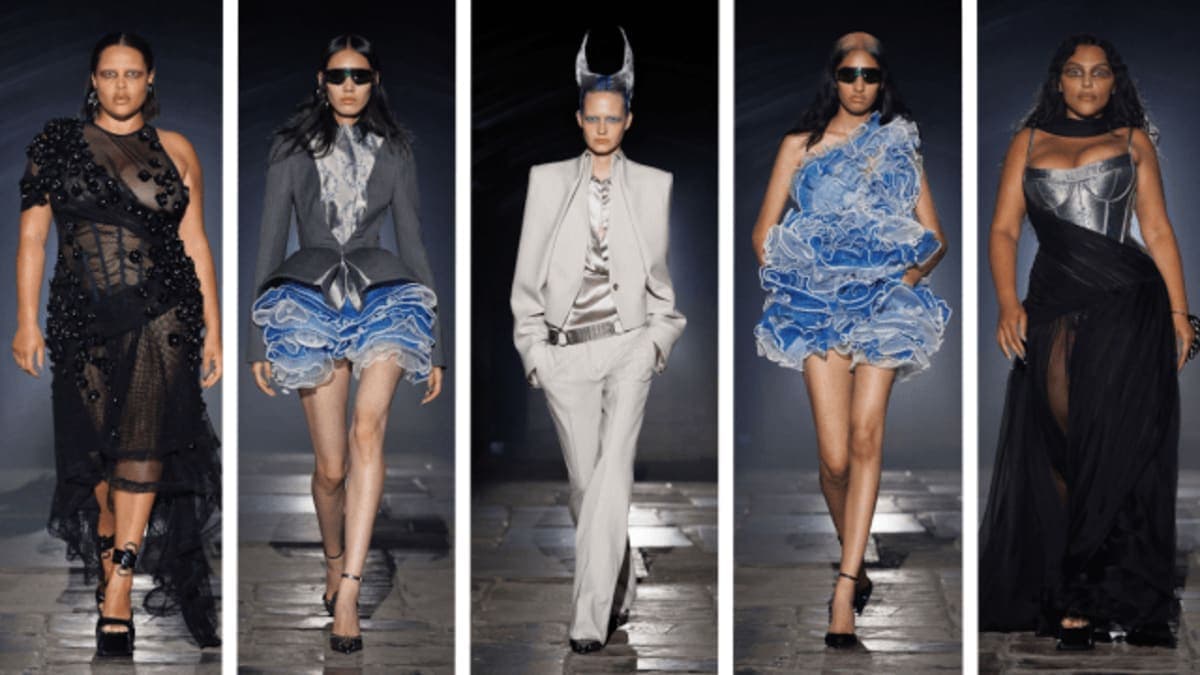
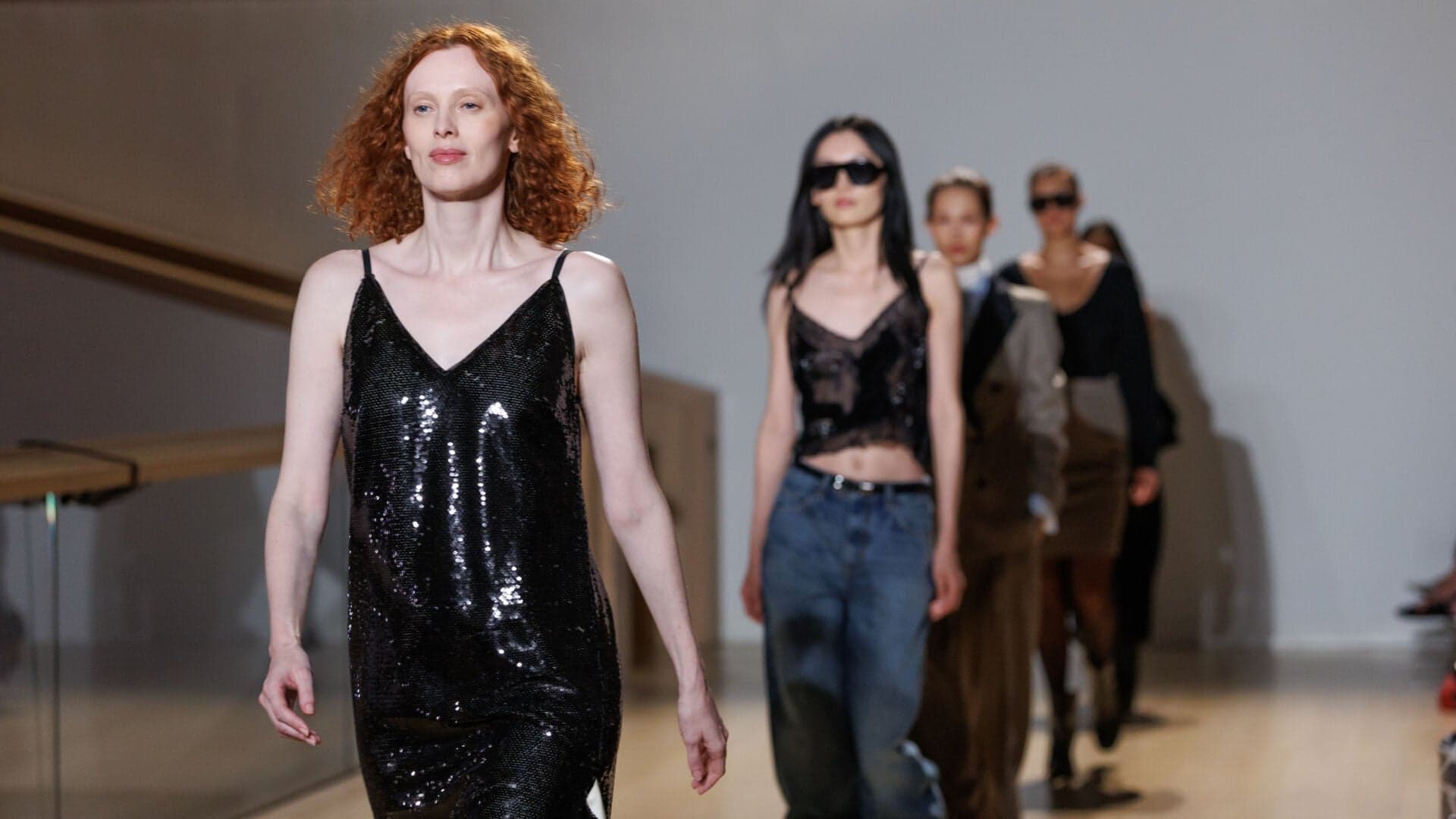
Prada opened Milan Fashion Week on September 22 with a high-energy show that placed co-creative directors Miuccia Prada and Raf Simons in the prestigious first slot of the 203-event calendar. Vogue Adria reported that the collection reworked familiar Prada codes through deliberately displaced proportions, exposed layers, and distorted shirting. The week drew an expected 141,000 visitors and featured 61 runway shows, including debut collections from Moschino's new creative directors and Glenn Martens' final Diesel show.
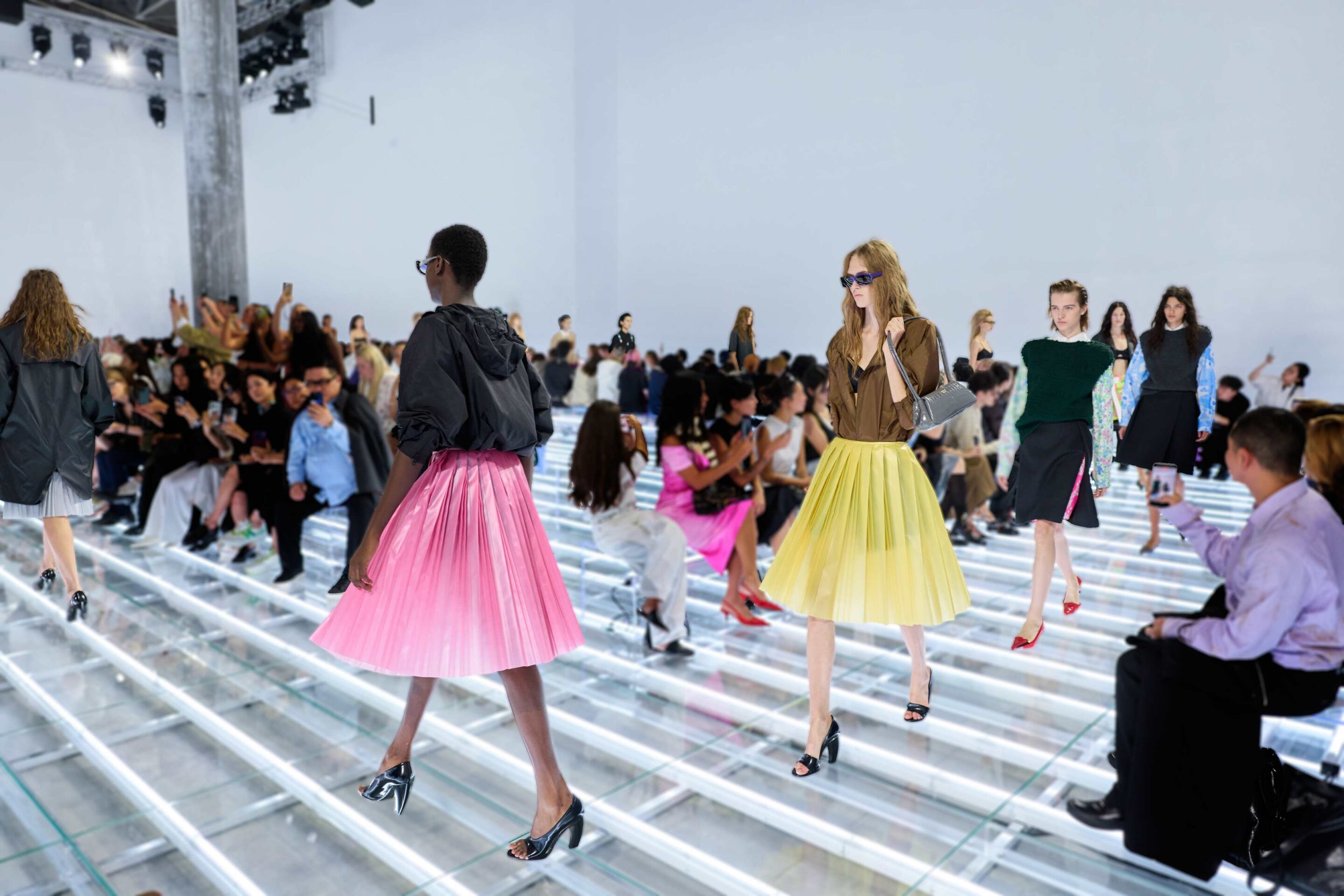
Skirts became the central motif of Prada's Spring/Summer 2027 collection, ranging from pleated and straight silhouettes to floral-embellished minis. V Magazine noted that the skirts, paired with leather outerwear, bralettes, and high heels, created sensual but sometimes ironic effects. The opening day also included a 500-guest Vogue World: Milano event and an evening techno party with producer Jeff Mills, adding cultural momentum to the start of fashion week.
Prada's Reimagined Skirt Takes Center Stage
The skirt dominated Prada's Spring/Summer 2027 vision in ways both playful and structural. V Magazine reported that Miuccia Prada and Raf Simons dedicated the entire runway to showcasing the versatility of the midi skirt. Designs moved from neat pencil silhouettes to wrapped styles, often layered under structured jackets or contrasted with vivid colors, checks, and lace.
Each silhouette carried Prada's signature displacement—proportions felt slightly off, layers exposed intentionally, and pairing choices challenged convention. High heels, bralettes, and leather outerwear transformed simple skirts into bold statements. The collection proved that a single garment, reworked through deliberate distortion and unexpected contrast, could define an entire season.
Milan Fashion Week Reaches Record Event Density
Milan's Fashion Week calendar hit the highest number of events in recent years, with 203 total programs running September 22–28. According to Carlo Capasa, president of Italy's National Chamber of Fashion, the packed schedule reflected strong designer participation. The week featured 61 runway shows, including collections from Fendi, Gucci, Armani, and other major Italian houses, alongside exhibitions and cultural events.
The opening day's festivities extended beyond Prada's runway. A 500-guest Vogue World: Milano event kicked off the womenswear season with star-studded attendance, Hello Magazine reported. An opening dinner at Palazzo Reale included the vernissage of
Prada's Expanded Milan Complex Opens During Fashion Week
Prada unveiled its transformed Galleria Vittorio Emanuele II complex, now spanning eight floors with a new underground gallery, museum, and private salons. The boutique, patisserie, and contemporary art space marked a significant expansion for the house during one of Milan's most visible weeks. The architectural refresh cemented Prada's role as a cultural anchor in the city's fashion ecosystem.
The timing aligned with broader momentum: Milan welcomed approximately 141,000 visitors for the week. Prada's opening-night strategy—combining runway spectacle with an evening techno party featuring producer Jeff Mills—illustrated how fashion houses now blend entertainment, commerce, and cultural programming to maximize impact during fashion week.
Luxury's Challenges Shadow a Star-Studded Opening
Prada's high-profile opening occurred against a softening luxury backdrop. The brand faced macroeconomic pressures and prolonged slowdown in China, major markets for premium goods. Despite headwinds, Prada reported better-than-expected first-half 2026 results, though profit margins narrowed due to integration costs from its Versace acquisition.
The collection's bold focus on silhouette reimagination and color contrast suggested Prada's strategy to stimulate consumer interest through distinct design vision. By anchoring Milan Fashion Week's opening with a distinctive point of view, the house aimed to capture attention and signal momentum entering a uncertain sales environment.
Sentiment
Mostly NegativeNEGATIVENEUTRALPOSITIVE
Publishers
39
Articles
50
Reach
89
A
AnonymousAuthor