Ten Teams Win Ig Nobels Outside U.S.
Ten Teams Win Ig Nobels Outside U.S.
Anonymous
Key Points
1
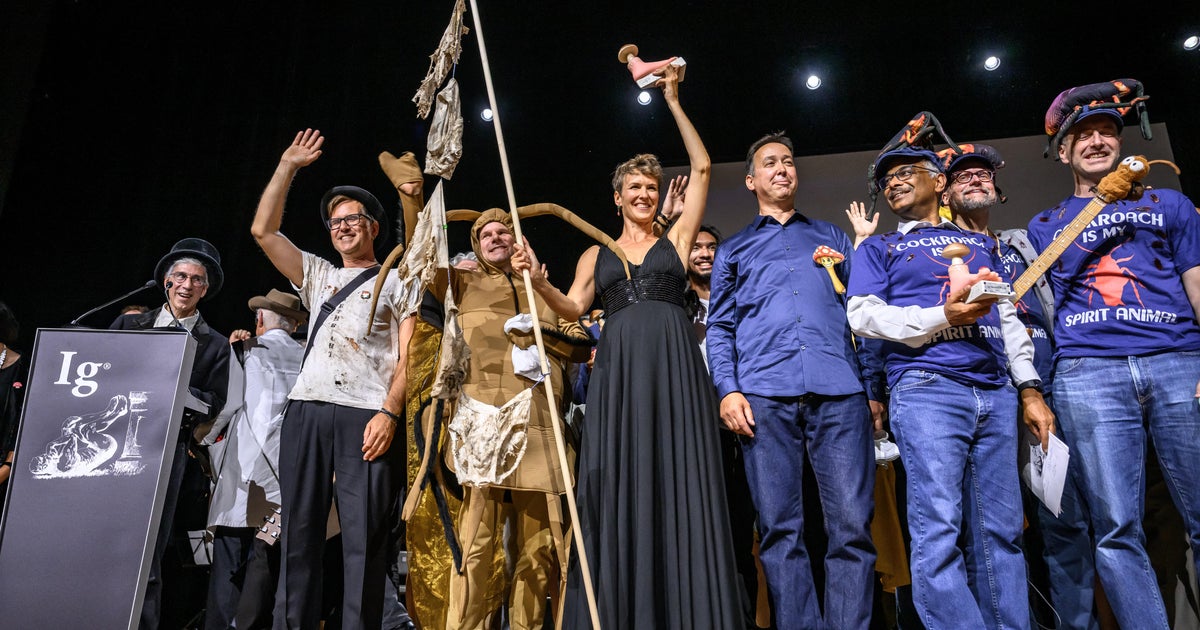
The researchers used X-ray crystallography to analyze the cockroach milk protein, and chemistry prize recipients Leo Chavis, Subramanian Ramaswamy and Nathan Coussens accepted the award on behalf of the wider team while wearing cockroach hats and singing about their research.
2
The milk proteins do not merely remain liquid: after the embryos consume the secretion, the proteins rapidly crystallize in their midgut, forming tightly packed nutrient reserves that can support development over time.
3
Researchers linked to India on the cockroach-milk project included Sanchari Banerjee, Nitish Sathyanarayanan, Jandhyam Srikanth and Subramanian Ramaswamy.
4
The underwear soil study involved burying 1,000 pairs in more than 25 countries to examine how soil organisms contributed to their decomposition.
5
Organizers said future ceremonies will alternate among European locations, with the 2027 event scheduled for Antwerp, Belgium; the Zurich ceremony also retained the tradition of audience members throwing paper airplanes toward the stage.
Ten teams won the 2026 Ig Nobel Prizes at a satirical awards ceremony in Zurich, Switzerland — the first time the event has been held outside the United States. Qazinform reported that organizers cited concerns about guests' ability to obtain visas and travel safely. The prizes honor quirky research that makes people laugh before prompting deeper thought, and are unrelated to the prestigious Nobel Prizes.
The chemistry prize went to researchers studying Pacific beetle cockroaches that produce a milk-like secretion for their offspring. Chemistry World found that the protein crystals in this cockroach milk contain more than three times the energy of comparable dairy milk — an unusually efficient way to nourish developing young. The winning team, including Indian scientists Sanchari Banerjee, Nitish Sathyanarayanan, Jandhyam Srikanth, and Subramanian Ramaswamy, accepted their award while wearing cockroach hats and singing about their research.
How Cockroach Milk Fuels Developing Embryos
The winning team used X-ray crystallography to analyze the cockroach milk protein in detail. Chemistry World explained that the proteins do not simply stay liquid after embryos consume them. Instead, the proteins rapidly crystallize inside the embryo's midgut, forming tightly packed nutrient reserves that support development over time. This crystal structure is what makes the milk so energy-dense compared to cow's milk.
Buried Underwear Reveals Soil Health Secrets
Another Ig Nobel winner studied how soil organisms break down fabric. CBS News reported that researchers buried 1,000 pairs of underwear in more than 25 countries to examine decomposition rates. The study shows how soil microbes and organisms contribute to nutrient cycling — a key measure of soil health. The simple, creative method earned the team recognition for making science both funny and informative.
Other Quirky Studies Win Global Recognition
The 2026 ceremony also awarded prizes for research on nose-blowing aerodynamics, splash-free urinal design, mosquito-inspired 3D printing, and the evolutionary history of kissing. Streamline Feed noted that these diverse studies reflect the Ig Nobel tradition of celebrating unexpected scientific questions. Each winner receives a genuine diploma and the prestige of having tackled a real research problem that others often overlook.
Zurich Hosts First Ig Nobel Outside the U.S.
Moving the ceremony to Switzerland marked a major shift for the awards, which have been held in the United States since their founding. CBS News reported that organizers made the change due to travel and visa concerns affecting international attendees. Qazinform confirmed that future ceremonies will alternate among European locations, with the 2027 event scheduled for Antwerp, Belgium. The Zurich ceremony retained the tradition of audience members throwing paper airplanes toward the stage.
Sentiment
Mostly NegativeNEGATIVENEUTRALPOSITIVE
Publishers
12
Articles
38
Reach
50
A
AnonymousAuthor


