Heart Drug Failure
Novo Nordisk Shares Tumble After Key Heart Drug Ziltivekimab Fails Late-Stage Trial
Anonymous
Key Points
1
Novo Nordisk's stock fell 8.78% to $47.08 on July 31 on about 2.8x average daily volume, breaking below the 20-day moving average with the 50-day at $46.84 as the first major support; the RSI of 42 suggests there is still room for downside before a true washout.
2
The Zeus trial tested ziltivekimab, an IL-6 pathway inhibitor added to standard care, in more than 6,300 patients with atherosclerotic cardiovascular disease, and failed to meet the primary MACE endpoint (defined as cardiovascular death, non-fatal MI, or non-fatal stroke); Jefferies has estimated the potential MACE market at over $10 billion annually.
3
Analysts Jefferies and Citi argued the sharp stock reaction was disproportionate given ziltivekimab's relatively small contribution to Novo's portfolio and described the result as strategically negative because it removes a credible non-obesity growth opportunity while underscoring Novo's dependence on obesity drugs and external innovation.
4
Pre-results commentary from Goldman Sachs highlighted the potential strategic significance of a successful Zeus candidate, noting it could have formed the core of Novo Nordisk's cardiovascular franchise, illustrating the program's importance to the company's long-term growth strategy.
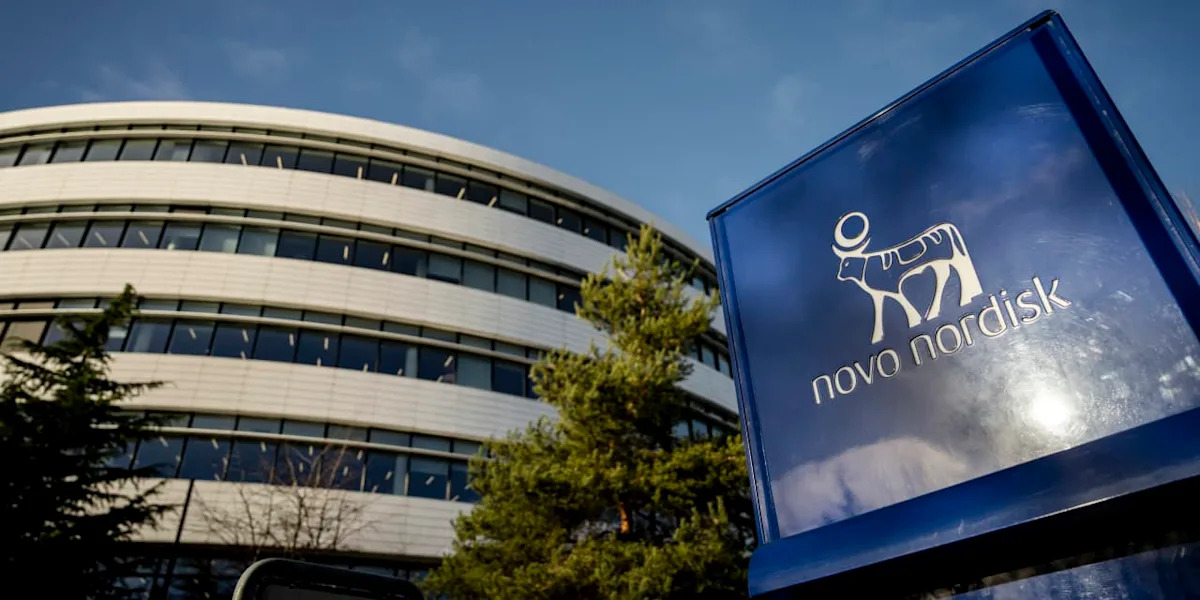
Novo Nordisk shares fell sharply on July 31 after its heart drug ziltivekimab failed a major late-stage clinical trial, erasing billions in market value in a single session. The stock dropped 8.78% to $47.08 on roughly 2.8 times its average daily volume, according to Trading Key.
The failure came from the Zeus trial, which tested ziltivekimab in more than 6,300 patients with heart disease. The drug did not reduce the risk of cardiovascular death, heart attack, or stroke compared with a placebo — the trial's primary goal. The result is another blow to Novo's pipeline beyond its blockbuster obesity drugs Ozempic and Wegovy.
What Went Wrong in the Zeus Trial
Ziltivekimab works by blocking a protein called IL-6, which drives inflammation in the body. The idea was to add it on top of standard heart care and cut the risk of major cardiovascular events. The Zeus trial enrolled more than 6,300 patients with atherosclerotic cardiovascular disease — a condition where arteries harden and narrow. But the drug failed to beat placebo on the primary endpoint, according to Yahoo Finance.
Novo Nordisk's Chief Scientific Officer Martin Holst Lange said the company saw "some biological effect" from the drug. But that was not enough. The trial did not deliver the cardiovascular risk reduction the company had hoped for. Lange stressed the setback does not change Novo's commitment to heart disease as a long-term focus area, according to Archynetys.
Analysts Say the Stock Drop Was Still Too Big
Analysts at Jefferies and Citi said the market reaction was outsized. Ziltivekimab was a small part of Novo's overall portfolio, making an 8–10% stock decline hard to justify on numbers alone. Still, both banks called the result "strategically negative." The drug had been seen as a credible growth engine outside of obesity, and without it, Novo looks more dependent on Ozempic and Wegovy than before, according to Yahoo Finance.
The stakes were high even before the trial read out. Goldman Sachs had noted before the results that a successful Zeus drug could have formed the core of Novo's entire cardiovascular franchise. Jefferies has estimated the potential market for drugs targeting major cardiovascular events at over $10 billion a year. That opportunity now looks closed for Novo, at least with this drug.
Stock Breaks Key Support as Selling Volume Surges
The sell-off pushed Novo Nordisk below its 20-day moving average — a level traders watch closely as a short-term trend signal. The next key support sits at the 50-day moving average of $46.84. The stock's RSI, a measure of momentum, sat at 42 — below the neutral level of 50 but not yet in "oversold" territory, according to Trading Key. That means more downside is possible before buyers step in.
Trading Key reported this was Novo's largest single-day drop in nearly five months. Volume was roughly 2.8 times the daily average, a sign of panic selling rather than routine profit-taking. Mizuho analyst Holz told CNBC the reaction reflected investor frustration with Novo's pipeline struggles on top of broader pressure in the U.S. market for its obesity drugs.
Novo Now Leans Harder on Ozempic and Wegovy
The Zeus failure leaves Novo Nordisk with fewer options to grow beyond weight-loss drugs. Ozempic and Wegovy have been massive successes, but competition is rising fast. Rivals like Eli Lilly are gaining ground in the obesity space. Without a strong heart drug pipeline, Novo has less to show investors who want proof the company can diversify, according to Archynetys.
Management insists the company remains committed to cardiovascular disease and will look at other paths forward. But analysts say words are not enough. Novo must now rely more heavily on external deals or new internal programs to fill the gap that ziltivekimab was supposed to close. For now, the company's growth story looks narrower than it did just 24 hours ago.
Sentiment
Mostly NegativeNEGATIVENEUTRALPOSITIVE
Publishers
17
Articles
19
Reach
36
Topics
A
AnonymousAuthor


