Hungary Realigns Foreign Policy
Hungary Designates Russia a Threat in Major Foreign Policy Shift
Anonymous
Key Points
1
The guidelines explicitly note that Russia’s actions threaten Hungary, Europe and the global order and also highlight that the situation endangers the Hungarian minority in Transcarpathia.
2
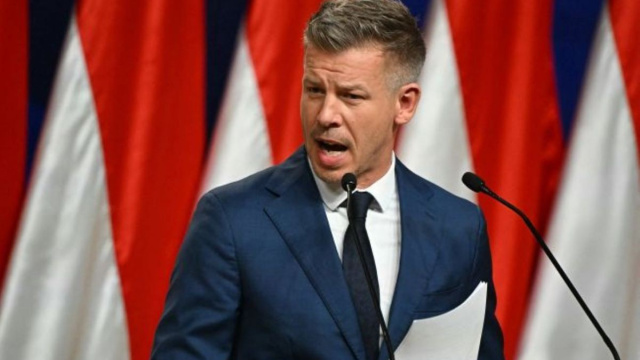
The resolution was signed by Prime Minister Péter Magyar and published in the Magyar Közlöny (official gazette) on August 25, formalizing the shift in Hungary’s UN engagement.
3
Hungary’s new government, led by Péter Magyar’s party, won a two-thirds majority in Parliament (141 of 199 seats) and took office on May 13, 2026.
4
Budapest authorities seized two bank vehicles in March carrying cash and gold worth about $82 million as part of a money-laundering probe into a Ukrainian bank convoy, a probe that was later closed.
5
On June 19, Hungary overturned a nine-month ban on Ukrainian media imposed by the previous administration as part of efforts to mend ties with Kyiv.
Hungary's new government has formally designated Russia as a threat to Hungary, Europe, and the global order in guidelines for its UN General Assembly delegation. The Kyiv Independent reports the move marks a sharp break from the pro-Russia stance of Viktor Orbán's administration, which repeatedly blocked EU sanctions and opposed Ukrainian interests.
Prime Minister Péter Magyar's party won a two-thirds parliamentary majority in May 2026 and immediately began realigning Hungary's foreign policy toward Europe and NATO. The guidelines, signed by Magyar and published August 25, affirm Ukraine's sovereignty and right to self-defense while supporting negotiations for lasting peace and security guarantees for Kyiv.
Hungary's Historic Shift From Orbán's Pro-Russia Posture
For years, Viktor Orbán's government blocked EU sanctions against Russia and obstructed European support for Ukraine. Yahoo News notes the new Magyar-led administration has completely reversed this approach. Budapest now explicitly identifies Russia's actions as endangering Hungary, Europe's stability, and the global order—and specifically threatens the Hungarian minority in Transcarpathia.
The policy reversal is swift and formal. Magyar's party secured 141 of 199 parliamentary seats and took office May 13, 2026. Within months, Hungary overturned a nine-month media ban on Ukrainian outlets imposed by the previous government. These moves signal a coordinated realignment of Budapest's entire international framework.
New Guidelines Commit Hungary to Dialogue and Peace
While naming Russia a threat, Hungary's UN guidelines emphasize support for diplomatic solutions. Budapest backs negotiations for lasting peace and long-term security guarantees for Ukraine. The government wants to pursue these objectives through the UN while advancing a broader European push to confront Russian aggression without abandoning negotiation channels.
The guidelines direct Hungary's UN delegation to pursue an ambitious agenda beyond Ukraine. Priorities include Gaza, Lebanon, Iran tensions, migration policy, and reform of UN institutions. This proactive stance differs sharply from Orbán's government, which often isolated Hungary within European and international forums.
Mending Ties With Ukraine After Years of Friction
Hungary and Ukraine endured significant tensions under Orbán. In March 2026, Budapest seized two bank vehicles carrying cash and gold worth approximately $82 million as part of a money-laundering investigation tied to a Ukrainian convoy. Novinite notes the probe was later closed, clearing the path for improved relations.
Magyar's government moved quickly to rebuild bridges. The June 19 decision to lift the nine-month ban on Ukrainian media signaled a deliberate effort to normalize ties. These steps align Hungary with broader European efforts to support Ukraine's sovereignty while pursuing regional stability and long-term security arrangements through diplomatic channels.
Sentiment
Mostly NegativeNEGATIVENEUTRALPOSITIVE
Publishers
20
Articles
26
Reach
46
A
AnonymousAuthor


