Energy Infrastructure Standards
LSAW Steel Pipes Support Large-Scale Energy and Marine Infrastructure Projects Worldwide
Anonymous
Key Points
1
LSAW pipe is manufactured by forming steel plate into a cylindrical shape and welding the longitudinal seam using the submerged-arc welding process.
2
The longitudinal welded design distinguishes LSAW pipe from both seamless pipe and spiral-welded pipe, although project-specific dimensions, material properties and service conditions should determine the final selection.
3
In jacket-type offshore wind foundations, large LSAW pipe members can transfer loads from the offshore wind turbine to the foundation system supported on the seabed.
4
Long-distance pipelines may transport oil, natural gas or other industrial fluids under controlled pressure across complex operating environments, making service conditions an important part of pipe selection.
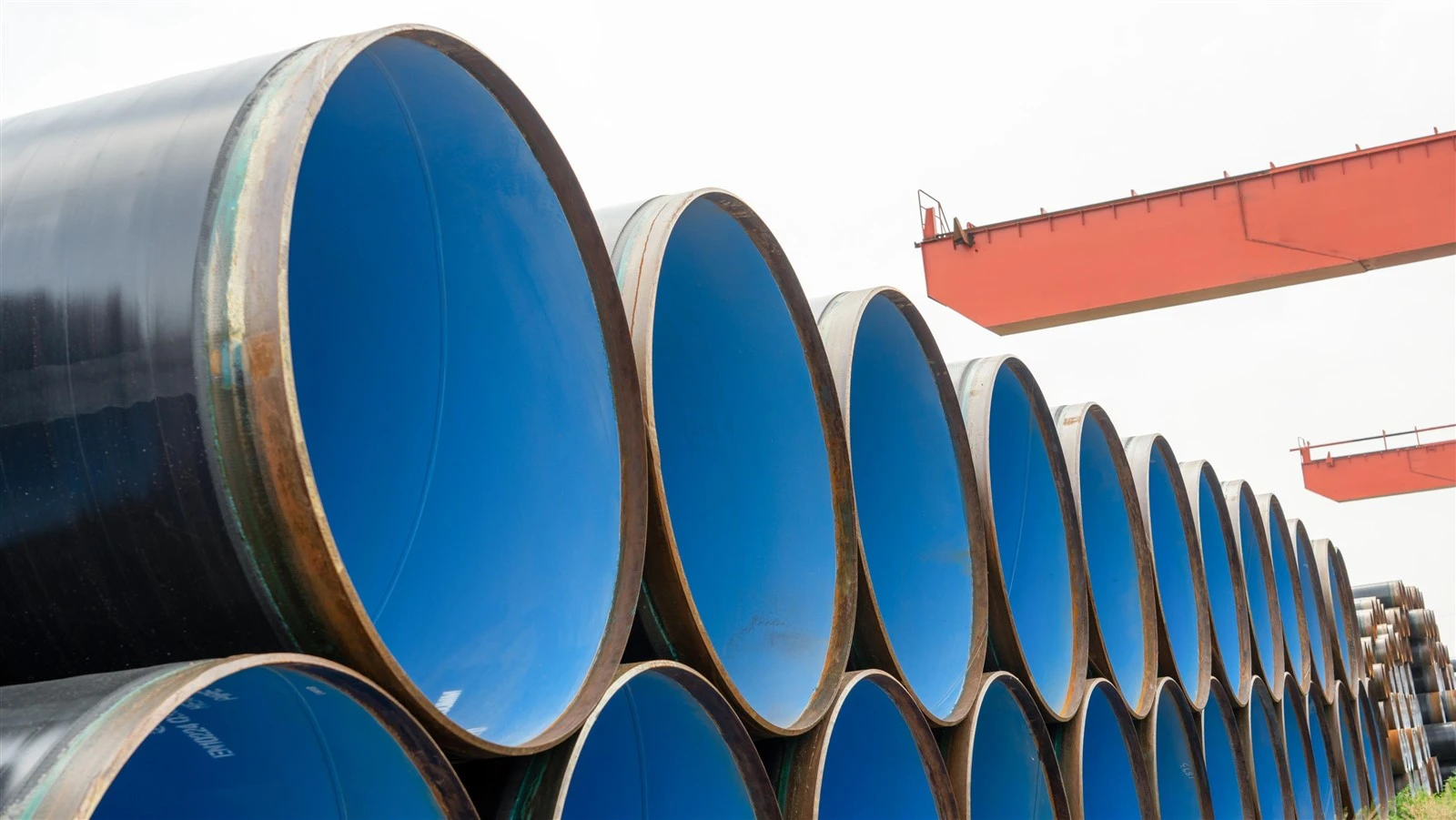
LSAW steel pipes—formed by welding a single longitudinal seam using submerged-arc technology—are the backbone of large-diameter oil and gas pipelines and offshore wind foundations. WBOC reports that these heavy-wall pipes withstand demanding combinations of pressure, temperature, wind, waves, and corrosive seawater. Selection depends on design pressure, operating temperature, steel grade, wall thickness, and protective coatings rather than pipe type alone.
LSAW pipes dominate high-pressure energy transport because their straight single weld seam delivers uniform thickness and low residual stress. According to industry standards, line pipe procurement accounts for 35% to 40% of total pipeline project costs. Modern LSAW pipes reach diameters up to 56 inches and wall thicknesses exceeding 31.8 mm, enabling transmission of up to 50 billion cubic meters of natural gas annually per pipeline.
How LSAW Pipes Are Made and Why They Matter
LSAW pipes begin as heavy steel plate, cold-formed into a cylinder and welded along one longitudinal seam using double-sided submerged-arc welding. This process differs sharply from seamless pipe—which has no weld—and spiral-welded pipe, which features a helical seam. The straight, single-weld design gives LSAW superior structural stability in high-stress environments like deep ocean floors and arctic regions.
Powering Long-Distance Oil and Gas Networks
Long-distance pipelines transport oil, natural gas, and industrial fluids under controlled pressure across complex operating environments. LSAW pipes operating at pressures up to 12 MPa carry these critical commodities across continents. Kotaradio notes that protective coatings like 3LPE and Fusion Bonded Epoxy extend pipe life to 20 to 30+ years, even in harsh buried and offshore conditions. API 5L and ISO 3183 standards govern weld integrity, mechanical performance, and traceability for all welded and seamless line pipe in energy transport.
Standard pipe lengths of 12 to 18 meters are joined together to form continuous transmission corridors. European standards have increasingly phased out spiral-welded pipes in favor of LSAW for critical transmission lines, recognizing LSAW's superior performance under multi-directional stress. This standardization ensures predictable behavior and easier maintenance across decades of operation.
Offshore Wind and Deepwater Marine Structures
Heavy-wall LSAW pipes now anchor offshore wind turbines to the seabed in deepwater jacket foundations. WBOC reports that these large structural members must endure wind, waves, tides, impacts, and corrosive seawater simultaneously. In jacket-type foundations, LSAW pipe members transfer dynamic loads from the offshore turbine down to the foundation system anchored on the seabed. Wall thickness, impact toughness, welding quality, and corrosion protection must all conform strictly to engineering design specifications.
As offshore wind installations move into deeper waters exceeding 1,500 meters, LSAW pipes become the primary load-bearing solution. Their uniform thickness and low residual stress make them ideal for handling the complex, multi-directional forces of marine environments. Combined with advanced 3LPE coating systems, these pipes resist seawater corrosion while maintaining structural integrity over 20+ year service lives.
Standards and Material Selection Drive Project Success
Final pipe selection rests not on pipe type alone but on the pipeline's design pressure, operating temperature, steel grade, manufacturing standards, testing protocols, protective coating system, and material traceability. API 5L and ISO 3183 establish the international baseline for line pipe specifications. Projects in extreme geographic zones—arctic regions, densely populated cities, and deep seabeds—require LSAW pipes certified under these rigorous standards.
Sentiment
Mostly PositiveNEGATIVENEUTRALPOSITIVE
Publishers
26
Articles
74
Reach
100
A
AnonymousAuthor


