Conditional House Arrest
Malaysia King Grants Former PM Najib Conditional House Arrest Until 2028
Anonymous
Key Points
1
Former Umno Youth chief Khairy Jamaluddin said Najib had already spent almost four years in prison since beginning his sentence in August 2022, arguing that house arrest did not mean he had avoided serving his punishment.
2
Analyst Shahril Sufian Hamdan warned the decision could trigger a “two-tier” justice debate because ordinary prisoners would not have the same access to political influence or support as a former prime minister. He said this argument could shape political contests over the coming year.
3
Shahril said the timing of the pardon was significant because it came against the backdrop of the Umno General Assembly, describing it as a “moment of discontinuity” that could reopen political calculations involving Umno, the Unity Government and the opposition.
4
Former Umno information chief Shahril Sufian Hamdan said the decision could influence the constitutional convention on royal pardons, including whether the Yang di-Pertuan Agong is bound by government advice or may exercise the power independently. He described the development as “history being made.”
5
Parti Wawasan Negara cited Article 42(1) of the Federal Constitution, which gives the King power to grant pardons, reprieves and respites, and said that prerogative should be respected regardless of political affiliation.
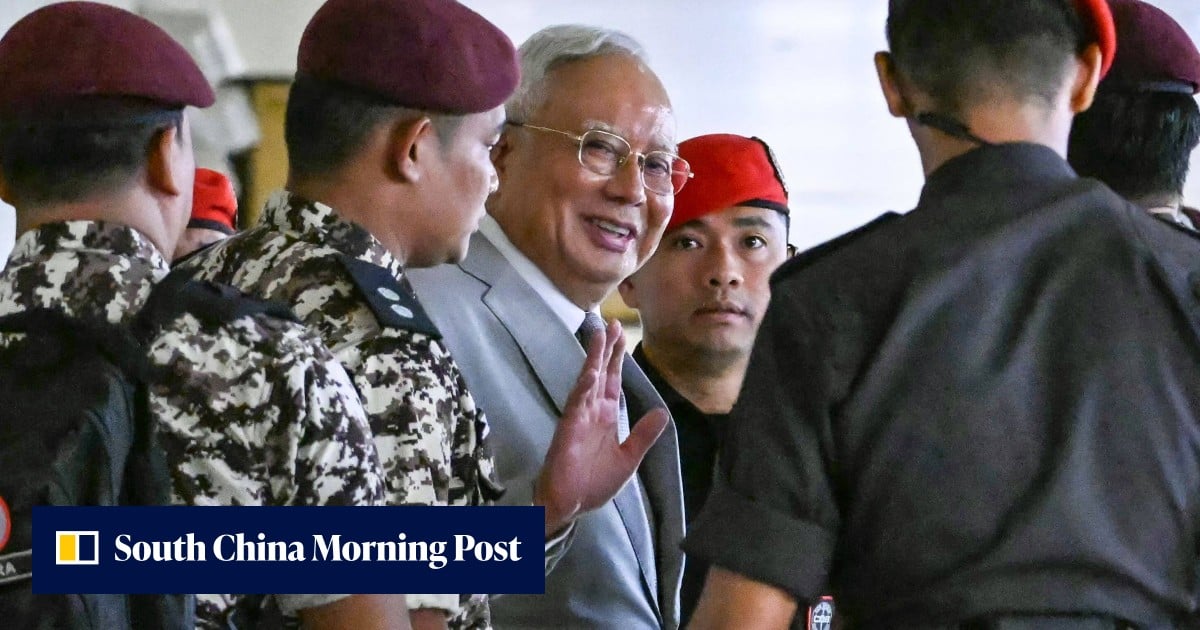
Malaysia's King Sultan Ibrahim granted former Prime Minister Najib Razak a conditional pardon on September 18, allowing him to serve the rest of his corruption sentence under house arrest until August 23, 2028. Yahoo News Malaysia reported that Najib must pay a RM50 million fine (about US$12.26 million) and follow all conditions, or he returns to prison. He has already spent nearly four years—1,487 days—locked up since August 2022.
Prime Minister Anwar Ibrahim defended the decision as a constitutional right of the King, insisting it does not weaken Malaysia's fight against corruption. SCMP noted that UMNO and PAS backed the pardon, while opposition parties warned the move risks creating a two-tier justice system where political figures get better treatment than ordinary prisoners.
Four Years Behind Bars Before House Arrest
Najib entered Kajang Prison in August 2022 after Malaysia's Federal Court upheld his conviction for stealing RM42 million from state investment fund SRC International. Yahoo News Malaysia reported his lawyers are now working to meet house arrest conditions. Former UMNO Youth chief Khairy Jamaluddin argued Najib had already served real prison time, saying house arrest does not erase his punishment or let him escape justice.
A Pardon That Sets New Legal Ground
Malaysia has no specific law for home detention, making this arrangement legally unprecedented. Legal experts say authorities must now create rules for monitoring and enforcement without clear guidance. The pardon applies only to the SRC case—Najib faces a separate trial over RM2.28 billion missing from 1MDB investment scandal, with a December 2025 conviction now under appeal. If that conviction stands, he could return to prison.
Political Divisions Over Fairness and Royal Power
Opposition figures and analysts warn the decision creates a 'two-tier' justice system. Analyst Shahril Sufian Hamdan told media that ordinary prisoners lack political influence to secure similar treatment, raising concerns the ruling favors the elite. He called the pardon 'history being made' and said it could reshape Malaysia's constitutional understanding of royal clemency powers. The timing matters too—the pardon came during UMNO's general assembly, boosting the party politically within Prime Minister Anwar's coalition government.
UMNO Launches Fundraiser to Pay Najib's Fine
Deputy Prime Minister Ahmad Zahid Hamidi, who leads UMNO, launched a party fundraiser to cover Najib's RM50 million fine. Yahoo News Malaysia reported that Hamidi called on party members and supporters to make voluntary donations. The fundraiser signals UMNO's political victory and strengthens the party's position ahead of future elections, though it also deepens tensions within Anwar's fractious coalition with reform-minded partners who fear the decision weakens anti-corruption standards.
Sentiment
Mostly NegativeNEGATIVENEUTRALPOSITIVE
Publishers
91
Articles
101
Reach
192
A
AnonymousAuthor


