Direct-to-Device Expansion
Amazon Leo Files FCC Plan for 5,105 Direct-to-Device Satellites Globally
Anonymous
Key Points
1
Amazon Leo's FCC filing indicates Globalstar frequencies would be usable immediately after the merger closes, allowing a rapid onboarding of Direct-to-Device services.
2
Beyond messaging and emergency services, the plan explicitly includes voice calls and industrial Internet of Things (IoT) applications as part of the D2D capabilities.
3
The FCC has opened the issue for public comment on Amazon Leo's use of Iridium frequencies outside the United States and related spectrum considerations.
4
Amazon already has approval to deploy about 3,236 initial LEO satellites, with roughly 400 Kuiper satellites currently in orbit, and the overall system is projected to cost about $20 billion to deliver by 2030–2031.
5
The frequency access being pursued includes Iridium's 1618.725–1621.25 MHz band outside the US and L-Band 1518–1525/1668–1675 MHz, with Rocket Lab pursuing Iridium as well—highlighting potential spectrum competition.
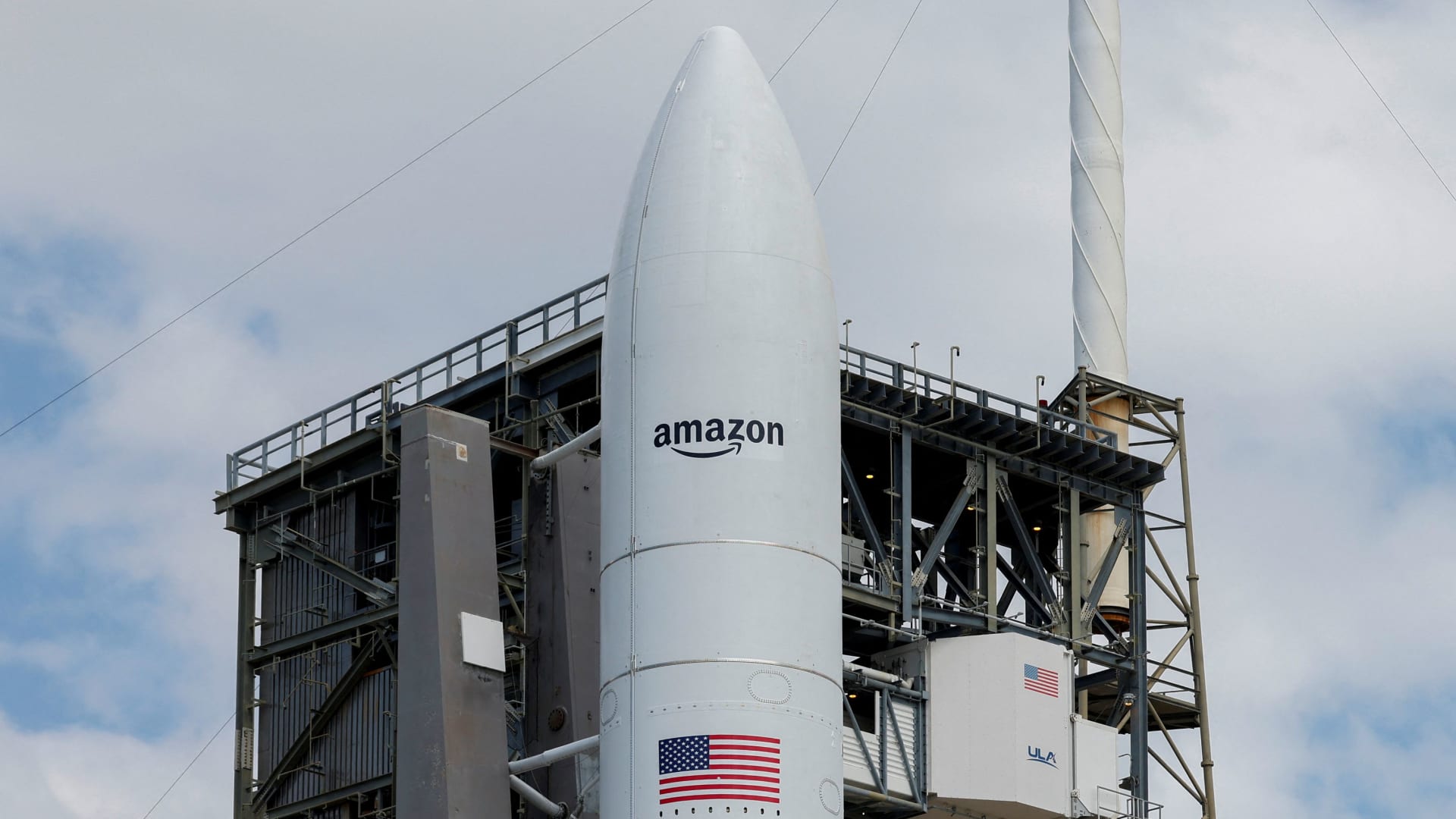
Amazon has asked the FCC to approve a new constellation of up to 5,105 low Earth orbit satellites built for direct-to-device connectivity — meaning your phone could connect to space without any special hardware. The Verge reported the new system, called Amazon Leo, would launch as early as 2028 and support voice calls, messaging, emergency services, and industrial IoT connectivity.
The filing comes after Amazon struck an roughly $11.57 billion deal to acquire Globalstar, the satellite company whose spectrum already powers Apple's emergency SOS feature on iPhones. CNBC reported that Globalstar's frequencies could be put to use by Amazon almost immediately after the merger closes, which is expected in 2027.
What Amazon Leo Would Actually Do for Your Phone
Direct-to-device satellite service lets ordinary smartphones connect to satellites in orbit — no special antenna required. Amazon Leo would use this technology to deliver voice calls, text messages, emergency alerts, and IoT data to devices on the ground. PCMag noted that Apple iPhones are a primary target, given Amazon's Globalstar acquisition ties it directly to the spectrum Apple already uses.
The 5,105-satellite constellation would work alongside Globalstar's existing network. Amazon already has approval to deploy about 3,236 initial Kuiper broadband satellites and currently has roughly 400 in orbit. The full system is expected to cost around $20 billion and be complete by 2030–2031.
Globalstar Deal Unlocks Spectrum — and a Fast-Track Launch
The Globalstar acquisition is the key that opens the door. Once the merger closes in 2027, Amazon gains access to Globalstar's licensed frequencies right away. Those frequencies — including L-Band spectrum in the 1518–1525 MHz and 1668–1675 MHz ranges — are already recognized by regulators and used in consumer devices worldwide. That gives Amazon a significant head start over rivals building similar services from scratch.
Amazon's FCC filing also asks for access to Iridium's 1618.725–1621.25 MHz band outside the United States. The FCC has opened that request for public comment. But there is a catch: Rocket Lab is also pursuing Iridium, which could set up a direct competition for the same slice of spectrum. PCMag flagged this as a potential flashpoint in the satellite industry.
Amazon Promises to Play Nice With Existing Satellite Users
With multiple companies sharing the same frequency bands, interference is a real concern. Amazon says it will take active steps to avoid disrupting other users of the same and adjacent spectrum. The company emphasized coexistence as a core part of its FCC filing, signaling it wants regulatory goodwill as it expands into an already crowded slice of the radio spectrum.
The FCC review process will be the real test. Public comments are now open on the Iridium frequency question. Regulators will weigh Amazon's interference promises against the concerns of existing operators before granting final approval for the full constellation.
How Leo Fits Into Amazon's Bigger Space Strategy
Amazon Leo is not a standalone bet. It sits on top of Project Kuiper, Amazon's existing broadband satellite program. Kuiper targets homes and businesses with high-speed internet. Leo adds a second layer — direct phone connectivity for billions of people who already carry a smartphone. Together, the two systems would give Amazon a full-stack satellite network covering both broadband and mobile. PCMag described it as a major expansion of Amazon's edge connectivity ambitions.
If everything goes to plan, Amazon would have satellites covering the globe for both broadband and direct phone service by the early 2030s. That would put it in direct competition with SpaceX's Starlink, which already offers direct-to-cell service through a partnership with T-Mobile. The race for satellite-powered mobile connectivity is moving fast — and Amazon just placed a very large bet.
Sentiment
Mostly PositiveNEGATIVENEUTRALPOSITIVE
Publishers
46
Articles
89
Reach
135
Topics
A
AnonymousAuthor


