Toddler's Transplant Journey
Two-Year-Old Awaits Life-Saving Heart and Double-Lung Transplant at Texas Children's Hospital
Anonymous
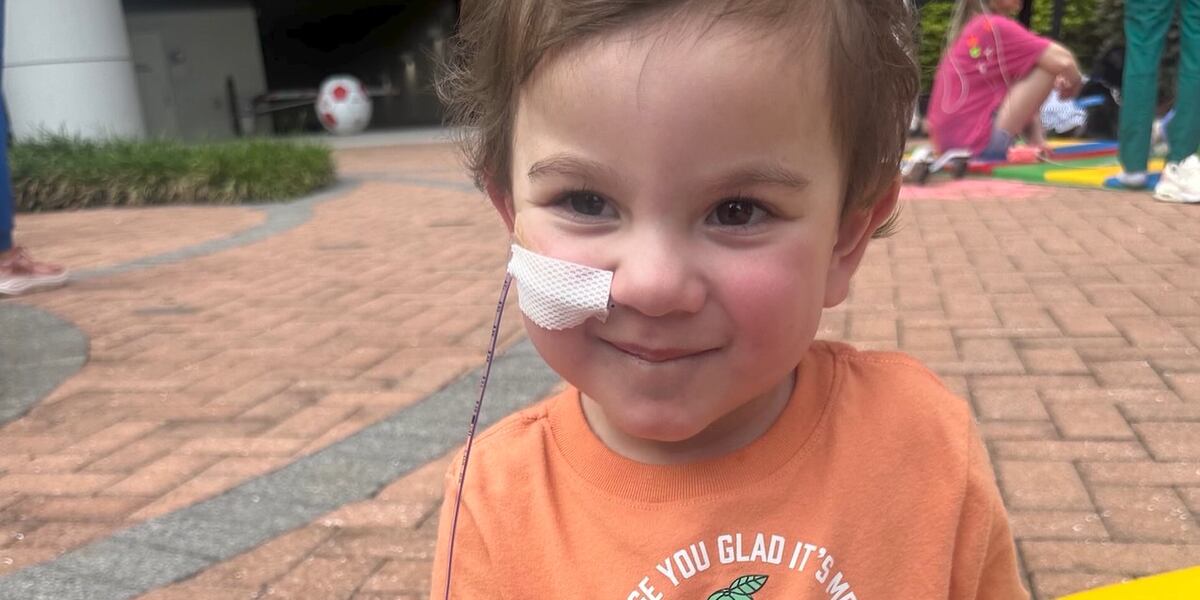
Alexander Petrilli, a 2-year-old from Florida, is fighting for his life at Texas Children's Hospital in Houston, where he awaits one of the rarest surgeries in medicine: a combined heart and double-lung transplant. He has already survived open-heart surgery at 6 days old, a cardiac arrest, and countless hospital stays — and he is still smiling. Live 5 News reports his case has drawn national attention as a symbol of pediatric resilience and the brutal reality of organ transplant waiting lists.
Alexander was born with Transposition of the Great Arteries, a defect where the heart's two main arteries are reversed. His early surgeries left his lungs permanently damaged from high pressure, making a heart transplant alone impossible. Doctors say a new heart would fail instantly trying to push blood through his scarred lungs. He needs both organs at once — a procedure performed fewer than 5 or 6 times a year across the entire United States. KGNS reports he is currently kept alive by a heart pump called a Ventricular Assist Device while his family waits.
A Life Spent Fighting From the First Hours
Alexander's battle started before he left the delivery room. He was born on December 8, 2023, weighing 7 lbs 10 oz. Within five hours, doctors airlifted him to Nemours Children's Hospital in Orlando. He had emergency heart surgery just hours later to keep blood flowing. Then, at just 6 days old, he underwent open-heart arterial switch surgery. During chest closure, his lungs hemorrhaged severely. Surgeons had to leave his chest open and place him on a heart-lung bypass machine to keep him alive. KPLC TV reported the full sequence of his early surgeries.
The damage from that early crisis never fully healed. Over his first two years, Alexander suffered collapsed lungs, fluid leaking into his belly, and chronic heart failure. Any small cold or virus knocked him down harder than a healthy child. His mother, Kayla Petrilli, described it plainly: "He's been in and out of the hospital because he's had heart failure this whole time, so any cold or any little bug he gets takes him down more than just a normal kid."
4:45 AM Cardiac Arrest Triggers Emergency Move to Houston
In late December 2025, Alexander went into cardiac arrest at home at 4:45 in the morning. His father, Michael Petrilli, had to perform CPR on his toddler son while waiting for help. A medical jet from Texas Children's Hospital flew to Florida and brought Alexander — and his father — directly to Houston. Michael recalled the whiplash of that moment: "I'm in a duffle bag here and now 8 months later, we're here." Cleveland 19 covered the family's emergency relocation.
In Houston, doctors confirmed what earlier tests had suggested. Alexander's lung pressure was too high and too permanent for a heart transplant alone. His medical team officially listed him for a combined heart and double-lung transplant. Dr. Hari Tunuguntla, his transplant cardiologist at Texas Children's Hospital, said: "It really benefits patients like Alex to be able to come here and be treated with this type of experience. He is one of the brightest kids, always smiling, always waving to the entire staff." WBNG reported on Dr. Tunuguntla's comments.
Why a Combined Heart-Lung Transplant Is So Rare and So Hard to Get
Pediatric heart-lung transplants are vanishingly rare. In the early 1990s, about 56 were performed nationwide over a five-year stretch. Today, that number has fallen to fewer than 5 or 6 per year across the entire country. Better medicines have helped many children with lung pressure avoid surgery altogether. But for Alexander, medicine is not enough. His heart has structural damage on top of the lung disease, leaving transplant as the only path. Up to 17% of children on the pediatric heart transplant waitlist die before a donor organ arrives, according to Stanford Medicine research cited by WILX.
The surgery also depends entirely on another family's tragedy. Unlike a kidney or part of a liver, no living donor can give a child a heart. A size-matched pediatric donor must become available. The top 15% of high-volume transplant centers in the U.S. perform nearly half of all pediatric heart transplants, which is why families like the Petrillis have no choice but to leave home and move to cities like Houston. Valley News Live noted the geographic and emotional toll this places on families.
A Family Running on Alexander's Strength
The Petrillis left Florida with their other two young children and packed into Houston for the long wait. Michael Petrilli described how watching his son fight keeps his family going: "Seeing him overcome every punch, punch, punch, it just got us stronger, stronger, stronger — because we see him fighting, we're fighters, we're going to fight right next to him." Kayla Petrilli has organized public fundraising to help cover the mounting costs of long-term care and relocation. WFSB covered the family's public appeals.
Despite the machines keeping him alive, Alexander still laughs, waves at nurses, and lights up the unit, according to his care team. His parents say his spirit is what keeps them from breaking. The family is now hoping that public awareness will push more families to register as organ donors. Every combined heart-lung transplant that does happen carries real survival odds: roughly 67% of recipients are alive at one year, and high-volume centers like Texas Children's Hospital report rates as high as 90% at one year. WKYT reported on Alexander's ongoing care and family updates.
Sentiment
NeutralNEGATIVENEUTRALPOSITIVE
Publishers
28
Articles
27
Reach
28
A
AnonymousAuthor