Germany Challenges China Over Training
Germany Summons Chinese Ambassador Amid Reports of Russia Military Training
Anonymous
Key Points
1
The reported RBC-focused training in Beijing lasted three weeks and included Russian soldiers studying a model nuclear reactor, with the program described as an exercise in radiological, biological and chemical defense; it was allegedly authorized by an August 2025 internal decree signed by Russian Defense Minister Andrei Belousov.
2
The operation reportedly involved at least four senior Russian and Chinese officers, underscoring the high level of military cooperation and strategic signaling between Moscow and Beijing.
3
European Union foreign policy chief Kaja Kallas said Brussels had independently confirmed the training had taken place and was assessing its implications, highlighting a formal EU evaluation beyond initial media reporting.
4
China publicly framed its position as neutral in Russia’s war and stated it supports peace negotiations, while the Chinese embassy was unavailable for comment and has denied the allegations as unfounded.
5
The summons followed Spiegel’s reporting on the issue, with Germany’s foreign ministry confirming the meeting after Spiegel; Reuters had reported the broader claims two days earlier, indicating a rapid escalation in official diplomatic engagement.
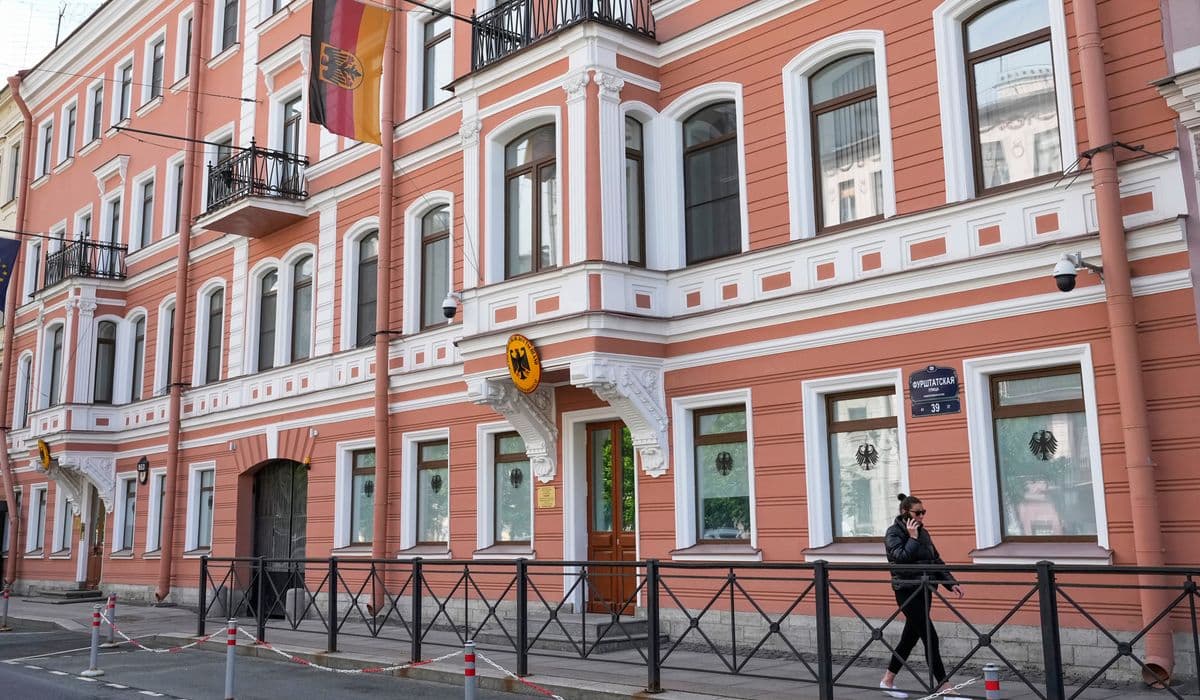
Germany summoned the Chinese ambassador in Berlin for urgent talks on July 3, 2026, after reports emerged that China secretly trained roughly 200 Russian soldiers in 2025. Spiegel broke the story, and Germany's Foreign Ministry confirmed the meeting shortly after, calling the alleged cooperation a direct threat to European security.
The training reportedly took place in Beijing over three weeks and included advanced drone operations and radiological, biological, and chemical defense exercises. According to Reuters, the program was authorized by an August 2025 internal decree signed by Russian Defense Minister Andrei Belousov — meaning approval came from the very top of Russia's military.
What the Secret Training Program Actually Involved
The three-week course in Beijing was no routine drill. Crypto Briefing reported that Russian soldiers studied a model nuclear reactor as part of the RBC — radiological, biological, and chemical — defense curriculum. That detail alone alarmed European officials, who saw it as a sign of deep and deliberate military cooperation.
At least four senior Russian and Chinese officers were directly involved, according to multiple reports. The program was approved by Defense Minister Belousov's decree, showing this was not a rogue operation. It was planned, signed off, and carried out at a high level of government.
Berlin Calls In the Ambassador, EU Backs the Alarm
Germany's Foreign Ministry did not mince words. Officials told the Chinese ambassador that Berlin "disapproves" of any Chinese role in training Russian forces, according to Yahoo News. The ministry called for full transparency and framed the alleged training as a threat to ongoing efforts to end the war in Ukraine.
The EU went a step further. Foreign policy chief Kaja Kallas said Brussels had independently confirmed that the training took place and was now assessing what it means for European security. That confirmation — separate from media reporting — signals that the bloc is treating this as a verified concern, not just an allegation.
China Denies the Claims, Calls Itself a Peace Broker
China pushed back hard. The Chinese government denied the allegations as unfounded and said it remains neutral in Russia's war against Ukraine. Beijing also stated it supports peace negotiations — a position it has held publicly throughout the conflict. The Chinese embassy in Berlin was unavailable for comment, according to Hiru News.
The denial has done little to ease tensions. European officials note that China's public stance on neutrality is increasingly hard to square with reports of direct military assistance to Russia. Berlin's decision to summon the ambassador — a serious diplomatic step — shows how far trust has eroded.
A Fast-Moving Diplomatic Escalation With Bigger Stakes
The timeline matters here. Reuters reported the broader allegations two days before Germany acted. Once Spiegel published its detailed account, Berlin moved quickly — summoning the ambassador within days. That speed shows how seriously European governments are taking China's potential role in sustaining Russia's war machine.
The episode fits a larger pattern. Western governments have long warned that China was walking a fine line — avoiding direct weapons transfers while offering other forms of support to Moscow. If the training reports hold up, that line may have already been crossed.
Sentiment
Mostly NegativeNEGATIVENEUTRALPOSITIVE
Publishers
12
Articles
58
Reach
70
A
AnonymousAuthor