Multi-Billion Aircraft Procurement
Korean Air finalizes a massive $44.8 billion Boeing and GE procurement deal.
Anonymous
Key Points
1
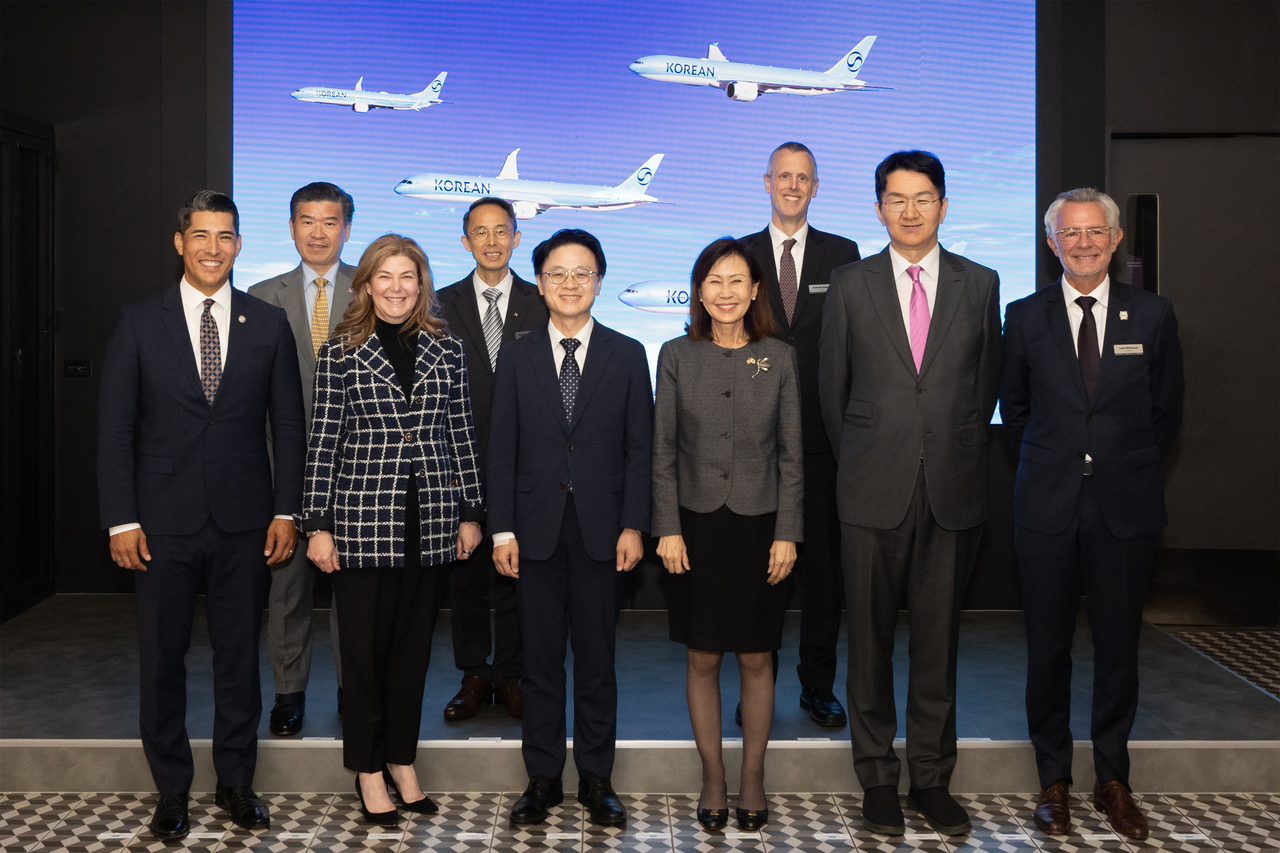
Korean Air and Boeing held the final signing ceremony on Sept. 15 at Seoul’s Conrad Seoul hotel, attended by Boeing Commercial Airplanes CEO Stephanie Pope, CFM International CEO Gaël Méheust, GE Aerospace Korea President Youngje Kim and senior U.S. and South Korean officials.
2
Korean Air Chairman Walter Cho said the transaction was “much more than a business deal,” describing it as evidence of “the trust and the unbreakable alliance” between South Korea and the United States; he added that the investment would support fleet reliability and efficiency.
3
South Korea’s Export-Import Bank agreed to provide 700 billion won in support for the fleet expansion—300 billion won in export financing and 400 billion won for supply-chain stabilization—and Korean Air later raised additional funding through 20 billion yen in Samurai bonds backed by the bank’s guarantee.
4
The aircraft are described as next-generation, fuel-efficient models, and the mix of widebody, single-aisle and freighter aircraft is intended to expand both passenger and cargo capabilities as global air-travel demand recovers.
Korean Air finalized a $44.8 billion deal on September 15 to buy 103 Boeing aircraft and engines, locking in one of aviation's largest-ever orders. The Seoul signing ceremony brought together Boeing CEO Stephanie Pope, GE Aerospace leaders, and top U.S. and South Korean officials—a rare show of bilateral industrial muscle. The aircraft will arrive through the late 2030s as Korean Air prepares to merge with rival Asiana Airlines and modernize its aging fleet.
The $36.2 billion aircraft order includes 20 Boeing 777-9 widebodies, 25 787-10 Dreamliners, 50 737-10 single-aisle jets, and 8 777-8 freighters. A separate $8.6 billion package covers 21 spare engines and 15 years of maintenance from GE Aerospace and CFM International. Korea Herald reported that this is Korean Air's largest-ever aviation deal, backed by South Korea's Export-Import Bank with 700 billion won in financing support.
A Strategic Bet on Fleet Modernization
Korean Air Chairman Walter Cho called the agreement "much more than a business deal," framing it as proof of "the trust and the unbreakable alliance" between South Korea and the United States. The new aircraft are fuel-efficient, next-generation models designed to cut fuel costs and emissions. By locking in delivery slots through the late 2030s, Korean Air hedges against manufacturing delays that have plagued Boeing and other aerospace makers since the pandemic, according to Simple Flying.
The deal directly supports Korean Air's December 2026 merger with Asiana Airlines, creating a mega-carrier with the scale and fleet flexibility to absorb Asiana's route network. The mix of widebodies, narrowbodies, and freighters expands both passenger and cargo capacity as global air travel recovers. Korean Air aims to achieve fleet reliability and operational efficiency while maintaining its competitive edge in Asia-Pacific aviation.
Seoul and Washington Double Down on Industrial Ties
South Korean and U.S. officials used the signing ceremony to showcase bilateral economic cooperation. Korea Herald noted that government representatives, including South Korea's Trade Minister Kim Jung-kwan and U.S. Ambassador Michelle Steel, attended the Seoul event. The Export-Import Bank of Korea committed 700 billion won—split between 300 billion won in export financing and 400 billion won for supply-chain stabilization. Korean Air later raised 20 billion yen through Samurai bonds guaranteed by the bank.
The deal reinforces U.S.-South Korea security and economic ties at a critical moment. Boeing secures a massive production backlog through the late 2030s, while GE Aerospace gains 15 years of engine servicing work. Trade experts see the agreement as proof that Washington and Seoul remain committed partners in aerospace manufacturing and global supply chain resilience.
The Numbers Behind Aviation's Biggest Order
The $44.8 billion package breaks down into two parts: $36.2 billion for the 103 aircraft, and $8.6 billion for engines and maintenance. The aircraft lineup balances growth across all segments—20 widebody 777-9s handle long-haul routes, 25 787-10 Dreamliners serve premium international flights, 50 737-10s cover short-haul networks, and 8 777-8 freighters expand cargo capacity. Freedom 96.9 reported that the narrowbody 737-10 order alone represents half the total aircraft purchase.
GE Aerospace and CFM International will supply 21 spare engines and provide comprehensive maintenance for 28 aircraft over 15 years. This long-term service guarantee protects Korean Air's operational uptime during the critical Asiana merger phase and ensures consistent reliability as the merged carrier ramps up its route network. Deliveries begin in the late 2030s, giving Korean Air five years to integrate operations before new jets arrive.
Sentiment
Mostly PositiveNEGATIVENEUTRALPOSITIVE
Publishers
27
Articles
101
Reach
128
A
AnonymousAuthor