IEBC Tender Revision Ordered
Kenya Orders Electoral Board to Revise 2027 Election System Tender
Anonymous
Key Points
1
PPARB said its decision was issued on September 3, 2026, after it partly upheld Galadirel Investment Limited’s review request challenging IEBC Tender No. IEBC/OIT/01/2026–2027.
2
The board found the technical evaluation section contained drafting gaps and placeholders—such as entries including “[insert points]” and “[insert weight between 0 and 10%]”—which it said created uncertainty in how bids would be scored.
3
PPARB said the tender left ambiguity over foreign-bidder documentation and scoring, including uncertainty about what would qualify as an “equivalent” tax certificate for foreign suppliers.
4
The board also flagged uncertainty in the arbitration clause, noting multiple arbitration regimes were referenced as possible options (including UNCITRAL, ICC, the Stockholm Chamber of Commerce, and LCIA), without clear selection.
5
In a related development, IEBC previously admitted an error that would have required successful bidders to provide performance security of 20% of the contract value—despite a legal limit of 10%—and said it was preparing an addendum to correct it while insisting the procurement remained valid.
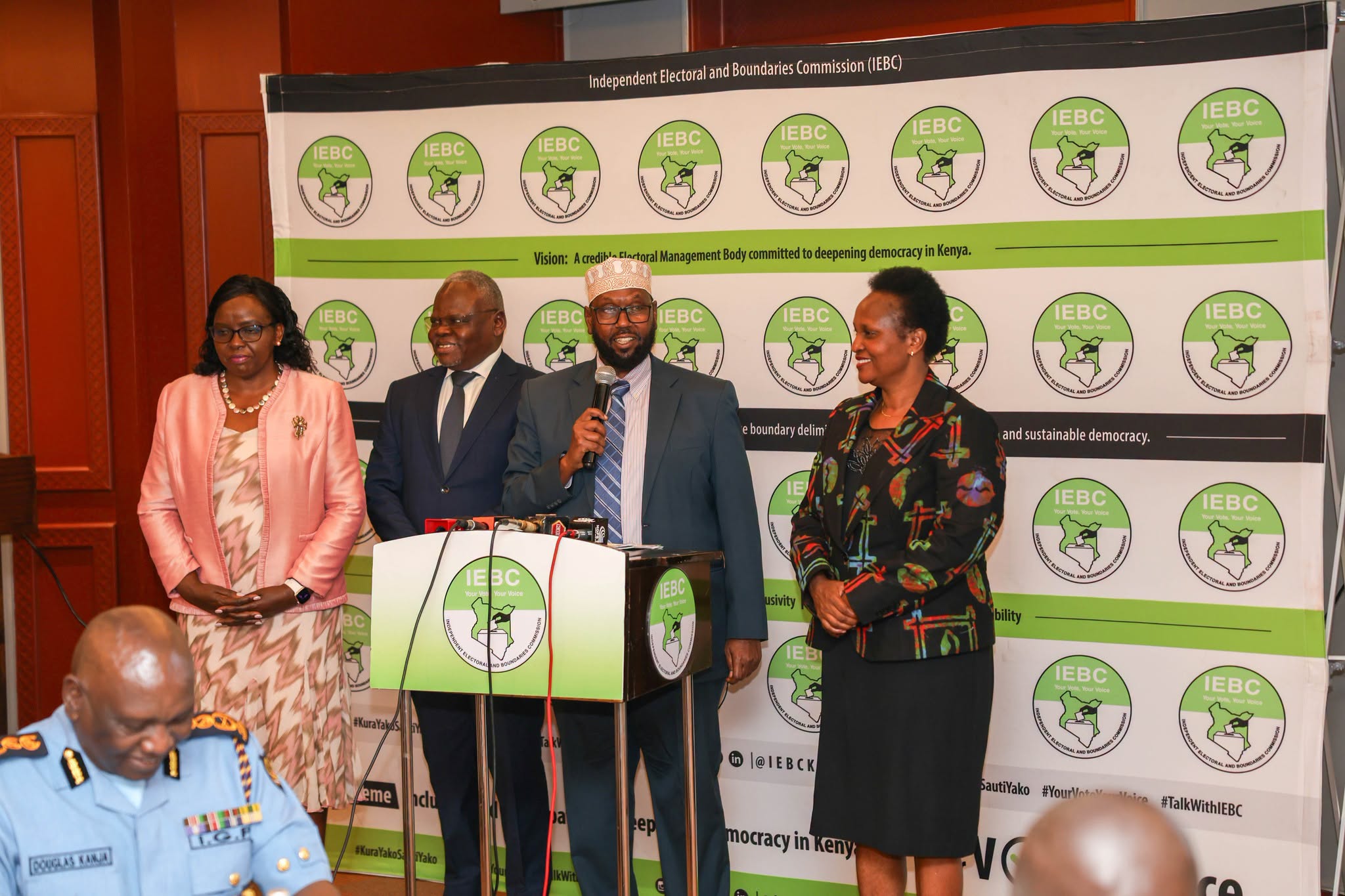
Kenya's election watchdog has been ordered to fix and reissue a multibillion-shilling tender for its 2027 election system. PPARB ruled on September 3 that the IEBC's tender contained unclear scoring instructions, ambiguous rules for foreign bidders, and incomplete technical requirements. The board said these gaps could undermine fairness and competition in the procurement.
The decision came after Galadirel Investment Limited challenged the original tender for the Integrated Elections Management System. Instead of canceling the bid, PPARB told IEBC to clarify the flawed document and give prospective bidders at least seven days to prepare new proposals.
Tender Had Blank Scoring Spots and Placeholder Text
The procurement board found dozens of drafting errors throughout the tender document. Technical evaluation sections included incomplete entries like "[insert points]" and "[insert weight between 0 and 10%]", PPARB said. These blanks meant bidders could not understand how their proposals would be scored or what qualifications mattered most.
Without clear scoring rules, PPARB warned that evaluation could become unfair or inconsistent. The board called this a fundamental failure of transparency in public procurement. IEBC must now fill in all missing details before reissuing the tender.
Foreign Bidders Faced Unclear Documentation Rules
The tender created confusion about what documents foreign companies must submit. It referenced "equivalent" tax certificates for overseas suppliers but never defined what "equivalent" meant. PPARB said this ambiguity could allow arbitrary rejection of legitimate foreign bids.
Unclear rules disadvantage international bidders and reduce competition for IEBC's Sh6.5 billion system contract. Foreign firms would not know which documents to provide or whether their credentials would be accepted.
Multiple Arbitration Options Left Bidders Guessing
The tender listed four different arbitration frameworks—UNCITRAL, ICC, the Stockholm Chamber of Commerce, and LCIA—without selecting which one would apply. PPARB noted this created uncertainty about dispute resolution. Contract winners would not know which rules governed their disputes with IEBC.
This vagueness could invite legal challenges later. PPARB ordered IEBC to pick one arbitration system and state it clearly in the revised tender.
IEBC Also Fixing Illegal Security Deposit Requirement
Separately, IEBC admitted it had included an illegal provision requiring winning bidders to post performance security equal to 20% of the contract value. Kenyan law caps this security deposit at 10%. IEBC said it would correct this error in an addendum.
The commission insists the procurement remains valid despite these errors. Bidders must now wait for the revised tender document and have at least one week to prepare their offers before submitting bids for the 2027 election system.
Sentiment
Mostly NegativeNEGATIVENEUTRALPOSITIVE
Publishers
18
Articles
2
Reach
20
Topics
A
AnonymousAuthor


