Europe's AI Hubs
EU opens bidding for seven AI gigafactories to boost compute power, reduce external reliance
Anonymous
Key Points
1
Public funding actually committed is far smaller than the headline €30 billion: only about €1 billion of Brussels' public share is locked in, with the rest contingent on the EU’s next long-term budget (the multiannual financial framework). Some reports also flag only a few billion euros currently available, with the remainder subject to budget approval.
2
The plan’s energy footprint is enormous: a gigafactory with 100,000 AI chips would demand around 70 megawatts of raw compute power and roughly 120–150 megawatts of total facility load when cooling and infrastructure are included.
3
There is strong bidder interest: reports describe about 77 proposals from stakeholders across 16 EU member states seeking to host or participate in the gigafactories, with notable activity around France and other large states; some host-country positions are signaling new directions (e.g., France considering going it alone).
4
The hardware backbone hinges on US chipmakers signing letters of intent to supply the necessary chips: Nvidia, AMD, and Qualcomm have formal LOIs in place to ensure access to required hardware for successful bidders.
The European Commission formally opened bidding on July 30 for up to seven AI "gigafactories" across the EU, framing the push as a €30 billion effort to build homegrown compute power and cut reliance on American and Chinese infrastructure, according to Cryptopolitan. Winning sites could host between 75,000 and 100,000 AI chips each — enough to train frontier AI models on European soil under EU data rules.
But the headline number comes with a major caveat. Of the €10 billion in public funding promised, only about €1 billion to €2 billion is actually locked in today, TechTimes reported. The rest depends on the EU's next long-term budget — a deal that hasn't been negotiated yet.
How the Seven Gigafactories Are Structured and Funded
The Commission split the program into two tiers, according to Table Media. Tier one covers up to four smaller sites, each requiring at least 75,000 AI chips and eligible for up to €500 million in public support. Tier two covers up to three flagship "gigafactories," each needing at least 100,000 chips and eligible for up to €1 billion each. Private partners must fund roughly twice what the public side contributes.
Total public funding is targeted at €10 billion — €5 billion from Brussels and €5 billion matched by member states — with private investors expected to add at least €20 billion more, according to Verdict. Eighteen EU member states signed the joint procurement agreement. Notable holdouts include the Netherlands, Belgium, and Austria. Bids are due November 12, with winners announced in early 2027 and construction expected to begin by late 2027.
€30 Billion Headline Masks a Much Smaller Committed Pot
A senior EU official admitted to reporters that Brussels "cannot pre-empt the decisions about the next MFF," describing the €30 billion figure as a "best estimate" rather than a guarantee, according to TechTimes. The Multiannual Financial Framework — the EU's multi-year budget — won't be negotiated until 2028. That means the bulk of promised public money doesn't exist yet on paper.
The scale gap with the U.S. is stark. American tech giants are on pace to spend over $600 billion on AI data centers in 2026 alone. The EU's entire €30 billion package — spread across years and seven sites — is roughly 20 times smaller than what a single U.S. firm like Microsoft or Google spends in one year.
American Chips Power Europe's Sovereignty Push
To guarantee hardware access, the Commission secured formal Letters of Intent from Nvidia, AMD, and Qualcomm, according to Tahawul Tech. These agreements give winning bidders priority access to high-performance AI accelerators. EU Executive Vice-President Henna Virkkunen said, "Access to the raw scale of computing power within AI Gigafactories is a strategic necessity for Europe as AI development accelerates."
Critics call this a sovereignty paradox. The EU wants local control over data and AI governance — but the physical chips all come from U.S. firms. True end-to-end independence remains out of reach as long as Europe cannot produce its own leading-edge semiconductors.
Energy Demands and National Rivalries Threaten the Plan
The power requirements are enormous. A single Tier 2 gigafactory running 100,000 chips needs around 70 megawatts just for raw compute. Add cooling and infrastructure and the total facility load hits 120 to 150 megawatts, according to Table Media. Securing that much continuous power — across seven sites — on a continent still managing a green energy transition is a serious bottleneck.
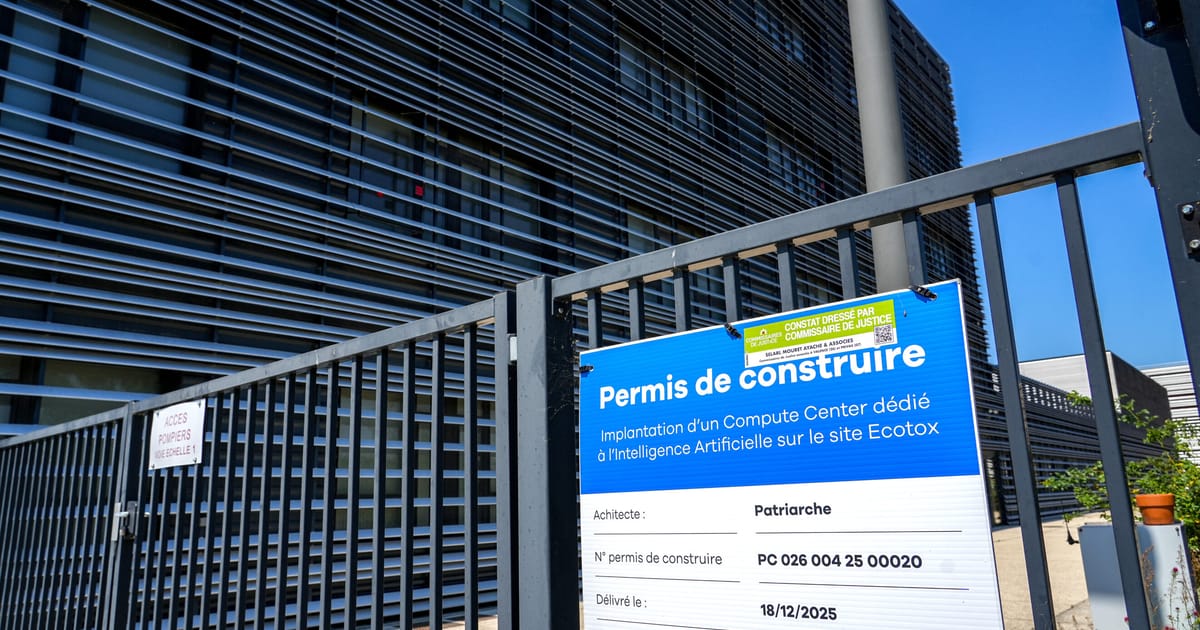
National politics are also pulling at the seams. A French consortium called AION — including Capgemini, Orange, and EDF — has proposed a €10 billion solo bid for a 1-gigawatt data center in France. French officials have signaled they may skip multi-country partnerships entirely and go it alone. Germany is pushing hard too, with Federal Research Minister Dorothee Bär declaring it "the German government's clear goal for Germany to become the location of an AI gigafactory."
Sentiment
Mostly PositiveNEGATIVENEUTRALPOSITIVE
Publishers
29
Articles
112
Reach
141
A
AnonymousAuthor


