Southern Communities Helped Replace New York Fire Trucks
Southern Communities Helped Replace New York Fire Trucks
Anonymous
Key Points
1
East Tennessee’s Freedom Engine was organized by Knoxville News Sentinel community and education services manager Diana Morgan, with support from WBIR, the city of Knoxville, First Tennessee Bank, Journal Broadcasting, the Knoxville Fire Department and Rural Metro Fire. The donated truck began serving New York on March 6, 2002.
2
Louisiana’s Spirit of Louisiana fire truck was completed in just 40 days, despite a normal production timeline of at least six months. Its convoy stopped in Washington, D.C., to visit President George W. Bush, and the vehicle became the first fire truck donated to the New York Fire Department by another state after the attacks.
3
Mercer Transportation moved more than 100 World Trade Center structural pieces in a two-day, police-escorted caravan involving 25 flatbed trucks. Schools closed and crowds gathered along highways to wave flags, while some drivers had to pull over because of the emotional weight of the journey.
4
The Tri-Cities’ post-9/11 Day’s Pay drive drew on a local precedent: 57 years earlier, about 44,300 Hanford workers had donated one day’s pay and raised $300,000 to build a B-17 bomber during World War II.
5
Louisiana’s response was accelerated by an unusually rapid manufacturing effort: after Ferrara Fire Apparatus owner Chris Ferrara proposed building a truck, the project was completed in 40 days rather than the usual six months, helping turn the campaign into a concrete early show of support for New York firefighters.
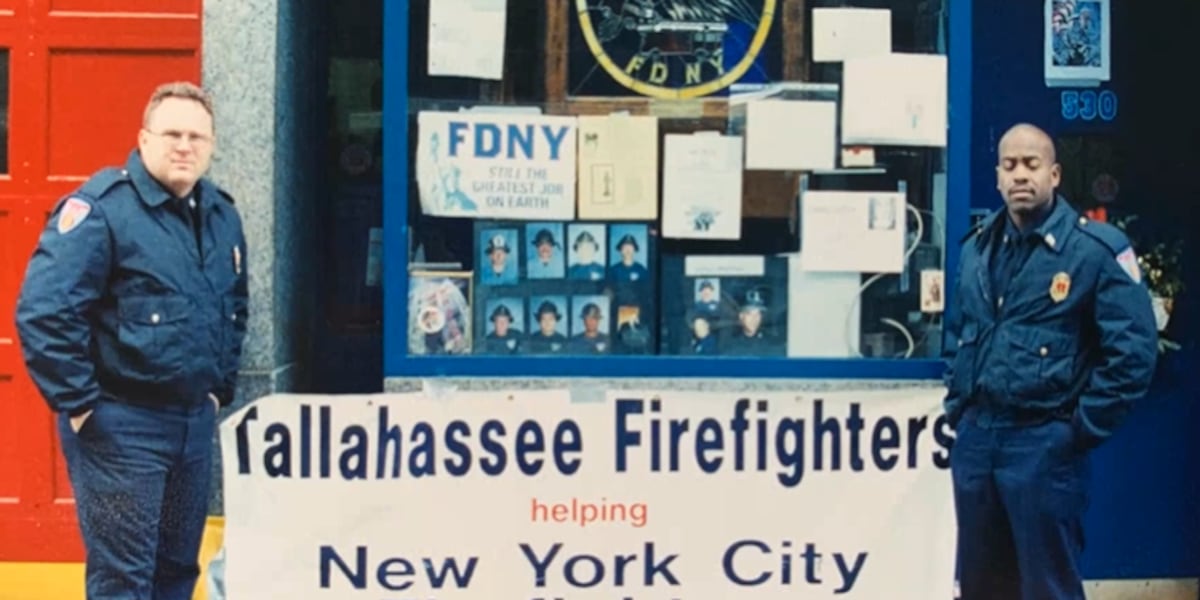
Twenty-five years after September 11, American communities are still remembered for turning grief into tangible help for New York's first responders. Tri-City Herald reported that residents across the country didn't just donate money—they built fire trucks, moved steel beams, and created lasting memorials that connected strangers through shared purpose and patriotism.
East Tennessee raised over $940,000 through its "Freedom Engine" campaign to provide New York with a new fire truck that rolled into service on March 6, 2002. Louisiana's "Bucks for Trucks" campaign built the "Spirit of Louisiana," completed in just 40 days instead of the usual six months. These gifts went far beyond charity—they became symbols of a nation standing together.
East Tennessee's Freedom Engine Reaches New York
Knoxville News Sentinel manager Diana Morgan organized a grassroots effort that united the entire city. WBIR, the city government, First Tennessee Bank, and the Knoxville Fire Department all pitched in to fund and build a new fire truck for New York. Local residents saw the truck as their direct connection to helping rescue workers thousands of miles away.
The donated truck arrived in New York on March 6, 2002, and immediately began saving lives alongside the city's own fire department. Artifacts from the campaign are now preserved in a Knoxville museum, keeping the community's generosity visible for future generations.
Louisiana Built a Truck in Record Time
When fire truck builder Chris Ferrara heard about New York's needs, he proposed an ambitious goal: complete an entire vehicle in 40 days. News Tribune documented how "Bucks for Trucks" raised nearly $1.2 million, turning the Ferrara Fire Apparatus plant into a symbol of speed and solidarity. The normal production timeline stretched at least six months, but Louisiana's determination compressed the work dramatically.
The "Spirit of Louisiana" fire truck rolled off the assembly line and began a journey to Washington, D.C., where it visited President George W. Bush. It became the first fire truck any state donated to the New York Fire Department after the attacks. Years later, New York returned the favor by sending resources to help Louisiana recover from Hurricane Katrina.
Moving Steel Across America With Honor
Louisville-based Mercer Transportation took on a different mission: transporting World Trade Center steel to New York as a memorial. Audacy reported that 25 flatbed trucks formed a police-escorted caravan, moving over 100 structural pieces across the country in two days. Schools closed along the route so students could wave flags. Some drivers had to pull over because the emotional weight of carrying such sacred cargo overwhelmed them.
Mercer Transportation kept one piece of World Trade Center steel for a memorial park in Louisville. That steel now honors those killed in the attacks, the survivors who escaped, and the communities that stepped forward with help when it mattered most.
Tri-Cities Revived Wartime Tradition of Unity
Tri-City Herald explained how Washington's Tri-Cities region dusted off an old fundraising campaign from World War II. Fifty-seven years earlier, about 44,300 Hanford workers had each donated one day's pay and raised $300,000 to build a B-17 bomber. In 2001, the community revived that same "Day's Pay" tradition to help New York firefighters.
The campaign worked because it gave ordinary people a clear way to act. Public displays of patriotism and shared fundraising created a sense of community purpose during a time when many felt helpless. The gifts proved that distant strangers could stand together through concrete action, not just thoughts and prayers.
Sentiment
Mostly PositiveNEGATIVENEUTRALPOSITIVE
Publishers
19
Articles
15
Reach
34
A
AnonymousAuthor


