AI Memory Reliability
AI Agent Memory Systems Face Reliability And Context Management Challenges
Anonymous
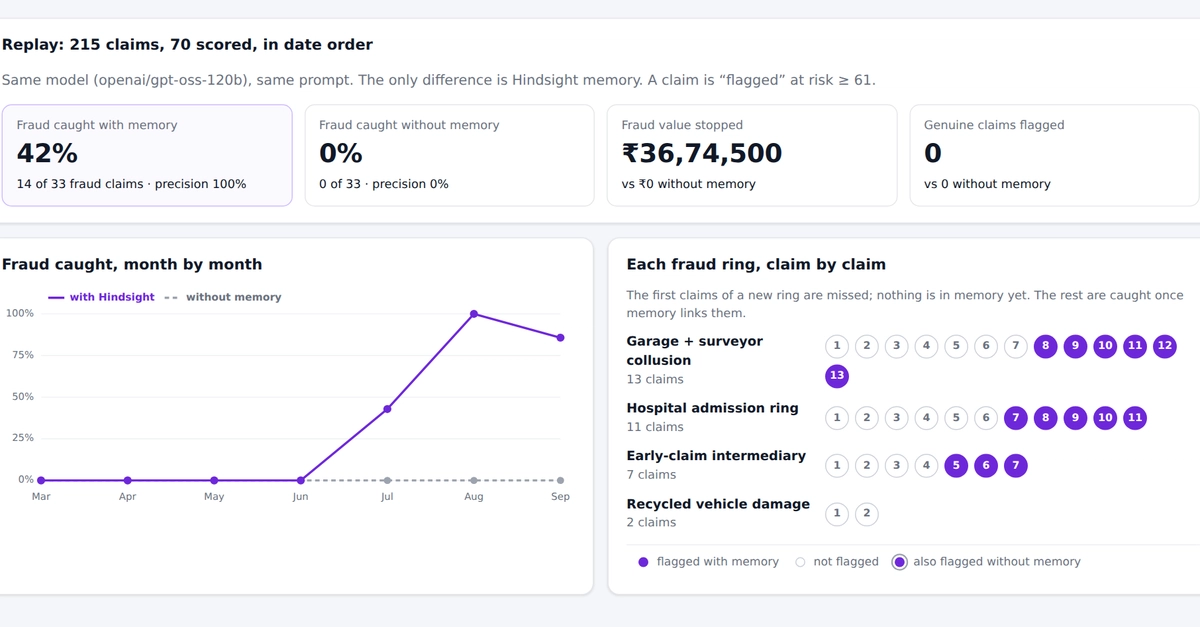
Projects and analyses examine persistent memory for AI agents across incident response, sales, customer support, insurance fraud triage, and payment recommendations, aiming to make assistance more tailored and reduce repetition. In a synthetic replay of insurance claims, memory helped detect 11 of 12 fraud cases while flagging no honest customers. However, agents may ignore recalled context, cite fabricated evidence, or fail to include relevant memories in their prompts; requiring citations to specific past outcomes has been shown to make recommendations better reflect customer history. Memory systems also must manage stale, superseded, duplicated, contradictory, or sensitive information, with research highlighting trade-offs in whether to merge or overwrite memories and how to retain them. Concise, action-linked notes can guide agents, but context limits may prevent those notes from reaching the model, and agents sharing memory can conflict when they read and write at different times. Reliable systems therefore need evidence-linked recommendations, safeguards against unsupported claims, careful memory updates, and human oversight for consequential actions.
Key Points
1
MemoryOps is designed for DevOps and SRE incident response: Hindsight stores learnings from resolved incidents, while a Groq-hosted LLM reasons over recalled incidents and current symptoms. The system does not execute actions autonomously; an engineer retains control.
2
The MemoryOps article clarifies that its example of a fabricated citation to incident INC-214 is hypothetical, not an actual model response; the repository’s seed incidents run from INC-101 to INC-116.
3
DealPilot’s sales scenario highlights a specific stakeholder constraint: an IT security lead may block an enterprise deal unless the seller provides ISO 27001 audit reports. Its pre-call briefs are intended to surface such constraints alongside deal risks and prior feedback.
4
The customer-support project associates persistent memories with individual customers and describes using Hindsight’s memory graph to visualize relationships among a customer’s past events and interactions.
Sentiment
Mostly NegativeNEGATIVENEUTRALPOSITIVE
Publishers
13
Articles
0
Reach
13
A
AnonymousAuthor


