At-home sleep apnea care
Daybreak introduces at-home sleep apnea testing and remote physician care solutions
Anonymous
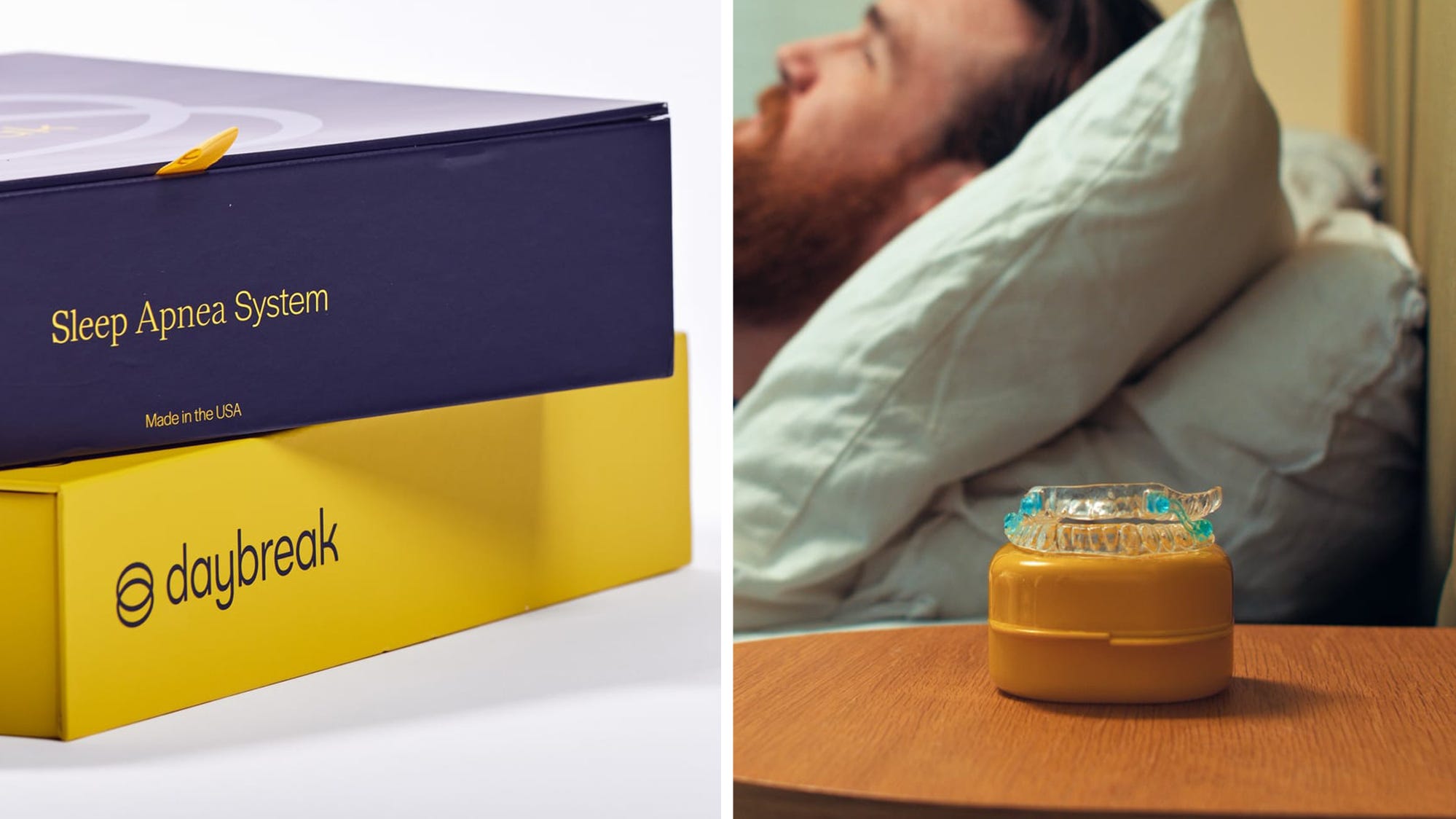
A new at-home sleep apnea test is changing how people get diagnosed and treated without leaving their home. USA Today reports that Daybreak, an FDA-cleared digital health company, lets patients test themselves overnight with a wireless finger monitor and get results reviewed by a doctor remotely. Those who need treatment can then use a custom wireless device worn while sleeping, skipping the traditional overnight sleep lab visit entirely.
The service costs $129.95 to $159.95 for the initial test, with custom oral appliances ranging from $500 to $1,100 depending on insurance. Cedars-Sinai researchers found that 83% of patients in a 185-patient study achieved successful treatment outcomes using Daybreak's virtual care model, with 88% of mild sleep apnea cases reducing their symptoms below the threshold for disease.
How Daybreak's At-Home Testing Works
Instead of spending a night in a sleep lab, patients receive a small wireless finger monitor shipped to their home. They wear it for several nights while sleeping normally. The device measures oxygen levels and breathing patterns throughout the night. A physician then reviews the data remotely and provides results. USA Today notes that if sleep apnea is confirmed, patients can move directly to treatment without scheduling office visits.
Qualifying patients receive a custom oral appliance — a mandibular advancement device that gently moves the lower jaw forward to keep airways open. Patients make dental impressions at home using simple putty and 3D scanning. State-licensed dentists and sleep physicians oversee the process remotely. Treatment typically takes a median of 42 days from test to fitted device.
Strong Clinical Results in Early Research
Cedars-Sinai Medical Center published a peer-reviewed study in the *American Journal of Clinical and Medical Research* evaluating 185 patients using Daybreak's fully virtual pathway. The researchers found that 83% met treatment success criteria. Among patients with mild sleep apnea, 88% reduced their breathing interruptions below the threshold that requires treatment, showing the approach works for real patients.
A separate 200-patient case study highlighted by SleepWorld Magazine in June 2026 demonstrated clinical viability of the telehealth-guided therapy. Daybreak reports a 90% treatment retention rate at 2.5 years and a 94% reduction in snoring. These numbers suggest patients stay with the treatment long-term, unlike traditional CPAP machines which have notoriously poor compliance.
Insurance Coverage and Cost Considerations
The at-home test costs $129.95 to $159.95, often discounted from the regular $159.95 price. Since Daybreak's oral appliance is an FDA-cleared Class II medical device, it qualifies for medical insurance coverage and HSA or FSA account eligibility. Out-of-pocket costs for the device itself typically range from $500 to $1,100, depending on your insurance plan and coverage level.
Questions About Diagnostic Accuracy
While Daybreak's results look promising, some concerns have surfaced. An FDA adverse event report from July 2026 flagged discrepancies between Daybreak's at-home test results and independent sleep studies. In one case, a patient's Daybreak follow-up test showed zero breathing interruptions, but an independent lab recorded 11.3 interruptions per hour. This raises questions about whether at-home testing catches all cases.
Some online patient communities also report that Daybreak sales representatives apply pressure to purchase treatment options during initial diagnostic calls, even when findings are borderline. The company's direct-to-consumer model eliminates traditional medical gatekeeping but shifts responsibility to patients to navigate upselling tactics. Independent verification of test accuracy remains limited compared to full overnight polysomnography in a controlled sleep laboratory.
Sentiment
NeutralNEGATIVENEUTRALPOSITIVE
Publishers
42
Articles
41
Reach
42
A
AnonymousAuthor


