Optimize Digital Experience
Info-Tech Research Group Warns Fragmented Web Strategies Expose Organizations, Offers Framework for Alignment
Anonymous
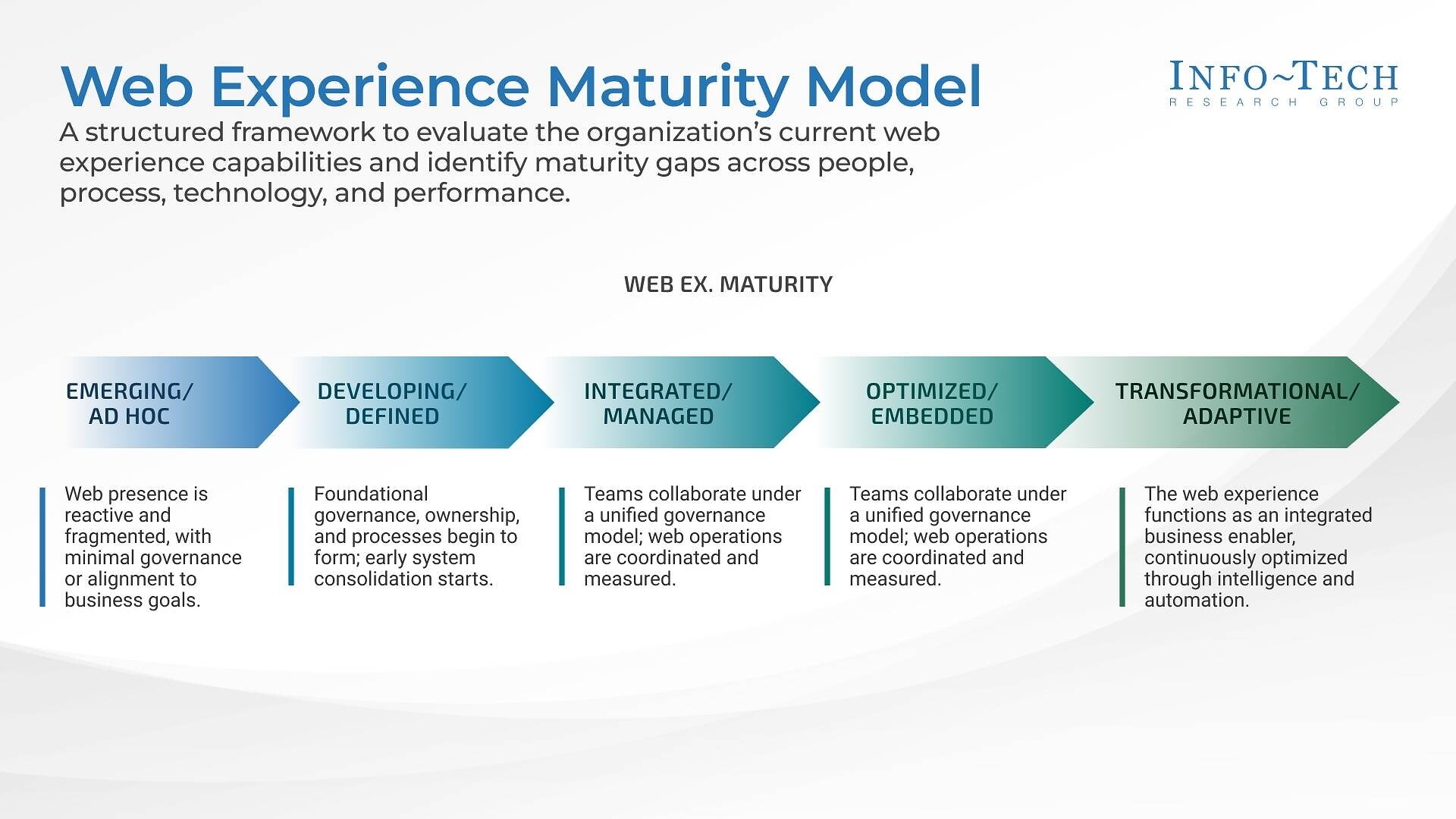
Info-Tech Research Group is sounding the alarm on fragmented web strategies, warning that most organizations are leaving themselves exposed as digital expectations climb. The firm found that without a structured web experience management (WEM) strategy, web projects routinely miss the mark — failing to serve both business goals and real user needs, according to National Post.
The firm's new blueprint, titled "Develop Your Web Experience Management Strategy," lays out a five-phase framework designed to help IT leaders close the gap between web execution and organizational priorities. The core problem, Info-Tech says, is that most teams treat web modernization as a tech upgrade rather than a coordinated experience strategy, reports Edmonton Sun.
Decentralized Content and Broken System Integrations Fuel the Crisis
Info-Tech's research points to two structural failures driving the problem. First, content operations are decentralized — meaning different teams manage web content with no unified approach. Second, integration between core platforms is inconsistent. Systems like CMS (content management), CRM (customer data), and analytics tools often don't talk to each other, according to Montreal Gazette.
These aren't small technical gaps. When systems don't connect, organizations lose visibility into what users actually do on their websites. That makes it nearly impossible to improve the experience in any meaningful way. Info-Tech warns this leaves organizations structurally unable to respond to rising digital expectations, reports Paris Star Online.
Five-Phase Framework Links Strategy, Experience, and Web Execution
Info-Tech's blueprint offers a five-phase approach to fix these gaps. The framework connects three layers: organizational strategy, customer experience priorities, and day-to-day web execution. The goal is to make sure web teams aren't just building pages — they're building toward clear business outcomes, according to Pembroke Observer.
The blueprint also includes practical tools for IT leaders to assess their current state and set priorities. Rather than starting with technology choices, the framework pushes teams to first define governance — who owns decisions, who controls content, and how success gets measured, reports Clinton News Record.
Investment Keeps Flowing but Structural Barriers Block Progress
Organizations aren't ignoring the web problem — many are actively spending on digital platforms and experience initiatives. But Info-Tech's findings show that investment alone isn't enough. Structural and operational barriers keep getting in the way, preventing that spending from translating into real improvements, according to Ontario Farmer.
The warning is clear: money without strategy produces fragmentation, not results. As user expectations keep rising, the cost of inaction grows. Info-Tech's blueprint is aimed squarely at helping IT leaders build the governance and alignment needed to turn web investment into a competitive advantage, reports Leader-Post.
Why Web Experience Management Is Now a Leadership Priority
Info-Tech frames WEM — web experience management — not as an IT concern but as a leadership one. The strategy must tie directly to what the organization is trying to accomplish, not just what the tech team wants to build. Without that connection, web projects drift and stall, according to Shoreline Beacon.
The firm's blueprint is designed to give IT and business leaders a shared language and a common plan. That alignment, Info-Tech argues, is what separates organizations that keep up with digital expectations from those that fall behind, reports County Market.
Sentiment
NeutralNEGATIVENEUTRALPOSITIVE
Publishers
13
Articles
13
Reach
13
A
AnonymousAuthor


