Intraprovincial Migration Key
CPABC Report: Thompson-Okanagan Population Growth Slows, Buoyed by Steady Intraprovincial Migration
Anonymous
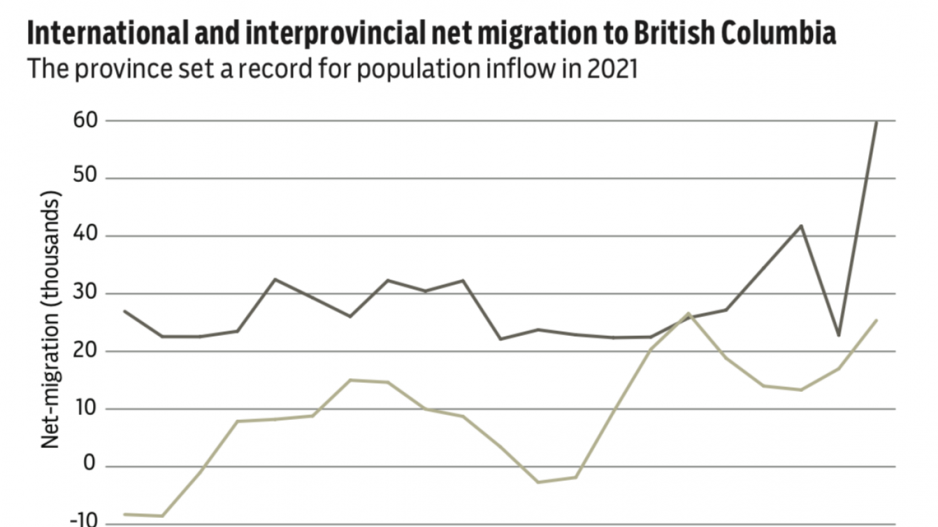
Population growth in British Columbia's Thompson-Okanagan region has slowed sharply, dropping to just 0.6% — matching the provincial trend, according to a new report from CPABC. The slowdown is being driven by a steep fall in international migration and weaker movement from other Canadian provinces.
The region still added 4,033 residents over the past 12 months, but the numbers tell a mixed story. International migration actually shrank the population — the region lost 1,752 people through that channel, a drop of 77.2% compared to the year before, CPABC reported.
Intraprovincial Migration Holds the Region Steady
While international and interprovincial migration both weakened, movement within B.C. kept the region afloat. The Thompson-Okanagan gained 4,327 residents from other parts of British Columbia. That steady flow of people moving within the province is what prevented a more serious population decline, according to CPABC.
Intraprovincial migration means people moving from one part of B.C. to another — not crossing national or provincial borders. This type of movement has proven more stable than international flows, which can drop quickly when immigration policy changes or global conditions shift.
Kelowna Grows While Kamloops Loses Residents
The region's two major cities moved in opposite directions. Kelowna, the largest city in the Thompson-Okanagan, gained 2,957 people between July 1, 2024, and July 1, 2025 — a growth rate of 1.2%. That makes it one of the stronger-performing cities in the province, CPABC noted.
Kamloops, by contrast, lost 259 people over the same period. The city saw outflows outpace new arrivals, reflecting broader pressures facing mid-sized cities across B.C. as affordability concerns and job market shifts influence where people choose to live.
Housing Markets Show Resilience Despite Fewer Sales
Home sales across B.C. have fallen through the first half of 2026. But housing markets in the Thompson and Shuswap/Revelstoke regions have held up better than expected, CPABC reported. Buyers and sellers in those areas appear more insulated from the provincial slowdown.
Fewer international newcomers typically means less pressure on housing demand. That could explain some of the resilience — supply and demand are rebalancing in smaller regional markets even as bigger urban centres feel more strain.
Why International Migration Fell So Sharply
The 77.2% year-over-year drop in net international migration is the most striking number in the report. It reflects a national trend: Canada has tightened immigration targets and reduced temporary resident admissions in recent months. Fewer newcomers are arriving, and more are leaving.
For the Thompson-Okanagan, that shift has real consequences. The region had relied on international arrivals to fuel population growth in recent years. Without that pipeline, local growth now depends almost entirely on British Columbians choosing to relocate within their own province, CPABC concluded.
Sentiment
NeutralNEGATIVENEUTRALPOSITIVE
Publishers
8
Articles
8
Reach
8
A
AnonymousAuthor