High-Grade Gold Discovery
GoldHaven reports high-grade gold assays up to 55.3 g/t at Magno property.
Anonymous
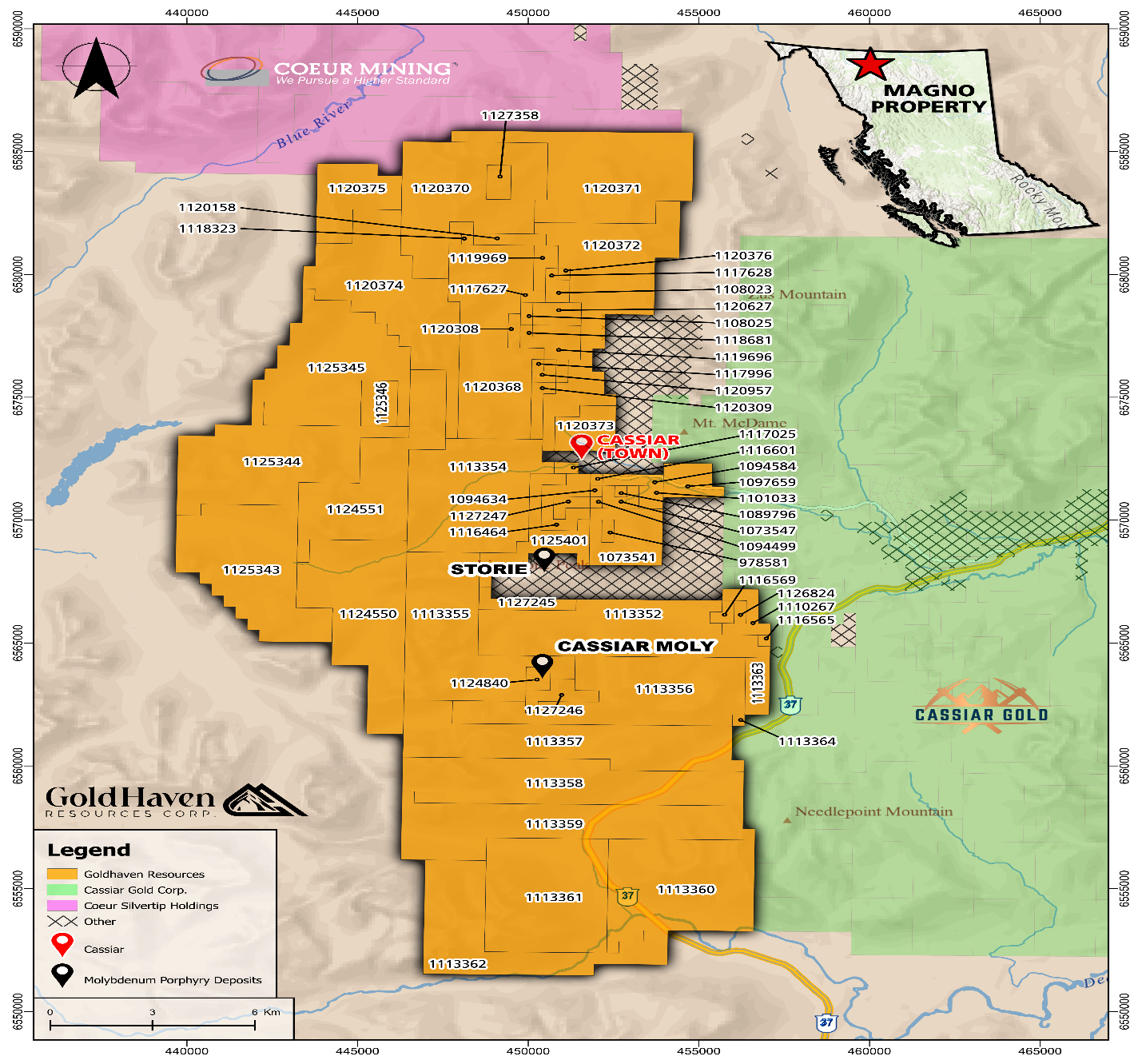
GoldHaven Resources Corp. has recorded gold grades of up to 55.3 grams per tonne (g/t Au) at its Magno Project in northern British Columbia, according to Montreal Gazette. The results come from 354 grab and chip samples collected during the company's 2025 surface exploration program at the 100%-owned property in the Cassiar District.
The high-grade gold hits confirm that gold occurs alongside silver, zinc, lead, copper, tungsten, and indium — all within the same structural framework, Ottawa Sun reported. GoldHaven trades on the CSE under the ticker GOH.
55.3 g/t Gold Anchors a District-Scale Discovery
The strongest gold results came from two key areas: the Magno and mineralized centres. Owen Sound Sun Times reported that the high-grade zones line up directly with major structural corridors. These corridors were mapped during a recently completed airborne magnetic survey covering 2,320.7 line-kilometres.
That survey is one of the largest of its kind run over the project. It gave GoldHaven a clearer picture of where gold-bearing faults and structures run beneath the surface. The company says the gold grades found so far are consistent with a large, district-scale mineralizing system.
Gold Shares Its Space With Six Other Critical Metals
One of the most striking findings is the metal mix. Gold does not sit alone — it occurs with silver, zinc, lead, copper, tungsten, and indium inside the same structural zones, Northern News reported. Indium is a rare metal used in electronics and solar panels, making its presence especially notable.
GoldHaven says this multi-metal signature supports its geological model. The company believes gold and the other metals share a common origin — a single, large mineralizing event that moved fluids through the same fault network across the district.
Airborne Magnetics Sharpen the Path to Drilling
The 2,320.7 line-kilometre airborne magnetic survey has become a key tool for GoldHaven. It identified the district-scale structural corridor that appears to control where high-grade gold shows up, according to Market Screener. The survey data ties directly to the surface rock sample results.
GoldHaven says it is now combining three data sets: geological mapping, surface geochemistry, and geophysics. The goal is to zero in on the best drill targets across the project. The company has not yet announced a drill program start date.
Cassiar District Provides a High-Profile Backdrop
The Magno Project sits in the Cassiar District of northern British Columbia — a region with a long history of gold and base metal mining. Montreal Gazette noted the area is considered prolific for mineral exploration. GoldHaven holds a 100% interest in the property.
The company says integrating all of its new data will strengthen its drill-targeting work ahead of future campaigns. With gold grades as high as 55.3 g/t confirmed at surface, investor attention on the project is likely to grow as GoldHaven moves toward the drill stage.
Sentiment
NeutralNEGATIVENEUTRALPOSITIVE
Publishers
8
Articles
8
Reach
8
A
AnonymousAuthor