17th-Century Polish Vampire Grave
Polish researchers investigate a 17th-century burial site featuring unusual restraints against the dead
Anonymous
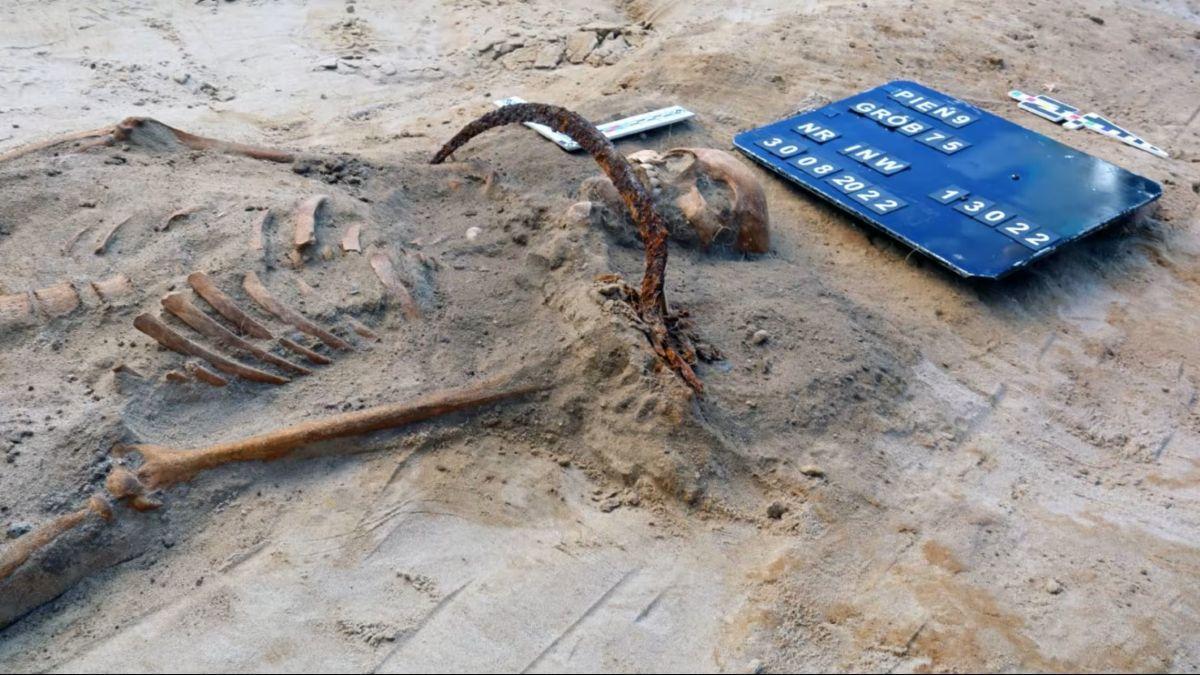
Archaeologists in Poland have uncovered a 17th-century grave containing the remains of a young woman fitted with a sickle across her throat and a padlock around her ankle — evidence of extreme precautions taken to prevent her from rising from the dead. Levante-EMV reports that a multidisciplinary team is investigating the burial, which reveals how deeply communities feared the supernatural in early modern Europe.
The metal objects were placed deliberately to restrain the body. Such burial practices reflect beliefs about curses, disease, and the return of the dead — fears that gripped entire regions during times of plague, famine, and social upheaval.
A Young Woman Bound for Eternity
The grave belongs to a teenage or young adult woman buried sometime in the 1600s. The sickle positioned at her throat served a dual purpose: to cut off her head symbolically and to physically separate her from any chance of resurrection. The padlock on her foot added another layer of control — binding her to the grave itself.
Such restraints are not unique but remain rare discoveries. They point to a specific individual who was deemed dangerous — perhaps she had died of an illness no one understood, or her death sparked panic in the community.
The Supernatural Fears That Gripped Early Modern Europe
In the 1600s, communities across Europe believed certain dead could return as vampires, witches, or revenants. Plague, tuberculosis, and other infectious diseases killed without warning. People had no germ theory to explain it — only supernatural explanations made sense to them.
When young, healthy people died mysteriously, or when entire families fell ill in sequence, suspicion fell on the recently deceased. Placing metal objects on or near a body was meant to anchor the dead to the grave and prevent their restless spirits from walking.
Why Poland Holds So Many Burial Secrets
Poland's archaeological record contains numerous examples of these protective burials. Researchers have found bodies pinned with nails, stones placed on chests, and graves oriented differently from standard Christian practice. Each discovery tells a story of community anxiety during unstable times.
The Polish team studying this grave is combining traditional archaeology with medical analysis and historical records. They aim to understand who this woman was, why she was seen as a threat, and what her community feared she might become.
What Modern Science Reveals About Ancient Terror
Bone analysis may show signs of disease or malnutrition. Isotope testing can reveal where she grew up and what she ate. DNA work might identify relatives buried nearby. These scientific tools answer questions the original grave-diggers never asked.
The sickle and padlock remain silent witnesses to a moment of collective panic frozen in time. They remind us that fear of the unknown — and the lengths people will go to protect themselves from it — is as old as death itself.
Sentiment
NeutralNEGATIVENEUTRALPOSITIVE
Publishers
15
Articles
0
Reach
15
A
AnonymousAuthor


