Monkeys Master AI
Wild Capuchin Monkeys in Costa Rica Learn to Use AI, Unlocking New Animal Intelligence Insights
Anonymous
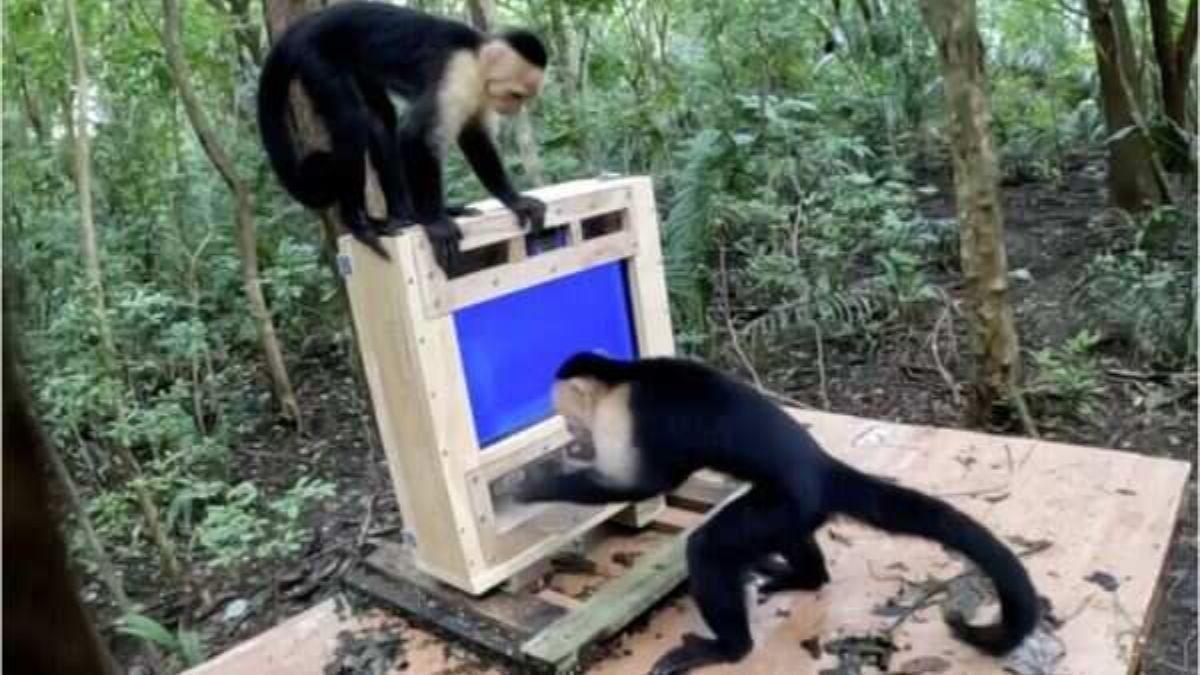
Wild capuchin monkeys in a Costa Rican jungle have learned to use an AI-powered touchscreen to earn food rewards — and they picked it up fast. La Opinión de Málaga reports that the experiment marks a major step forward in studying animal intelligence outside of lab settings.
The study shows that free-ranging monkeys, with no prior training, can interact with AI-controlled technology on their own terms. Scientists say this opens a new era for understanding how wild animals think and learn. El Periódico calls it a breakthrough for cognitive research in natural environments.
Wild Monkeys Touch Screens and Win Treats
Researchers set up an AI-driven touchscreen device in the jungle. No fences. No cages. The capuchin monkeys approached it voluntarily. When they touched the right part of the screen, they got food. The system used AI to track their choices and adjust in real time. Levante EMV notes the monkeys learned the task quickly — within just a few sessions.
Capuchins are already known as one of the smartest monkey species. They use tools in the wild and solve complex problems. But this experiment took things further. It showed they can also figure out how to interact with digital, AI-powered interfaces — something never tested on wild primates before. Diario de Mallorca described their learning speed as surprising even to the research team.
Costa Rica Jungle Becomes an Open-Air Lab
The choice of location was key. Costa Rica's forests are home to well-studied capuchin groups. Scientists already know these animals' social structures and individual personalities. That background made it easier to understand how each monkey responded to the AI screen. La Opinión de Murcia notes the site allowed researchers to study real behavior — not behavior shaped by captivity.
Running experiments in the wild is far harder than in a lab. Animals can walk away. They get distracted. Other group members interfere. Yet the capuchins stayed engaged with the screen long enough to learn the task. That alone, say researchers, is a significant result. El Periódico de Aragón reported the setup as a model for future field-based cognitive studies.
AI Lets Scientists Study Animals Without Disturbing Them
Traditional animal cognition tests require capturing animals or training them over months. This AI system changes that. It adapts to each animal's responses automatically. It runs tests without a human present. That removes a big source of stress and bias. Diario Córdoba explains that the AI records every touch, every hesitation, and every correct choice — building a detailed picture of each monkey's learning curve.
Researchers say the approach could work on many other species. Birds, big cats, even marine animals could be tested in their natural habitats. The data collected is richer and more honest than anything from a lab. El Correo Gallego notes scientists believe this method will reshape how we measure animal intelligence going forward.
What This Means for Understanding Animal Minds
The experiment raises big questions. If wild monkeys can learn to use AI tools, what else can they do? Scientists are now looking at whether the monkeys share what they learn with others in their group — a sign of social learning and culture. La Provincia reports that some younger monkeys appeared to watch older ones use the screen before trying it themselves.
The broader implication is clear: intelligence in the animal kingdom may be far more widespread than we thought. We just lacked the right tools to see it. AI-powered field devices could finally give us those tools. Información concluded that this study is not just about monkeys — it is about rethinking what minds other than our own are capable of.
Sentiment
NeutralNEGATIVENEUTRALPOSITIVE
Publishers
17
Articles
0
Reach
17
Topics
A
AnonymousAuthor


