U.S., South Korea, Japan Reaffirm North Korea Denuclearization
U.S., South Korea, Japan Reaffirm North Korea Denuclearization
Anonymous
Key Points
1
The United States reaffirmed its “ironclad” defense commitments to Japan and South Korea, including extended deterrence backed by U.S. nuclear capabilities.
2
The ministers called for the immediate resolution of issues involving North Korean abductees, detainees, unrepatriated prisoners of war and separated families.
3
The three governments supported Taiwan’s meaningful participation in appropriate international organizations, in addition to backing peace and stability in the Taiwan Strait.
4
The countries agreed to launch a new consultation mechanism on economic security to coordinate on critical technologies and supply-chain resilience.
5
The ministers reaffirmed a July trilateral memorandum aimed at accelerating the deployment of small modular nuclear reactors in other countries.
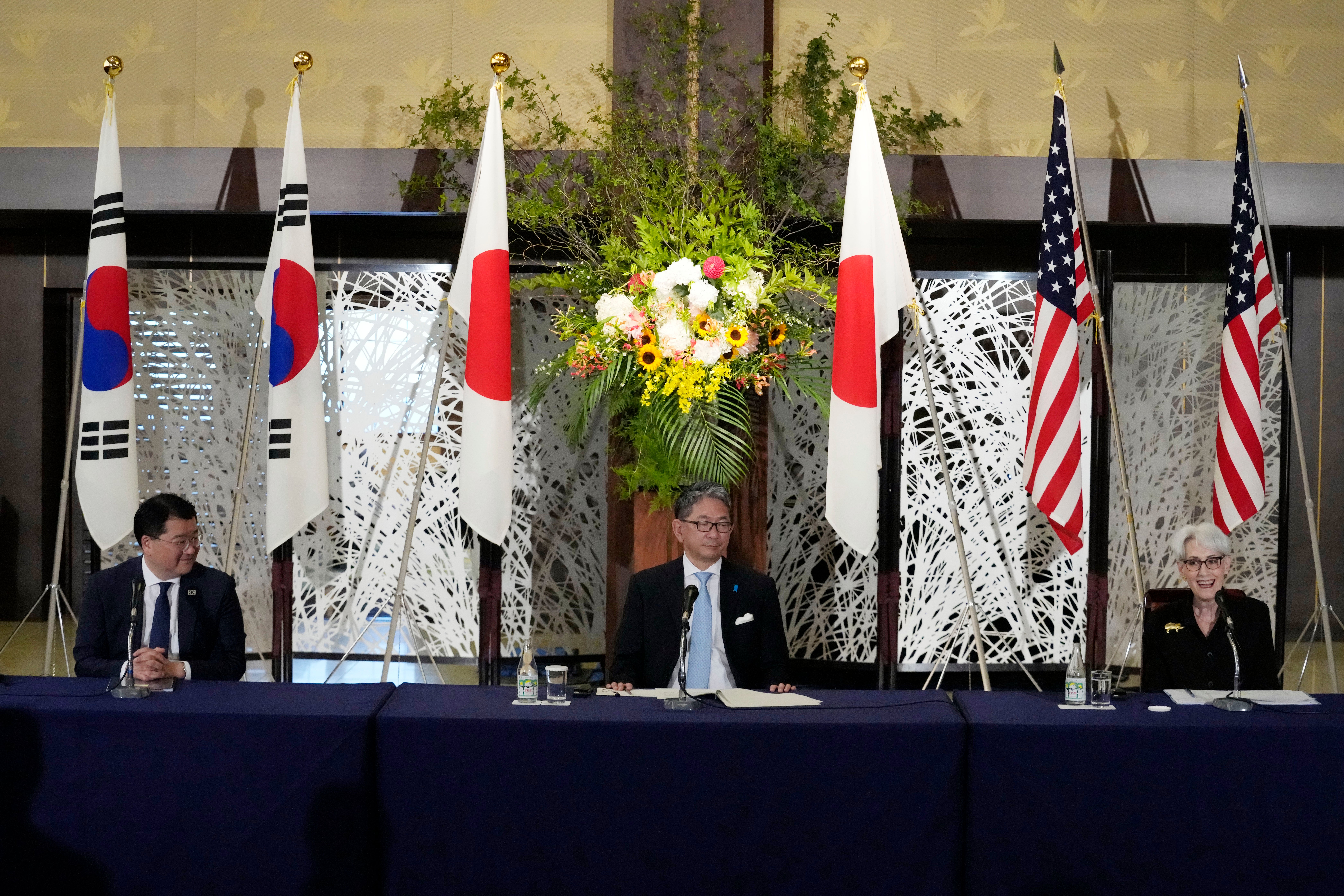
The United States, South Korea, and Japan pledged to work together on North Korea's nuclear weapons, Taiwan's security, and economic competition with China. Waco Tribune reported that the three nations' foreign ministers reaffirmed their "ironclad" commitment to each other's defense and called on Pyongyang to return to dialogue while enforcing U.N. sanctions.
The alliance also launched new cooperation on cyberattacks, cryptocurrency theft, and supply-chain security. The ministers emphasized that peace in the Taiwan Strait depends on opposing unilateral changes and protecting freedom of navigation—a message timed as President Trump prepares to meet Chinese leader Xi Jinping.
Confronting North Korea's Nuclear Threat
The three nations demanded that North Korea completely abandon its nuclear and missile programs. Rapid City Journal stated the ministers urged Pyongyang to return to negotiations instead of pursuing weapons development. They pledged to block the money North Korea uses to fund its programs through cyberattacks, cryptocurrency theft, and forced labor schemes.
The U.S. reaffirmed its "ironclad" nuclear protection for Japan and South Korea. The countries also called for immediate action on North Korean abductees, prisoners of war, and separated families waiting for reunification.
Protecting Taiwan While Balancing China Relations
The alliance backed Taiwan's participation in international organizations and promised to defend the Taiwan Strait's peace and stability. Chippewa reported the ministers opposed any unilateral changes to the status quo and affirmed freedom of navigation and overflight rights in the region.
These pledges come as Trump prepares his first meeting with Xi Jinping since returning to office. Regional governments are watching closely to see how the U.S. will balance its alliance commitments with potential trade and competition negotiations.
Building Economic Resilience Against Beijing
The three countries created a new economic security consultation mechanism to coordinate on critical technologies and supply chains. They agreed to deepen cooperation on energy security, semiconductors, and defense against economic coercion from larger powers.
The ministers also reaffirmed a July agreement to accelerate small modular nuclear reactors worldwide. This moves the alliance beyond military deterrence into competing with China on technology, infrastructure, and economic influence across Asia and the Pacific.
Sentiment
Mostly NegativeNEGATIVENEUTRALPOSITIVE
Publishers
16
Articles
69
Reach
85
A
AnonymousAuthor


