Florida Dengue Surge
Florida Dengue Fever Cases Nearly Double in One Week Amid State Advisories
Anonymous
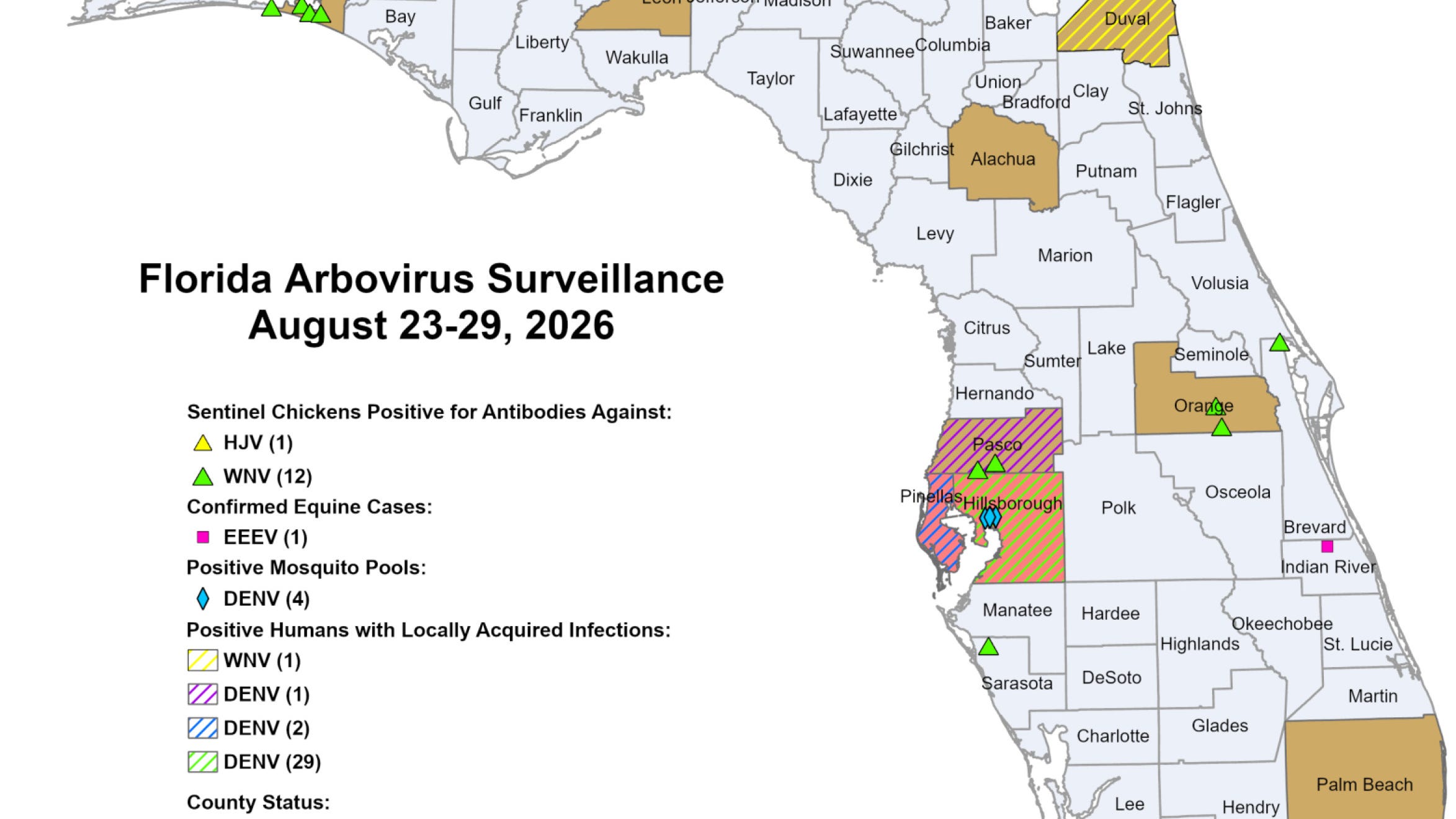
Dengue fever cases in Florida nearly doubled in a single week, with health officials reporting 32 new locally acquired infections. As of August 29, the state has recorded 73 total dengue cases, according to Florida Health Department. The rapid surge has prompted mosquito-borne illness alerts across ten counties and heightened concerns about disease transmission as summer conditions persist.
Dengue is a painful, debilitating illness spread by mosquitoes that rarely proves fatal. However, CDC warns that pregnant women infected with dengue can pass the virus to their fetuses, risking miscarriage, low birth weight, or premature birth. Florida is also tracking two West Nile virus cases amid broader mosquito surveillance efforts.
Ten Florida Counties Now Under Mosquito Alert
Ten counties across Florida are currently under active mosquito-borne illness advisories or alerts, according to Herald Tribune. Sarasota County received a specific mosquito alert after state officials identified local conditions that favor disease spread. The alerts signal residents to take precautions against mosquito bites in high-risk areas.
How Dengue Spreads and Why It Matters
Dengue spreads through bites from infected Aedes mosquitoes, the same species that carries Zika and chikungunya. The virus causes fever, severe joint pain, headaches, and rash. Most cases resolve within days, but some patients develop dengue hemorrhagic fever, a more serious form. There is no specific treatment—doctors manage symptoms and provide supportive care.
The rapid case surge in Florida reflects ideal breeding conditions for mosquitoes. Warm, humid summer weather and recent rainfall create abundant standing water where Aedes mosquitoes lay eggs. State health officials urge residents to eliminate standing water around homes and use insect repellent during outdoor activities.
Risks for Pregnant Women and Vulnerable Populations
Pregnant women face heightened danger from dengue infection. CDC emphasizes that dengue viremia during pregnancy can transmit the virus across the placenta to the developing fetus. Outcomes include fetal death, premature birth, and reduced birth weight. Pregnant residents in affected counties should take extra precautions against mosquito exposure.
Infants born to dengue-infected mothers are also at risk for severe dengue disease in their first weeks of life. The Florida Department of Health recommends pregnant women consult physicians about travel to areas with active dengue transmission. Anyone experiencing fever, severe headache, or joint pain should seek medical evaluation immediately.
Sentiment
NeutralNEGATIVENEUTRALPOSITIVE
Publishers
16
Articles
15
Reach
16
A
AnonymousAuthor


