Rising Global Food Prices
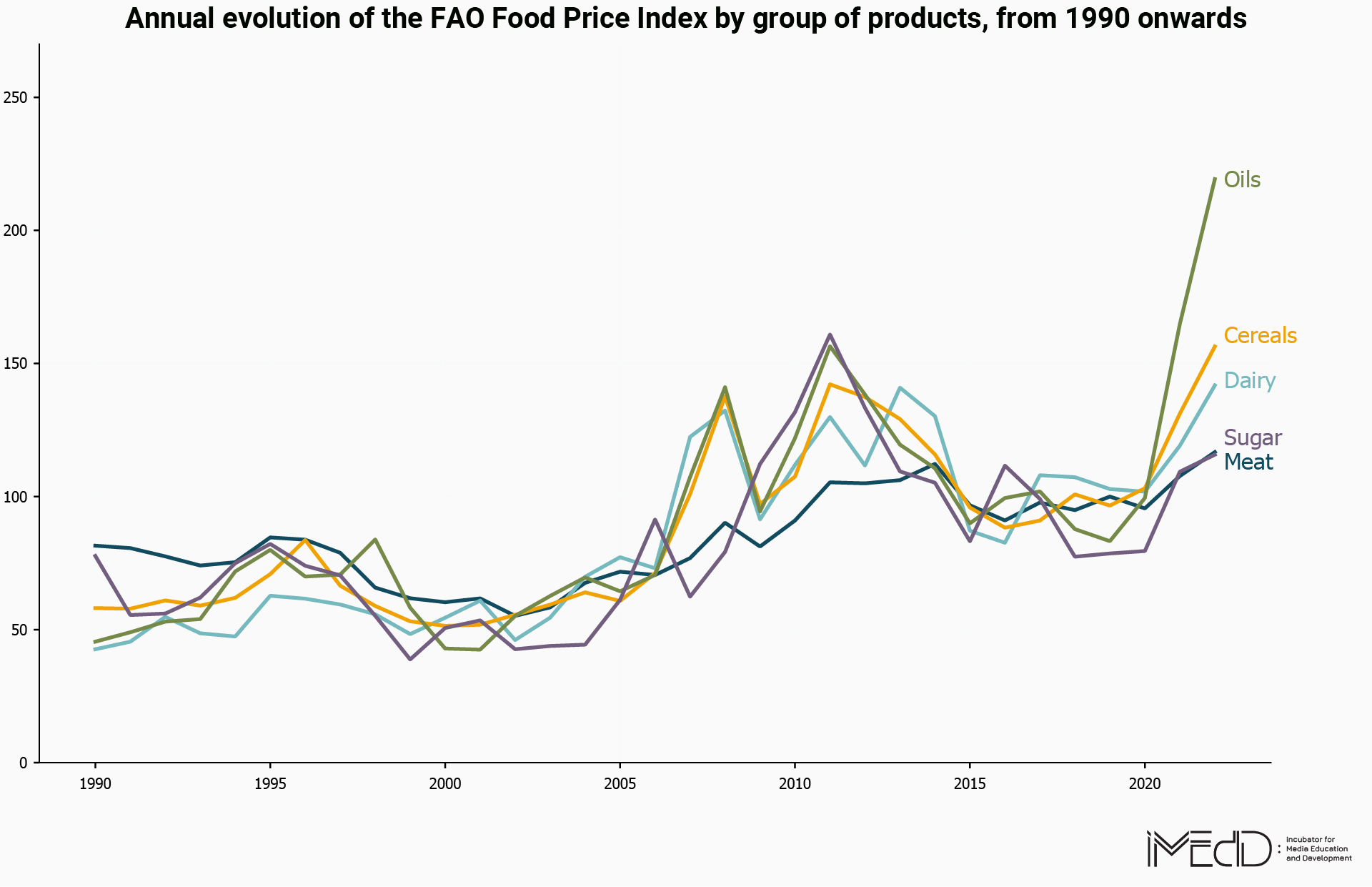
Global Food Prices Hit Highest Level Since 2022 Amid Supply and Climate Shocks
Anonymous
Key Points
1
The FAO Food Price Index averaged 133.3 points in August 2026, and all tracked commodity categories recorded higher prices overall.
2
FAO Chief Economist Maximo Torero said the increase showed that “the risk premium is returning to food markets,” as climate shocks, geopolitical tensions and disrupted logistics converged to tighten supply expectations.
3
Maize prices rose 2.5%, supported by concerns about input supplies after the closure of the Strait of Hormuz, which also disrupted a major source of fertilizer supplies.
4
The FAO said grains, sugar and dairy were the main categories leading the August increase in food-commodity prices.
Global food prices surged in August to their highest level since late 2022, driven by extreme weather, geopolitical conflict, and supply disruptions. FAO reported the Food Price Index jumped 1.9% from July and 2.5% from last year to 133.3 points, with sugar leading the charge after jumping 11.9%. FAO Chief Economist Maximo Torero warned that "the risk premium is returning to food markets" as climate shocks, wars, and logistics chaos converge to threaten future supplies.
All commodity categories tracked by the UN agency climbed higher in August, signaling broad-based price pressure across the global food system. The surge raises alarms about food security and affordability for millions worldwide, especially as weather threats and trade-route closures compound supply fears.
Sugar Prices Jump on Weather and India's Import Shift
Sugar led all commodities with an 11.9% price jump in August, driven by a perfect storm of supply shocks. Standard.net.au noted that adverse weather hit Europe, while El Niño risks threatened Asian production. Lower Brazilian output, traditionally the world's largest sugar producer, tightened global supplies. India then allowed duty-free raw-sugar imports, flooding markets with cheaper competing supply—a move that initially seemed counterintuitive but exposed underlying scarcity fears.
Wheat Prices Remain Elevated From Ukraine War Fallout
Wheat prices stayed substantially higher than a year earlier, Bilyonaryo reported, largely because of ongoing disruptions to Black Sea export routes tied to Russia's invasion of Ukraine. The conflict has persisted for over two years, creating chronic logistics bottlenecks that prevent major grain exporters from reaching global markets. Ukraine and Russia together normally supply about 30% of the world's wheat, making every month of disruption a direct hit to supply.
Maize Prices Rise as Fertilizer Fears Spike After Hormuz Closure
Maize prices climbed 2.5% in August, supported by concerns about fertilizer availability following the closure of the Strait of Hormuz. FAO data showed the disruption restricted a major source of fertilizer supplies needed for grain production. The Strait closure, linked to regional conflict, compounds existing input shortages and threatens next season's crop yields across multiple regions dependent on imported nutrients.
Dairy and Grains Round Out Price Surge
Grains and dairy were the other main categories driving August's food-price climb alongside sugar, ViewsBangladesh reported. Extreme heat and drought reduced crop prospects across multiple regions, while trade-route closures and fertilizer disruptions left farmers facing input scarcity. The convergence of climate stress, geopolitical tension, and logistics chaos has created a period of sustained agricultural pressure unseen since late 2022, when similar shocks last dominated global food markets.
Sentiment
Mostly PositiveNEGATIVENEUTRALPOSITIVE
Publishers
17
Articles
133
Reach
150
A
AnonymousAuthor


