US-Germany Defense Pact
US and Germany Sign Defense Industry Declaration to Deepen Cooperation and Boost NATO Readiness
Anonymous
Key Points
1
Hegseth said Germany is moving toward NATO’s 5% defense-and-security spending target agreed at last year’s Hague summit. The commitment is divided into 3.5% of GDP for core military needs and 1.5% for broader security investments, including infrastructure and industrial capacity, by 2035.
2
Hegseth cautioned that higher defense spending is only the first step, saying Germany’s progress on the NATO commitment must be matched by stronger military capabilities and industrial output.
3
Pistorius said the talks were friendly and relaxed, with no criticism of Germany’s actions or new demands from the U.S.
4
The expanded industrial cooperation is expected to make both countries’ defense industries more competitive globally, while potential German participation in the deal could generate additional revenue and support the German economy.
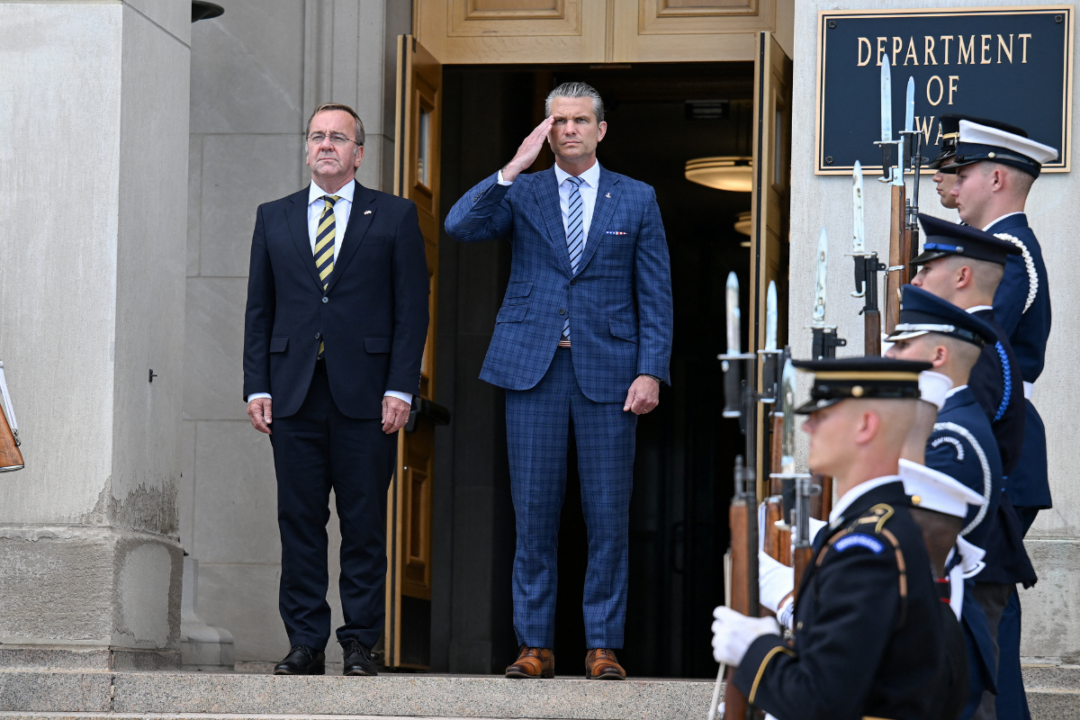
The United States and Germany signed a defense industry agreement to jointly develop, produce, and maintain weapons systems as both nations face depleted stockpiles and rising security threats in Europe. Defense News reported that the deal, signed by Defense Secretary Pete Hegseth and German Defense Minister Boris Pistorius, expands shared production of Patriot interceptors, strike missiles, and other weapons while strengthening supply chains and technology-transfer rules.
Hegseth connected the agreement to his "NATO 3.0" vision, which emphasizes increased defense production and a stronger European military role. The Epoch Times noted that the cooperation aims to make both countries' defense industries more competitive globally while supporting Germany's commitment to reach NATO's 5% defense-and-security spending target by 2035.
Germany Commits to Higher Defense Spending
Germany is moving toward NATO's 5% spending target through a two-part commitment. Defense Secretary Hegseth said the goal divides into 3.5% of GDP for core military needs and 1.5% for broader security investments like infrastructure and industrial capacity, with full implementation by 2035. Military Times reported that this represents a significant increase from Germany's current defense budget.
Hegseth cautioned that increased spending alone is not enough. Defense News emphasized that higher military budgets must be paired with stronger military capabilities and actual industrial output. Germany's progress on NATO commitments must translate into tangible defense production, he said.
Joint Production Expands European Weapons Output
The agreement creates a framework for Germany to become an additional production hub for American weapons systems. Defense News reported that Germany and the U.S. will expand shared production of Patriot interceptors and strike missiles. The deal also allows German workers to manufacture ammunition for American military equipment, boosting munitions supply across NATO.
Military Times stated that the expanded cooperation covers joint development, maintenance of weapons, research partnerships, and supply chain improvements. These partnerships are expected to generate revenue for Germany's economy while strengthening NATO's overall readiness and reducing dependency on single suppliers.
Germany Seeks Balanced Partnership, Not Dependency
German Defense Minister Pistorius emphasized that the talks were friendly and relaxed, with no U.S. criticism or new demands. He said Germany and the United States share the same security assessment for Europe. The Epoch Times noted that Pistorius stressed the cooperation should create a balanced partnership rather than make Germany overly dependent on Washington.
Details remain under negotiation, including a potential German purchase of Tomahawk cruise missiles. Defense News reported that the expanded industrial cooperation aims to strengthen both nations' global competitiveness in defense manufacturing while ensuring Europe has greater self-sufficiency in weapons production.
Sentiment
Mostly PositiveNEGATIVENEUTRALPOSITIVE
Publishers
15
Articles
95
Reach
110
A
AnonymousAuthor


