Stricter Environmental Penalties
Alberta plans million-dollar fines for corporate dumping alongside stricter waste facility rules.
Anonymous
Key Points
1
The province expects about 150 of Alberta’s 684 waste transfer and storage sites to face new registration requirements. The higher-risk category would include facilities handling larger waste volumes or storing waste for longer periods; lower-risk sites would remain under the existing notification process.
2
The enforcement figures illustrate how few penalties have followed some reported dumping: Calgary recorded about 30,000 complaints about dumping on municipal property last year but issued only three fines, according to figures presented by Premier Danielle Smith.
3
Edmonton recorded more than 600 complaints about dumping on private property over five years and issued 240 tickets, according to Smith.
4
Environment Minister Grant Hunter said facilities currently covered by the notification process do not have minimum design standards, preventative-control requirements or approval steps before waste is stored or transferred.
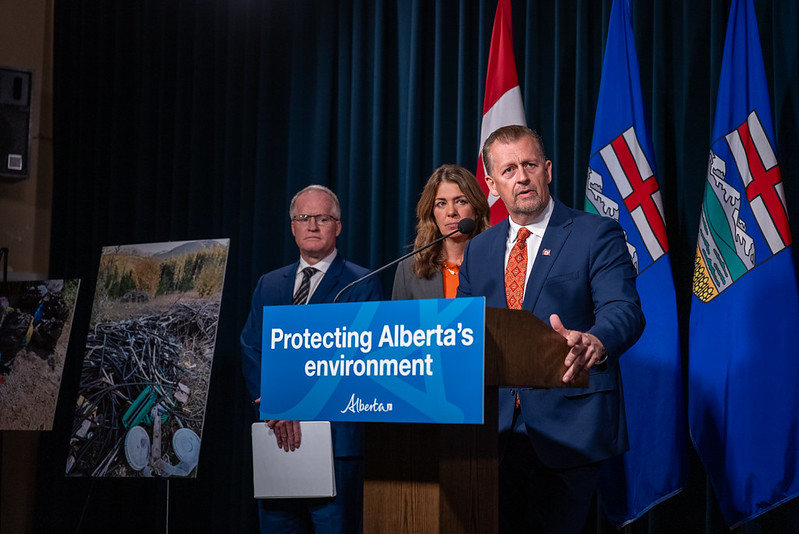
Alberta plans to crack down hard on illegal dumping this fall with new legislation that would hike corporate fines to as much as $1 million, according to Discover Airdrie. The proposed law would raise penalties for individuals from current levels to $10,000–$100,000, with possible jail time up to six months. The move targets a persistent problem: Calgary received nearly 30,000 dumping complaints last year but issued only three fines, Culture Alberta reported.
The legislation would also require about 150 of Alberta's 684 waste transfer and storage facilities to register and meet new design and safety standards. Premier Danielle Smith says the changes will make polluters pay for cleanup costs instead of leaving the burden on taxpayers and municipalities.
How Few Offenders Actually Face Penalties
The enforcement gap in Alberta's major cities reveals the scale of the dumping problem. Calgary logged approximately 30,000 complaints about dumping on municipal property in a single year but issued just three fines, according to figures presented by Premier Smith. Edmonton fared slightly better, issuing 240 tickets in response to over 600 complaints about dumping on private property over five years—roughly one ticket per three complaints.
Calgary crews also responded to nearly 3,300 illegal dumping calls in 2025 alone, Head Topics reported. The wide gap between complaints and enforcement suggests many dumpers face no consequences, creating little incentive to stop.
New Fines Double Current Maximum Penalties
Under current law, Alberta's dumping fines are far too low to deter offenders. The new legislation would double maximum penalties: individuals would face $10,000–$100,000 in fines instead of the current cap, while corporations could be hit with $100,000–$1 million, according to Chat News Today. The updated law would also allow judges to impose jail sentences of 30 days to six months for individual offenders in some cases.
These penalties are designed to make polluters responsible for cleanup costs rather than leaving those expenses to municipalities and taxpayers. The government believes stronger financial consequences will finally discourage illegal dumping across the province.
Registration Requirements for High-Risk Waste Facilities
The legislation would also tighten rules around where waste can be stored and transferred. Currently, most of Alberta's 684 waste transfer and storage sites operate under a simple notification process with no minimum design standards or safety controls. Environment Minister Grant Hunter said these facilities lack preventative-control requirements and approval steps before waste is stored or transferred.
The new law would require about 150 of these facilities—those handling larger volumes or storing waste for longer periods—to register and meet higher operating standards. Lower-risk sites would continue under the existing notification process, balancing stricter oversight with practical implementation across the province.
Sentiment
Mostly NegativeNEGATIVENEUTRALPOSITIVE
Publishers
16
Articles
17
Reach
33
A
AnonymousAuthor


