Autonomous Delivery Expansion
Drone Startup Airbound Raises $37 Million to Scale Autonomous Logistics and Delivery Networks
Anonymous
Key Points
1
Airbound’s total funding to date is nearing $50 million, combining the $37 million Series A with prior rounds.
2
Airbound has completed over 13,000 autonomous flights, including more than 1,000 flights with Narayana Health.
3
The current TRT drone weighs about 3.3 pounds and carries roughly 2.2 pounds of payload; the next-generation unit is expected to weigh around 3 kilograms and carry up to 5 kilograms (about 11 pounds).
4
Airbound’s founder and CEO, Naman Pushp, is 20 years old.
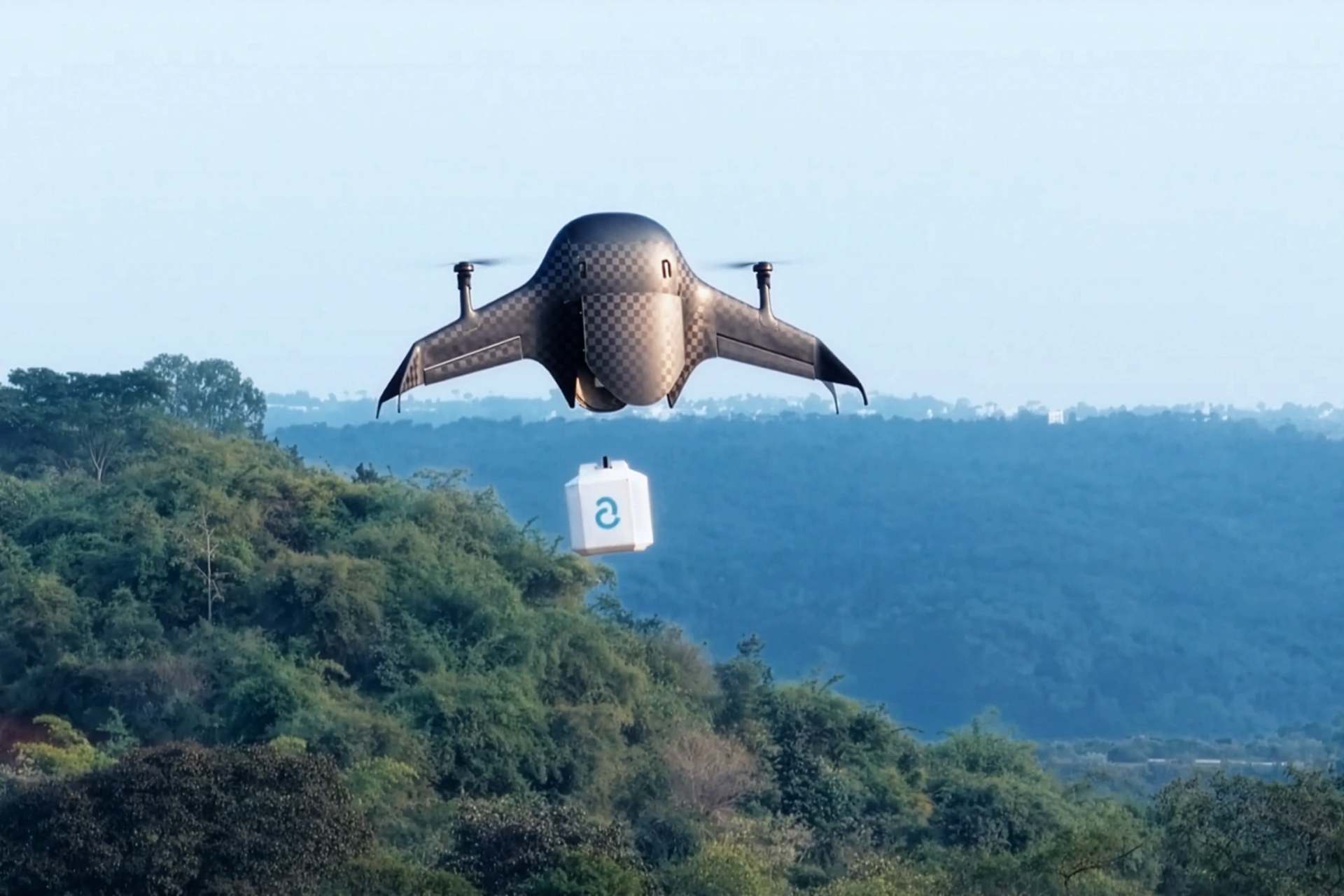
Airbound, a 20-year-old founder's Bengaluru startup, has raised $37 million in Series A funding to scale autonomous cargo drones that could eventually compete with trucks on price Technology.org. The round was led by Greenoaks with backing from DoorDash, investor Lachy Groom, Lightspeed, and Humba Ventures, bringing total funding to roughly $50 million RealHacker.news. Airbound designs lightweight drones using a tail-sitter design—they take off vertically like helicopters but fly efficiently like airplanes—and has already logged more than 13,000 autonomous flights Technology.org.
The company is shifting focus from medical logistics into quick commerce, e-commerce, and food delivery while developing larger aircraft for eventual passenger transport WhalesBook. CEO Naman Pushp's immediate goal is simple: make drone delivery cost as much per pound as trucking BusinessCircle.
Current Drones Already Carrying Real Cargo
Airbound's current TRT drone weighs just 3.3 pounds and carries approximately 2.2 pounds of payload Technology.org. Despite these lightweight specs, the startup has completed over 1,000 flights in partnership with Narayana Health, a major Indian hospital chain RealHacker.news. This proves the drones work in real conditions, not just test labs.
Next Generation Drones Aim for Heavier Payloads
The next-generation model represents a major jump in capacity. The new drone will weigh around 3 kilograms and carry up to 5 kilograms—roughly 11 pounds of cargo Technology.org. This payload increase matters because heavier loads mean fewer trips needed. The drones remain runway-independent, taking off vertically from anywhere BusinessCircle.
The Race to Match Trucking Economics
Airbound's core mission is ruthlessly focused: achieve "trucking cost parity," meaning the per-pound cost of air delivery equals ground trucking BusinessCircle. If they succeed, companies would choose drones for speed while paying roughly the same price. This requires extreme efficiency in design—their tail-sitter, blended-wing-body architecture is built specifically to cut costs Technology.org.
Regulatory Hurdles Still Block Widespread Deployment
Despite strong funding momentum, serious barriers remain before drones fill the skies. Airbound must clear strict autonomous flight certification requirements and navigate country-specific regulations WhalesBook. India's aviation regulator has not yet approved Beyond Visual Line of Sight (BVLOS) autonomous operations at scale. The 1,000+ flights with Narayana Health likely operate under special exemptions, not permanent regulatory approval BusinessCircle. Industry-wide scalability depends on governments approving autonomous air cargo networks—a process that typically takes years.
Sentiment
Mostly PositiveNEGATIVENEUTRALPOSITIVE
Publishers
20
Articles
19
Reach
39
A
AnonymousAuthor


