California EV Boost
California Launches $270 Million Program Offering $3,500 Instant Rebates for New EVs
Anonymous
Key Points
1
CARB expects to disclose which automakers will participate in California's rebate program soon.
2
Industry coverage describes the plan as 'instant rebates' rather than a traditional tax credit, potentially enabling immediate at-purchase discounts.
3
Newsom has publicly criticized President Trump for actions he says harmed the EV industry, tying the policy to a broader political battle over EV incentives.
4
Some coverage notes that the federal EV tax credit of up to $7,500 expired in September 2025, creating the backdrop for California's state rebates.
5
Tesla is repeatedly highlighted as a leading beneficiary and a benchmark for California's EV momentum in industry coverage.
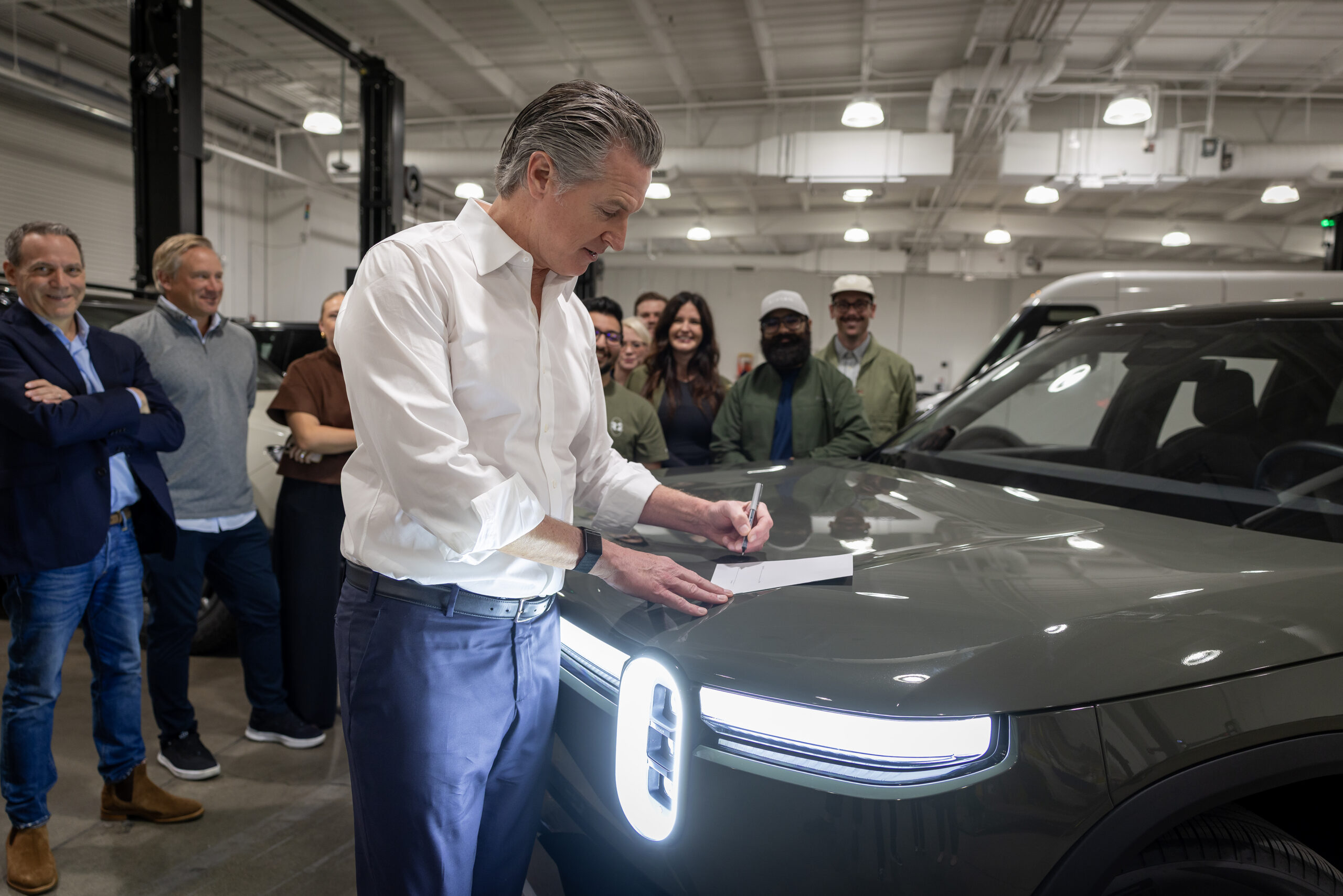
California Governor Gavin Newsom signed Senate Bill 168, launching a $270 million rebate program that gives first-time electric vehicle buyers an instant $3,500 discount at the dealership. The program, called "MyFirstEV," applies to new EVs priced at $50,000 or less — with one notable exception that is already stirring debate. Electrek reported that the bill passed just as the federal EV tax credit of up to $7,500 expired in September 2025.
The state is splitting the cost with automakers — putting up $135.5 million while manufacturers cover the rest, according to Electrek. A $1,750 rebate is also available for used EVs priced up to $25,000. California's Air Resources Board (CARB) says it will soon reveal which automakers are taking part.
The $50,000 Cap Has a Big Loophole
Most EVs over $50,000 are cut out of the rebate. But SB 168 carves out an exception: automakers headquartered in California can sell vehicles above that price and still qualify. That means Rivian and Lucid — both California-based — can take part even though their vehicles cost more than $50,000. Electrek described this as the bill "favoring Rivian and Lucid over Tesla."
Tesla, despite being the biggest EV brand in California, is largely locked out. Its cheapest models sit near or above the cap, and the company relocated its headquarters to Texas in 2021. Basenor put it plainly: the program "caps Tesla, not Rivian or Lucid." Rivian Trackr confirmed that Rivian is exempt from the price cap under the new law.
Instant Rebate, Not a Tax Credit — Here's the Difference
Unlike the old federal tax credit, which buyers had to claim later on their tax return, this rebate works at the point of sale. That means the $3,500 comes off the price right at the dealership — no waiting, no filing. Basenor described it as an "instant rebate" that puts money in buyers' hands immediately.
That design could make a real difference for buyers who can't front the full cost and wait months for a refund. The program targets California residents who are buying their first EV. CARB has not yet said when dealerships will begin applying the discount.
Newsom Takes Aim at Trump as Federal Credits Disappear
The timing is not an accident. The federal EV tax credit — worth up to $7,500 — expired in September 2025 after Congress eliminated it. Newsom has publicly blamed former President Trump, saying his actions hurt the EV industry. The new state program is California's direct answer to that federal rollback.
Electrek framed the bill as part of a broader political fight over who controls the future of EV policy in the US. California leads the country in EV adoption, and Newsom is positioning the state to keep that momentum going without federal help. The state has not said how long the $270 million fund will last before it runs out.
Who Actually Wins — and Who Gets Left Out
Gurufocus ran the headline "California's New EV Rebate Makes Tesla the Winner" — but Tesla North pushed back with "Why Tesla Gets Left Behind." The debate shows how the fine print matters. Tesla's Model 3 starts around $42,000, which could qualify, but its more popular and higher-trim models exceed the cap.
Rivian and Lucid, meanwhile, sell vehicles that can cost $70,000 or more — yet both qualify thanks to the California headquarters exemption. Buyers looking at truly affordable EVs from brands like Chevrolet or Hyundai may benefit most, once CARB confirms which automakers are in. That list is expected soon.
Sentiment
Mostly PositiveNEGATIVENEUTRALPOSITIVE
Publishers
15
Articles
108
Reach
123
A
AnonymousAuthor


