Conflict drives renewable transition paradox.
Iran war drives renewable energy push worldwide despite rising emissions and fossil fuel reliance
Anonymous
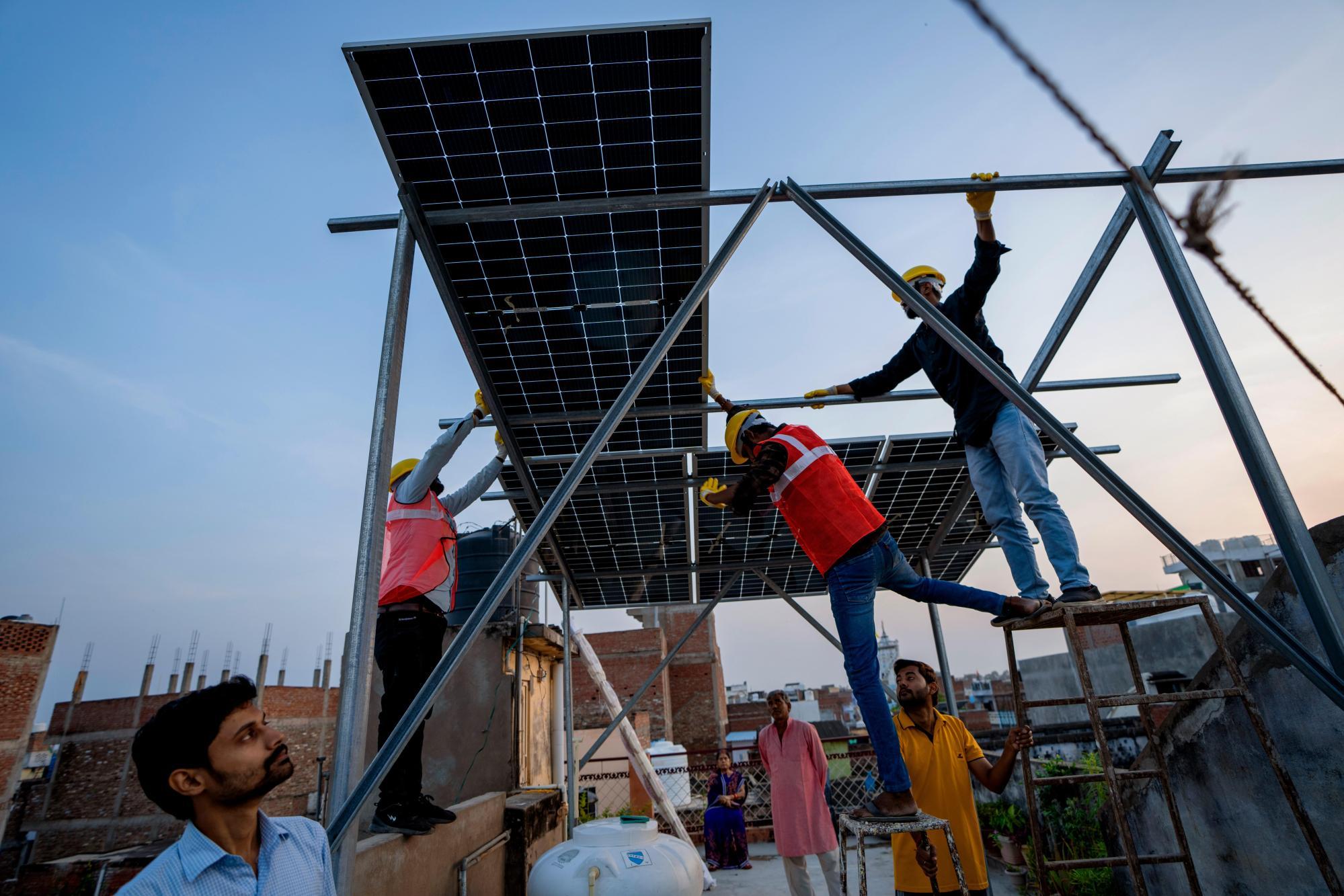
The war involving the United States, Israel and Iran has driven up oil and gas prices, prompting fuel-price protests and unrest in countries including Guatemala and Syria while forcing governments to weigh subsidies against inflation. The energy shock has also encouraged more than 30 governments to promote renewable power, improve energy efficiency or reduce fossil-fuel dependence. However, global greenhouse-gas emissions still rose slightly in the first half of 2026, and worldwide investment in new wind and solar capacity declined compared with the same period a year earlier, largely because of a drop in China. Renewable adoption is increasing in places such as the United Kingdom, Indonesia, Europe and India, but governments continue to expand or support fossil-fuel production to protect energy security and heavy industry. Experts say the conflict may accelerate the clean-energy transition over time, but the world remains too dependent on fossil fuels for current policies to meaningfully address climate change.
Key Points
1
Brent crude rose above $100 per barrel after the war, up from roughly $60–70 before the conflict began in February.
2
Fuel-price impacts included gasoline reaching a record €2.30 per liter in Germany and U.S. diesel prices rising 60% in a year to more than $6 per gallon.
3
In contrast to the global decline in wind and solar investment, solar investment increased in the United States, Europe and India, while wind investment in those regions either held steady or grew, according to Rhodium Group’s Hannah Pitt.
4
Pauline Heinrichs of King’s College London described governments as “doing a dance between acknowledging the importance of clean power while continuing to support fossil fuel expansion,” adding that “an old and a new world interact in contradiction with each other.”
5
Indonesia is replacing some diesel-fired power plants with solar, but it is also increasing coal use to serve heavy industry, illustrating the tension between energy-transition policies and industrial energy needs.
Sentiment
Mostly NegativeNEGATIVENEUTRALPOSITIVE
Publishers
9
Articles
104
Reach
113
A
AnonymousAuthor


