NATO Surveillance Fleet Expansion
Netherlands Plans GlobalEye Purchase to Expand NATO Surveillance Capabilities
Anonymous
Key Points
1
The planned purchase is part of an 11-country NATO effort to jointly procure up to 10 GlobalEye aircraft. The participating countries are Belgium, Canada, Denmark, Germany, Latvia, Lithuania, Luxembourg, Norway, Romania, Sweden and the Netherlands.
2
NATO had previously announced plans to acquire six Boeing E-7A Wedgetail aircraft, but in July selected GlobalEye instead as the basis for its future airborne early warning and control system. The United Kingdom is still separately acquiring three E-7s for its own NATO-related contribution.
3
NATO currently operates 14 Boeing E-3A aircraft from Geilenkirchen, Germany; the type has served the Alliance since the 1980s and is approaching retirement.
4
Saab CEO Micael Johansson said the system would provide “enhanced situational awareness and early warning capabilities across multiple domains” and help NATO operate in an increasingly complex security environment.
5
A GlobalEye aircraft is estimated to cost between SEK 4 billion and SEK 6 billion, although the Netherlands’ prospective procurement value has not been disclosed.
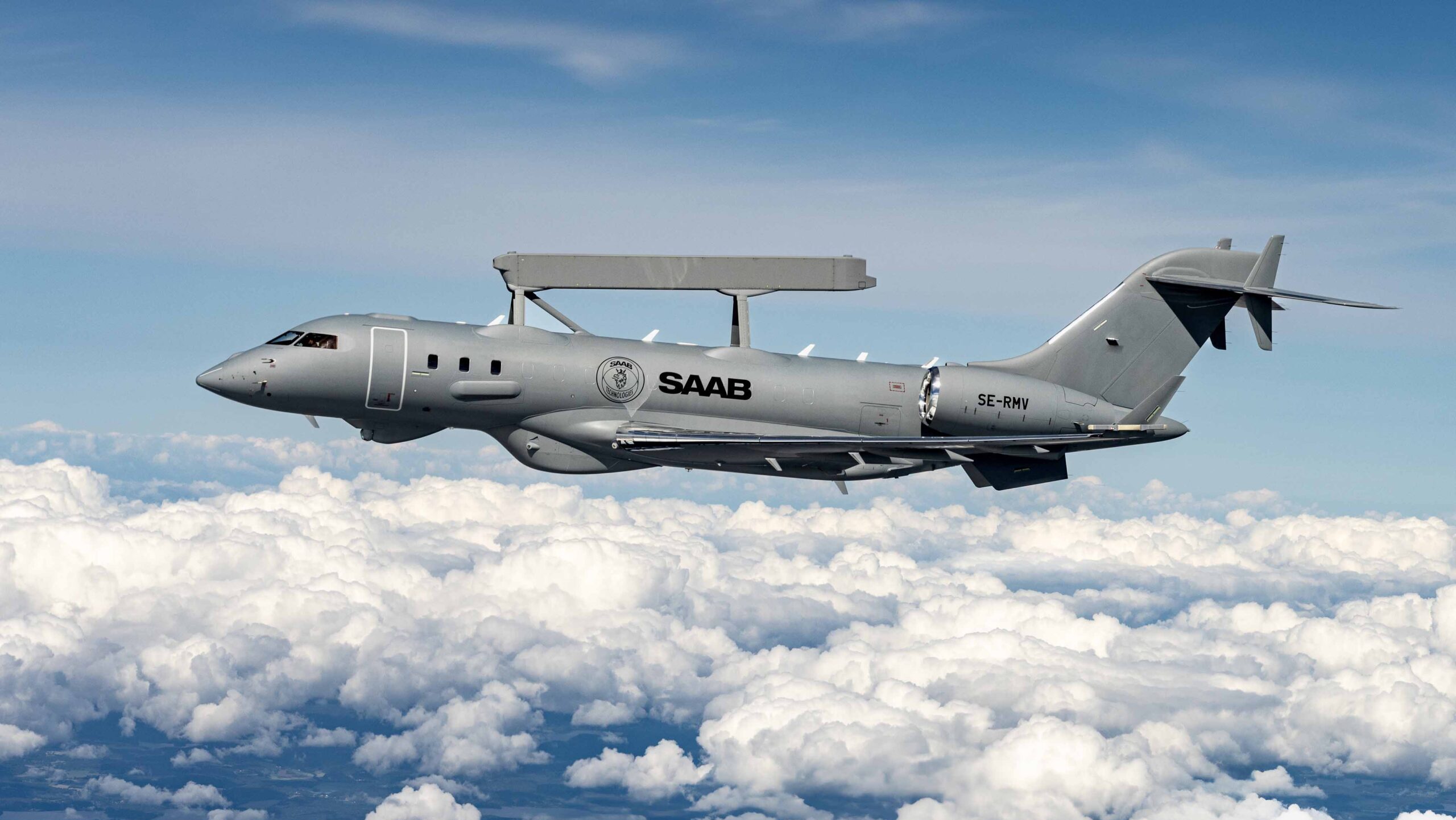
The Netherlands has signed a Letter of Intent with Sweden to purchase a Saab GlobalEye airborne surveillance aircraft, marking a major step in NATO's push to replace aging radar planes. Janes reports the single aircraft will be delivered in 2031, joining a broader 11-nation NATO effort to collectively acquire up to 10 GlobalEye jets.
The move reflects NATO's shift away from decades-old Boeing E-3A aircraft. Breaking Defense notes the Netherlands' purchase comes on top of the alliance's larger GlobalEye order, as European nations scramble to modernize their surveillance capabilities amid growing security tensions.
GlobalEye's Multi-Domain Surveillance Edge
GlobalEye uses active and passive sensors to detect and track threats across air, maritime, and land domains simultaneously. Air Force Technology explains the system provides real-time intelligence to military forces, giving them a complete picture of threats in any direction. Saab CEO Micael Johansson said the aircraft would deliver "enhanced situational awareness and early warning capabilities across multiple domains" in NATO's increasingly complex security environment.
NATO's Decade-Long Push for New Surveillance Fleets
NATO currently operates 14 Boeing E-3A aircraft stationed in Geilenkirchen, Germany. The Aviationist notes the E-3A has served the alliance since the 1980s and is rapidly approaching retirement. In July, NATO officially selected GlobalEye over the Boeing E-7A Wedgetail as the foundation for its future airborne early warning system.
The UK remains a notable outlier, Breaking Defense reports, still pursuing three separate E-7A Wedgetail aircraft for its own NATO-related contribution. This creates a split capability within the alliance, with most nations moving to GlobalEye while Britain maintains a different platform.
An 11-Nation Collective Purchase Reshapes European Air Defenses
Eleven NATO countries—Belgium, Canada, Denmark, Germany, Latvia, Lithuania, Luxembourg, Norway, Romania, Sweden, and the Netherlands—have committed to jointly procuring up to 10 GlobalEye aircraft. Defence-ua highlights this collective approach as a cost-sharing strategy across Europe. Individual aircraft are estimated to cost between SEK 4 billion and SEK 6 billion, though the Netherlands' specific procurement value remains undisclosed.
Sweden's arrangement with the Netherlands shows how allied nations are optimizing shared capabilities. Air Force Technology reports Swedish crews will gain early access to the Dutch aircraft for training before its 2031 delivery, allowing both nations to begin operational familiarity well before the full fleet matures.
Netherlands Gains First Independent Surveillance Capability
The Netherlands' single GlobalEye acquisition represents a historic milestone: The Aviationist notes it gives the country its first-ever national airborne early warning and control capability. Previously, Dutch forces relied entirely on shared NATO E-3A assets based in Germany. This independent platform will significantly enhance Dutch and regional air and maritime surveillance.
Sentiment
Mostly PositiveNEGATIVENEUTRALPOSITIVE
Publishers
16
Articles
39
Reach
55
A
AnonymousAuthor