Markets Near Record Highs
US Stocks Hold Near Record Highs Despite Recent Drops in Oil Prices
Anonymous
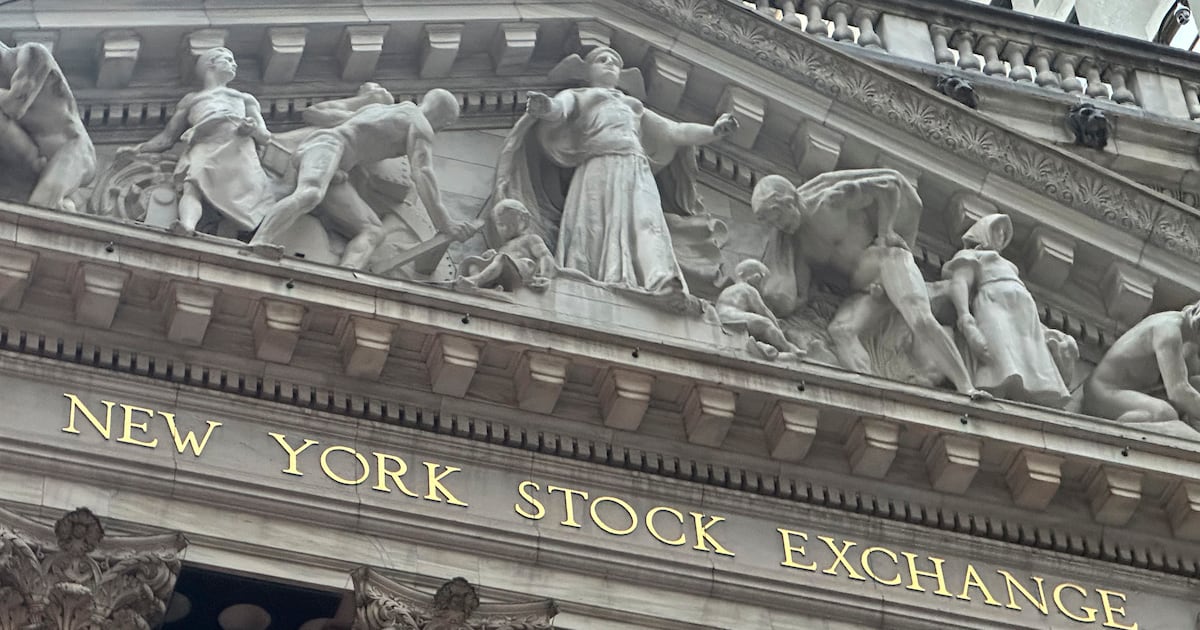
US stocks held steady on Monday despite wild swings in oil prices, with the S&P 500 up 0.2% and within 0.8% of its summer record high. The Nasdaq composite gained 0.5% and approached its own peak, while Brent crude fell to $101.83 a barrel, down 0.4% after bouncing between $100 and $103 earlier in the day. Associated Press noted that market moves remain tied to uncertainty over when the Iran conflict will allow normal crude flows to resume.
The steady stock performance masked deeper tensions in financial markets. The 10-year Treasury yield climbed to 5.30%, holding near multi-decade highs. Corporate dealmaking remained robust, with Schneider Electric agreeing to buy software firm PTC for $205 per share — a $22.6 billion deal that sent PTC shares up 35.3%. Yet the Dow Jones Industrial Average fell 103 points, or 0.2%, reflecting ongoing pressure from energy costs and higher borrowing expenses.
Oil Price Volatility Reflects Strait of Hormuz Uncertainty
Brent crude has whipsawed between $100 and $103 a barrel as traders debate when Persian Gulf shipping will fully recover. The Iran conflict that erupted in late February 2026 closed the Strait of Hormuz and choked crude supplies. On Sunday, OPEC+ agreed to hold production steady for November, while Saudi Aramco cut its November price by $5 per barrel to remain competitive as flows slowly return.
Energy prices spiked well above $119 a barrel during the conflict's worst months before settling into a volatile $72–$102 range throughout the summer. The G7 previously released 100 million barrels from emergency stockpiles to ease the supply crunch. With Brent now at $101.83, oil remains historically expensive — keeping pressure on gas pumps. National average gasoline stands at $4.01 per gallon, up from under $3.14 a year earlier.
M&A Deals Signal Corporate Confidence Despite High Rates
Major acquisitions boosted investor sentiment despite rising borrowing costs. Schneider Electric's $22.6 billion cash purchase of PTC — valued at $205 per share — lifted PTC stock 35.3%. Separately, C.H. Robinson agreed to buy RXO's truck brokerage unit for $30.25 per share, sending RXO up 23% but pulling C.H. Robinson down 10.2% on deal costs. These deals suggest big corporations still see value ahead.
Wall Street strategists describe a "tug-of-war" between strong earnings and dealmaking on one side, and high energy costs plus climbing Treasury yields on the other. The 10-year Treasury yield now sits at 5.30% — a level that raises borrowing costs for companies and consumers alike. Yet aggressive M&A continues, hinting that large firms believe the economy can absorb these headwinds.
Fed Rate Hike Adds Pressure to Stocks and Bonds
In September 2026, the Federal Reserve raised interest rates for the first time in three years, a move that has rippled through both stock and bond markets. The Fed is set to release detailed meeting minutes on Wednesday, October 7, explaining the decision. Higher rates reduce consumer and corporate borrowing appetite, which can weigh on valuations — especially for growth stocks that depend on cheap money.
Bond market traders have pushed the 10-year yield to 5.30% and the 30-year to 5.63% on concerns that persistent oil prices above $100, plus sticky inflation, will force the Fed to keep rates elevated. This creates a structural headwind: stocks can generate strong profits, but investors increasingly discount future earnings because today's cash is worth less at higher discount rates.
Global Markets Mixed as US Equities Hold Near Records
While US stocks remained resilient, international markets showed less momentum. Japan's Nikkei 225 surged 2.4%, but France's CAC 40 fell 0.7%. The S&P 500's narrow 0.8% gap from its summer peak suggests investors remain cautious about pushing prices higher amid geopolitical risk and elevated bond yields. Attention now turns to US jobs data, services sector reports, and consumer sentiment in coming weeks.
Sentiment
Mostly NegativeNEGATIVENEUTRALPOSITIVE
Publishers
37
Articles
439
Reach
476
A
AnonymousAuthor


