Targeted AI Controls
Anthropic Denies Open-Weight Ban, Advocates for Targeted AI Safety Measures and Chip Controls
Anonymous
Key Points
1
The Nvidia-backed open-weight letter has broadened beyond the initial core group to include OpenAI, Google, Amazon, SpaceX, Cohere, Mistral, CoreWeave, GitHub, OpenClaw, Perplexity and others, showing wider industry backing; OpenAI joined after the letter was published, while Anthropic did not sign.
2
Anthropic's Dario Amodei explicitly stated, 'Anthropic has never advocated for a ban on open-weights models,' reinforcing a stance against broad prohibitions.
3
Amodei's formal position calls for three targeted policies instead of a ban: tighter chip export controls to prevent authoritarian access, crackdown on industrial-scale distillation, and mandatory safety testing for all sufficiently capable models (open and closed), with exemptions for less capable models from startups and academia.
4
Anthropic has accused Alibaba’s Qwen of launching the largest distillation campaign against Claude, involving up to 25,000 fake accounts and millions of exchanges (a focal point in the distillation controversy).
5
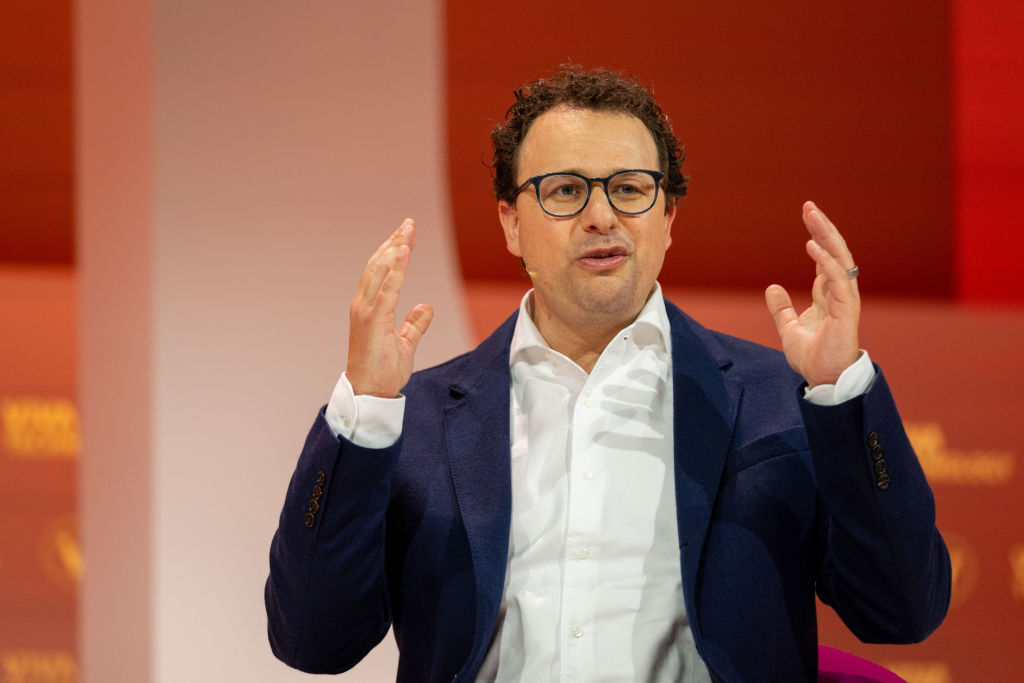
Amodei spoke at the AI Impact Summit in New Delhi, India, on February 19, 2026, presenting Anthropic’s position in a live setting amid ongoing global debates over open-weight AI and national security.
Anthropic CEO Dario Amodei has flatly denied that his company wants to ban open-weight AI models. "Anthropic has never advocated for a ban on open-weights models," he said, pushing back on a wave of criticism that followed the company's decision not to sign an industry letter opposing AI restrictions. TechCrunch and The Verge both reported on his response, which came as a broad coalition of tech firms rallied around open-weight AI.
The controversy exploded after Nvidia's Jensen Huang led a public letter urging policymakers to keep open-weight models free from heavy regulation. The letter drew signatures from Microsoft, Meta, Google, Amazon, OpenAI, SpaceX, Hugging Face, Perplexity, and dozens more. Anthropic did not sign. That absence put the company in a political spotlight it has now moved to escape, according to The Next Web.
Three Targeted Policies Amodei Wants Instead
Rather than a ban, Amodei outlined three specific measures he wants policymakers to adopt. First, tighten chip export controls to stop authoritarian governments from getting advanced processors. Second, crack down on industrial-scale distillation — the practice of training a new AI model by feeding it massive amounts of output from a more powerful one. Third, require mandatory safety testing for all sufficiently capable AI models, open or closed.
Amodei made clear that less capable models from startups and universities would get exemptions from safety testing rules. He presented the position live at the AI Impact Summit in New Delhi, India, on February 19, 2026, according to CNBC. His framework targets specific risks rather than the technology as a whole.
Alibaba's Qwen Accused of Massive Claude Distillation
One flashpoint in the debate is distillation, and Anthropic is at the center of it. The company has accused Alibaba's Qwen of running the largest distillation campaign ever launched against Claude, Anthropic's AI model. The alleged operation used up to 25,000 fake accounts to generate millions of exchanges with Claude, then used those responses to train a competing model.
That accusation adds weight to Amodei's push for anti-distillation rules. Open-weight models trained this way can spread capability widely — including to actors Anthropic considers dangerous. The distillation controversy has made industrial-scale data harvesting a core issue in the broader open-weight policy fight, according to TechCrunch.
Chinese Open-Weight Models Like Kimi K3 Sharpen the Debate
The arrival of capable Chinese open-weight models has intensified the whole conversation. Kimi K3, a model from Chinese AI lab Moonshot AI, drew fresh attention to how quickly competitors outside the US are advancing. Amodei warned that the real national-security risk is not open-weight models themselves — it is authoritarian regimes building far more powerful systems.
He argued that a Chinese government AI with superior military capability could give Beijing permanent strategic advantages. He also warned such systems could be used to repress people at scale. Open-weight models without dangerous built-in capabilities, he said, are a public good. The threat comes from who builds the most powerful ones, not from openness itself, according to Yahoo Tech.
Industry Letter Grew Far Beyond Its Original Signatories
The open-weight letter that sparked the controversy kept growing after it was first published. OpenAI joined after the initial release — a notable move given its history as a closed-model company. The final list includes Nvidia, Microsoft, Meta, Google, Amazon, SpaceX, Cohere, Mistral, CoreWeave, GitHub, Hugging Face, Perplexity, and more. That breadth shows how much of the industry has unified around protecting open-weight development.
Anthropic remains the most prominent holdout among major AI labs. Amodei's position is not opposition to open weights — it is a demand for narrower, more targeted rules. Whether that distinction satisfies critics inside and outside the industry remains to be seen, according to The Next Web.
Sentiment
Mostly NegativeNEGATIVENEUTRALPOSITIVE
Publishers
20
Articles
11
Reach
31
A
AnonymousAuthor


