Solar Storage Optimization
Habitat Energy Drives Australia's Solar-Plus-Storage Future with Advanced Grid Optimization.
Anonymous
Key Points
1
In Maharashtra, time-of-day tariffs and rooftop regulations for solar installations above 100 kW are creating new storage applications.
2
EPCs must carefully select appropriate storage products and invest in technical training, as design sizing and pre-installation calculations errors can compromise project performance.
3
GoodWe rolled out hybrid inverters in 2025; residential customers needing regular backup or outages longer than two hours are adopting batteries with hybrid inverters, and storage-ready hybrid inverters allow future battery integration as tariffs or backup needs evolve.
4
Fulham Solar Farm (80 MW) with a 64 MW/128 MWh battery and Blind Creek Solar Farm (300 MW) with a 243 MW/486 MWh battery will be DC-coupled, commissioning in 2027 and 2028 respectively, with DC coupling reducing energy losses and improving charging efficiency.
5
Iran’s distributed plants are promoted for proximity to consumption, reduced grid losses, passive defense benefits, and investor economics; aggregation models via the energy exchange and the green board aim to broaden participation, with about 700 MW registered toward a 12,000 MW target by March 2027, contingent on financing, exchange-rate management, and guaranteed electricity purchases.
Habitat Energy has been appointed to trade and optimise two of Octopus Australia's solar-plus-storage projects totaling 380 MW of solar and 307 MW of battery power, according to Energy Storage News. The portfolio includes 614 MWh of total battery capacity, making it one of Australia's largest DC-coupled solar and storage combinations to date.
Both projects will use DC coupling, which connects batteries directly to solar panels. This reduces energy losses and improves charging efficiency compared to older AC-coupled designs, ESD News reported.
Two Big Projects Commissioning in 2027 and 2028
The first project is Fulham Solar Farm, an 80 MW solar site paired with a 64 MW/128 MWh battery. The second is Blind Creek Solar Farm, a much larger 300 MW solar farm paired with a 243 MW/486 MWh battery. Fulham is set to commission in 2027, with Blind Creek following in 2028, according to Energy Storage News.
Habitat Energy will use digital twins to prepare both assets for Australia's National Electricity Market. A digital twin is a virtual model of the project that lets operators test strategies before going live. The goal is to co-optimise solar generation and battery dispatch to earn the most revenue possible.
DC Coupling Becomes the Design of Choice in Australia
DC coupling is gaining ground in Australia's large-scale solar-plus-storage sector. In a DC-coupled system, the battery charges directly from the solar panels before the electricity is converted. That means less energy is lost in conversion, and the battery can capture power the solar inverter would otherwise clip or waste.
As coal plants retire across Australia's grid, developers are betting that co-located solar and storage — run by smart software — can fill the gap. Habitat Energy's appointment signals a wider market belief that forecasting and co-optimisation are now essential tools, not optional extras.
India and Iran Push Distributed Solar for Different Reasons
India's solar storage market is also growing fast. In Maharashtra, time-of-day tariffs and rooftop rules for systems above 100 kW are pushing businesses toward hybrid inverters and batteries. GoodWe rolled out new hybrid inverters in 2025. Customers facing outages longer than two hours are now pairing them with batteries, according to ESG News.
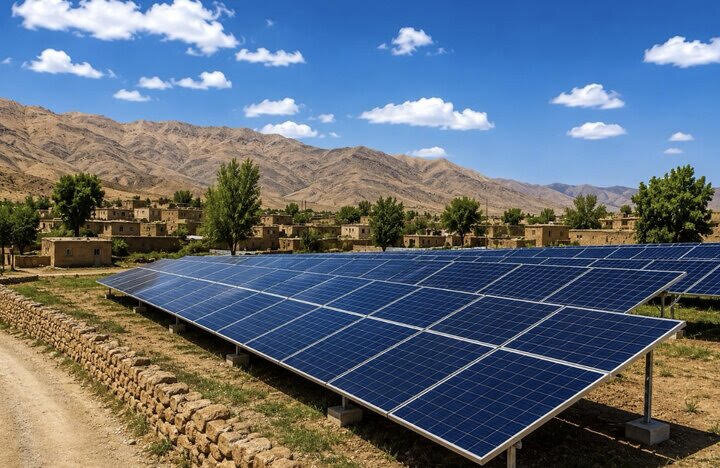
In Iran, the government is targeting 12,000 MW of distributed solar by March 2027. About 700 MW has been registered so far, Tehran Times reported. Authorities are promoting small plants close to consumers to cut grid losses. Success depends on securing financing, managing exchange rates, and guaranteeing electricity purchase agreements for investors.
Training and Sizing Errors Remain a Hidden Risk
Across all these markets, industry experts warn that poor design is a growing problem. Errors in system sizing and pre-installation calculations can hurt project performance badly. EPCs — the firms that build these systems — must pick the right storage products and invest in proper technical training to avoid costly mistakes.
Storage-ready hybrid inverters offer one way to manage uncertainty. They let customers add batteries later, as tariffs change or backup needs grow. That flexibility makes them appealing in markets where policy and prices are still shifting fast.
Sentiment
Mostly PositiveNEGATIVENEUTRALPOSITIVE
Publishers
12
Articles
2
Reach
14
A
AnonymousAuthor


