West Bank Olive Destruction
Israeli Military Bulldozers Destroy West Bank Olive Groves Days Before Annual Harvest
Anonymous
Key Points
1
The Palestinian Authority’s Colonization and Wall Resistance Commission said Israeli attacks on agricultural land in August damaged 21,508 trees, including 19,375 olive trees.
2
The commission also reported three new military orders affecting 339 dunams of land in Jenin, Qabatiya and Beit Rima, extending the impact beyond the Deir Nizam groves.
3
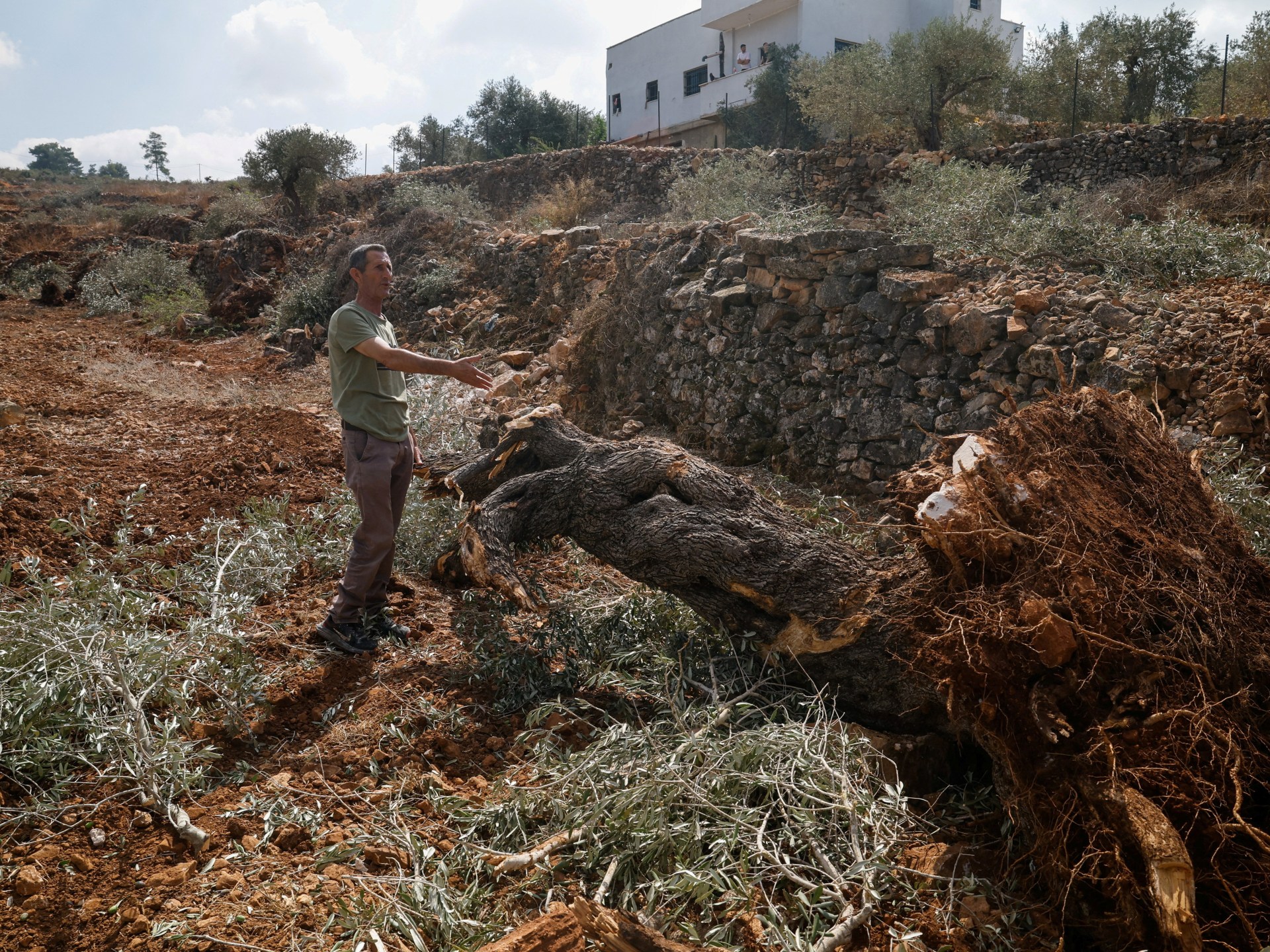
Abd Alfattah Tamimi said the destruction left farmers with no productive trees, telling reporters: “They left us with nothing.”
4
Palestinian activists and farmers warned that this year’s harvest could be especially volatile because of what they described as a record surge in Israeli settler attacks on Palestinians and Palestinian resources in the West Bank.
5
The Palestinian Authority estimated this year’s olive production at 21,000 tonnes, compared with local demand of approximately 15,000 tonnes.
Israeli military bulldozers destroyed hundreds of Palestinian olive trees in Deir Nizam near Ramallah, uprooting nearly nine acres of groves just days before the annual October harvest begins. Al Jazeera reported that the destruction wiped out a major source of income for farming families, with one family saying they typically produce about 120 drums of olive oil from the land. The Israeli military said it was reviewing requests for comment but has previously justified removing trees on security grounds.
Palestinian human rights groups and farmers reject the security rationale, saying the clearances deprive families of income and damage trees viewed as symbols of their connection to the land. The Palestinian Authority's Colonization and Wall Resistance Commission said IJR that Israeli attacks on agricultural land in August alone damaged 21,508 trees, including 19,375 olive trees. The olive sector accounts for about 8 percent of the Palestinian economy and supports more than 60,000 jobs.
Destruction Extends Beyond Deir Nizam Groves
The damage to olive groves is not limited to the Deir Nizam area. Palestinian officials reported three new military orders targeting 339 dunams of agricultural land in Jenin, Qabatiya, and Beit Rima, extending the impact across multiple West Bank communities. Archynetys noted that this widespread destruction has sparked fears among Palestinian farmers about the timing and scale of the losses.
Farmers Face Record Year of Settler Attacks
Palestinian activists and farmers warned that this year's harvest could be especially volatile because of what they described as a record surge in Israeli settler attacks on Palestinians and Palestinian resources in the West Bank. Abd Alfattah Tamimi told reporters that the destruction left farmers with no productive trees, saying: "They left us with nothing." Middle East Online reported that the destruction deprives Palestinian farmers of income from olive sales during a traditionally joyous season.
Economic Impact on Palestinian Agriculture
The Palestinian Authority estimated this year's olive production at 21,000 tonnes, compared with local demand of approximately 15,000 tonnes, meaning the sector relies on export sales for significant revenue. CP24 reported that the destruction occurs at a critical moment when Palestinian farmers would normally be preparing for their biggest annual harvest. The loss of hundreds of productive trees will reduce output and leave families without a key source of annual income during an already difficult economic period.
Sentiment
Mostly NegativeNEGATIVENEUTRALPOSITIVE
Publishers
15
Articles
80
Reach
95
Topics
A
AnonymousAuthor