Measles Outbreaks Spread
U.S. Measles Cases Surge to Decades-High Levels as Vaccination Rates Drop
Anonymous
Key Points
1
The CDC says 95% of U.S. measles cases reported in 2026 are associated with outbreaks, defined as clusters of three or more related cases. Measles can also remain airborne in a room for up to two hours after an infected person leaves.
2
Ohio reported 47 new measles cases in the week ending Sept. 17, up from 11 the prior week; Wayne County accounted for 34 of the new cases, compared with nine the week before.
3
Tuscarawas County identified its first case in the current outbreak involving a fully vaccinated person. The county health commissioner said the patient had mild symptoms and was recovering at home, noting that breakthrough infections are rare but can occur when transmission is widespread.
4
Wisconsin’s kindergarten vaccination coverage is about 85%, well below the 95% level health officials say is needed for community immunity. State health officials said the last time Wisconsin recorded more than 50 measles cases in a year was more than 35 years ago.
5
Wisconsin officials said the Marathon County infection was linked to out-of-state travel and was not connected to the southwest Wisconsin outbreak; no public exposure locations had been identified in connection with that case at the time of the report.
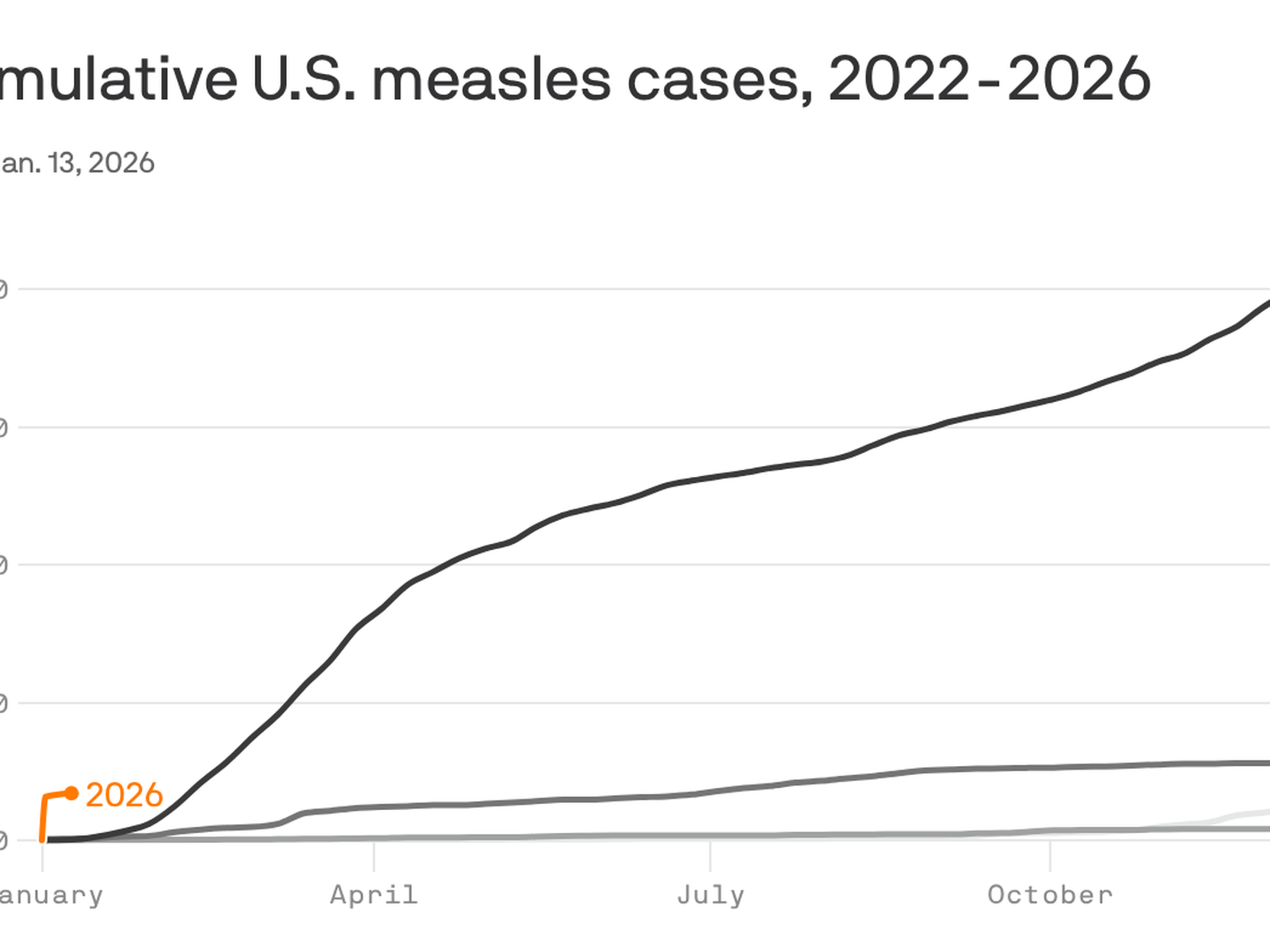
Measles cases are surging across the United States at levels not seen in decades. CDC data shows 3,471 confirmed cases across 47 states as of mid-September 2026—the highest single-year total since the disease was declared eliminated in 2000. Ohio has reported 180 cases in 2026, four times its entire 2025 total, while Wisconsin has recorded 166 cases, with more than 99% involving unvaccinated people.
The outbreak is being driven by childhood vaccination rates that have fallen below the 95% threshold needed to stop the virus from spreading. Wisconsin Department of Health Services confirmed that kindergarten vaccination coverage in the state has dropped to about 85%. With measles remaining airborne for up to two hours after an infected person leaves a room, public health officials are urging all residents to check their vaccination records and get the two-dose MMR vaccine, which is roughly 97% effective.
Ohio's Weekly Case Count Doubles in Single Week
Ohio reported 47 new measles cases in the week ending September 17, jumping from just 11 cases the week before. Ohio Department of Health data shows Wayne County accounted for 34 of those 47 new cases, compared to nine the previous week. The state's total of 180 cases in 2026 represents a dramatic acceleration that has prompted health officials to intensify outbreak response efforts.
Tuscarawas County identified its first case involving a fully vaccinated person during the current outbreak. The Tuscarawas County Health Commissioner said the patient experienced mild symptoms and was recovering at home, reassuring the public that breakthrough infections are rare but can occur when transmission spreads widely through a community.
Wisconsin Faces Largest Outbreak in Over 35 Years
Wisconsin's 166 measles cases mark the highest annual total in more than 35 years. Wisconsin DHS officials confirmed new infections spreading across Vernon and Marathon counties, with 161 cases tied to a southwest regional outbreak spanning multiple counties. More than 99% of Wisconsin's cases involve unvaccinated individuals, and five patients have required hospitalization. No deaths have been reported.
The Marathon County infection was linked to out-of-state travel and was not connected to the southwest Wisconsin outbreak at the time of reporting. State health officials stressed that the current crisis reflects decades of declining vaccination rates. Kindergarten MMR coverage of about 85% in Wisconsin leaves roughly one in six children vulnerable, creating ideal conditions for rapid viral spread in schools and communities.
Maine Issues Public Exposure Warning After Case Confirmed
The Maine Department of Health and Human Services confirmed a measles case in an unvaccinated Somerset County adult and issued a public warning on September 12 about possible exposure at a Waterville urgent-care facility. Health officials urged anyone who may have been exposed to review their vaccination status and contact their doctor immediately. The case highlighted how quickly measles can spread through healthcare settings where unvaccinated patients may encounter vulnerable individuals.
Vaccination Gap Threatens National Elimination Status
The U.S. surge threatens the country's official measles elimination status. According to CDC epidemiologists, 95% of all 2026 measles cases are linked to outbreaks—clusters of three or more related cases. The two-dose MMR vaccine is about 97% effective, but when vaccination rates fall below 95% in local areas, the virus finds enough unvaccinated people to keep spreading. Public health experts warn that continued transmission could result in loss of elimination status by the Pan American Health Organization.
State health departments are deploying rapid response teams to trace exposures and encourage vaccination. Public health officials are asking residents nationwide to review immunization records, verify they received two doses of the MMR vaccine, and seek vaccination if they are missing doses. The urgency reflects a harsh reality: measles kills roughly one in 500 infected children, and no treatment exists—only prevention through vaccination works.
Sentiment
Mostly NegativeNEGATIVENEUTRALPOSITIVE
Publishers
30
Articles
119
Reach
149
A
AnonymousAuthor


