Chimpanzee Health Checks
Former research chimpanzees receive comprehensive medical examinations at a Liberian sanctuary.
Anonymous
Key Points
1
The research was conducted because West African chimpanzees were the only animal model known to be susceptible to human hepatitis viruses; chimpanzees also played a role in identifying hepatitis C in the 1980s. Their use contributed to development of the hepatitis B vaccine, which now protects billions of people.
2
Sanctuary director Liliana Pacheco Ricote said the chimpanzees underwent “very invasive research” and “went through a lot of experiments and pain,” underscoring the welfare costs of the studies beyond the procedures listed in the summary.
3
The sanctuary says some physical and behavioral effects of the experiments remain apparent in the animals, even though the findings from the latest examinations are still being compiled.
4
Liberia has the second-largest population of chimpanzees in West Africa after Guinea, adding regional conservation significance to the sanctuary’s work with the critically endangered animals.
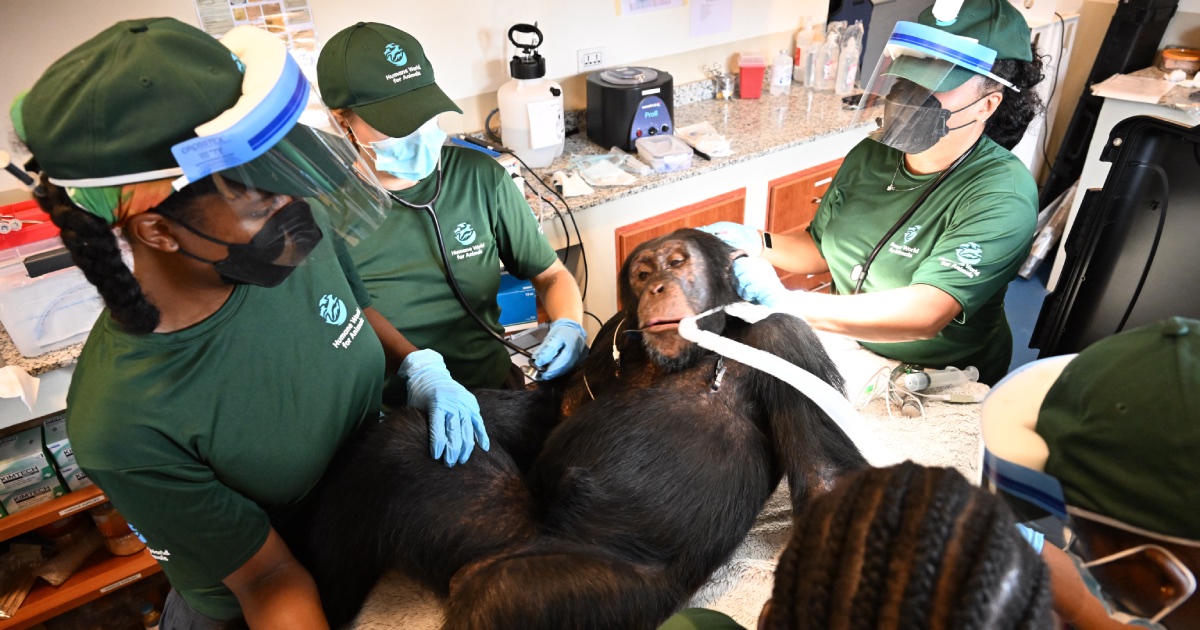
More than 400 chimpanzees were used in U.S. hepatitis B vaccine research in Liberia from the 1970s through the early 2000s. Now, 60 survivors are receiving comprehensive medical exams at the Second Chance Chimpanzee Refuge, with veterinary teams conducting checks under anesthesia that include dental work, X-rays, blood tests, and heart and lung assessments Times Leader.
The health checks aim to catch illness early and create personalized care plans for animals now in their 30s and early 40s CBS42. Sanctuary director Liliana Pacheco Ricote noted the chimps underwent "very invasive research" and "went through a lot of experiments and pain," and some physical and behavioral effects from their lab experiences remain visible today CBS42.
Why Chimpanzees Were Trapped in Lab Research
West African chimpanzees were the only animal known to contract human hepatitis viruses, making them uniquely valuable for vaccine development Jamaica Gleaner. Researchers captured many as infants and kept them for decades to test experimental hepatitis B vaccines. The work ultimately contributed to a vaccine that now protects billions of people globally Jamaica Gleaner.
From Lab Cages to Island Sanctuary Life
In 2015, Humane World for Animals took permanent responsibility for 60 surviving chimpanzees and relocated them to the Second Chance Chimpanzee Refuge PhilStar Life. The animals now live mainly on mangrove-covered islands in central Liberia, away from human contact. These chimps belong to West Africa's critically endangered population, and Liberia holds the second-largest group after Guinea Boston Globe.
Ongoing Medical Care Reveals Lasting Damage
Current health exams include dental checks, blood work, booster vaccinations, and assessments of nervous system function Times Leader. Veterinary teams perform these procedures under anesthesia to minimize stress on animals still recovering from decades in captivity. Though full results are still being compiled, sanctuary staff confirm that physical and behavioral scars from laboratory experiments persist in many of the chimps CBS42.
Sentiment
Mostly NegativeNEGATIVENEUTRALPOSITIVE
Publishers
12
Articles
74
Reach
86
A
AnonymousAuthor


