Historic Space Weather Delay
Researchers Correct Long-Standing Date of Historic Space Weather Train Disruption to 1848
Anonymous
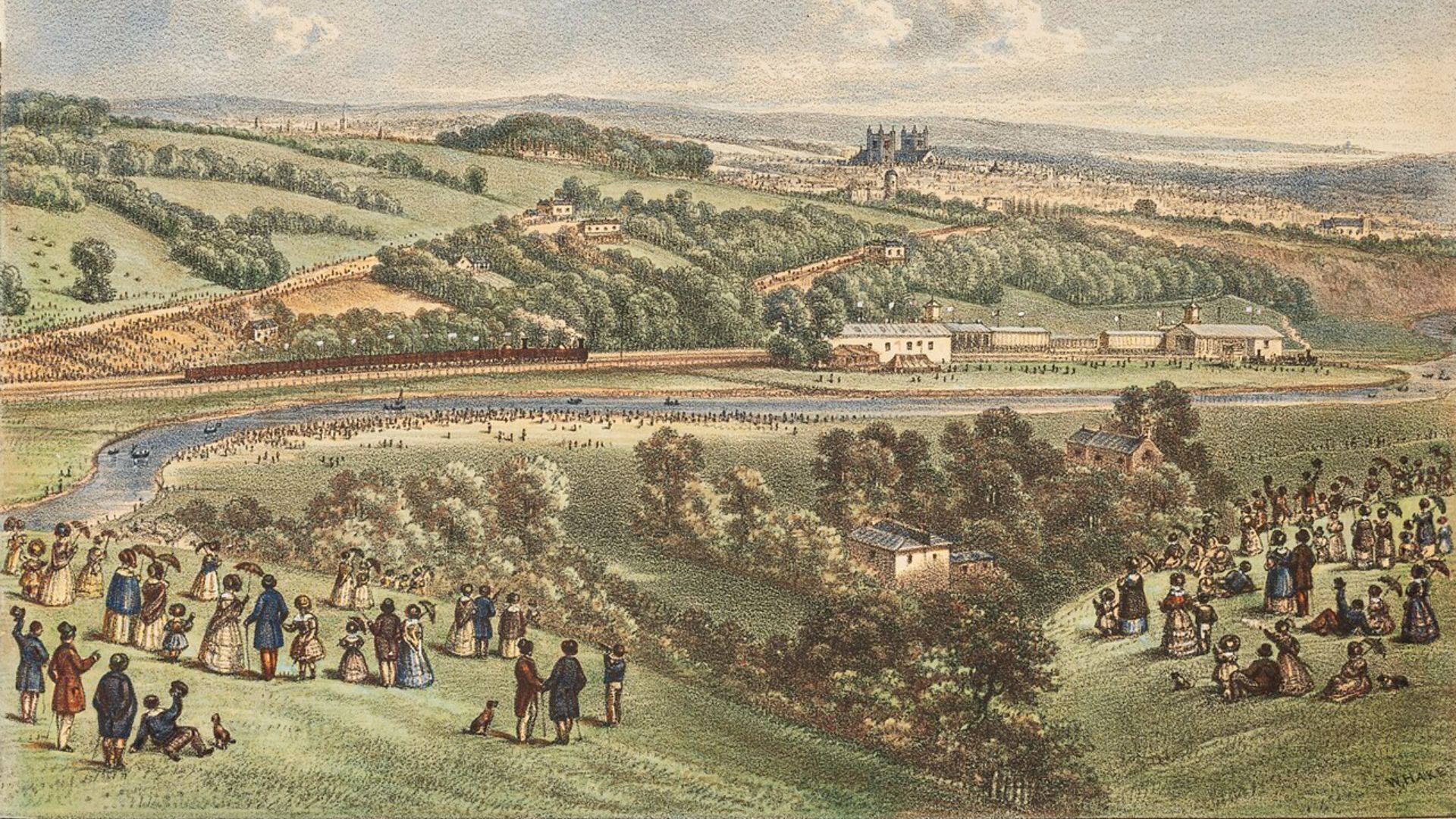
An international research team has corrected a long-standing account of a geomagnetic storm that disrupted railway communications and delayed a train departing Exeter, England, by 16 minutes. The incident, long dated to October 18, 1841, most likely occurred on October 18, 1848, because the Exeter-to-Starcross rail line cited in the original 1871 Nature report did not open until 1846. Researchers reached the conclusion by comparing railway timetables, newspapers, solar observations, auroral reports and geomagnetic records. The Exeter episode remains one of the earliest documented examples of space weather disrupting technology, but evidence indicates that telegraph interference on the Midland Railway during a March 1847 aurora may have occurred earlier. The findings underscore that space weather became a societal hazard as modern electrical infrastructure expanded in the 19th century.
Key Points
1
The 1847 Midland Railway incident was specifically reported as occurring on the evening of March 19, when telegraph equipment developed “spontaneous electrical currents” while a “brilliant aurora was seen” over the British Isles.
2
The Midland Railway account was presented to the Royal Society in London in May 1848, adding an important contemporary scientific record to the evidence that space weather affected technology before the 1859 Carrington Event.
3
Researchers place the episode in the context of the first practical electric telegraph networks, which were deployed during the 1840s; as solar activity increased, Victorian telegraph operators began reporting unexplained electrical effects linked to geomagnetic disturbances.
4
Lancaster University space physicist Jim Wild described the Exeter case as occurring when “emerging technologies first began to encounter the realities of the space environment.”
5
The researchers contrasted the revised Exeter event with the Carrington storm of 1859, which remains one of the most powerful geomagnetic storms in the scientific record and was associated with the earliest and greatest solar flare then observed, despite not being the first instance of solar activity disrupting technology.
Sentiment
Mostly NegativeNEGATIVENEUTRALPOSITIVE
Publishers
7
Articles
5
Reach
12
A
AnonymousAuthor


