Delayed Nuclear Seismic Aftershocks
North Korea's 2017 Nuclear Test Linked to Years of Rising Earthquakes
Anonymous
Key Points
1
Persistent seismic activity began on September 23, 2017—about three weeks after the final nuclear test—rather than immediately following the explosion.
2
Researchers found that the earthquakes were concentrated along two previously quiet fault zones near Mount Mantap, suggesting the tests reactivated ancient intraplate faults.
3
The vast majority of the post-test earthquakes were weak, measuring roughly magnitude 2 to 3, and occurred at shallow depths.
4
Before the 2017 test, major earthquake catalogs recorded no crustal earthquakes within 50 kilometers of Mount Mantap from 1904 onward, underscoring how unusual the later seismic sequence was.
5
The researchers linked the site’s unusual behavior to the region’s stable continental crust and the presence of ancient faults far from active tectonic plate boundaries, rather than to the kind of regular tectonic setting found near Japan.
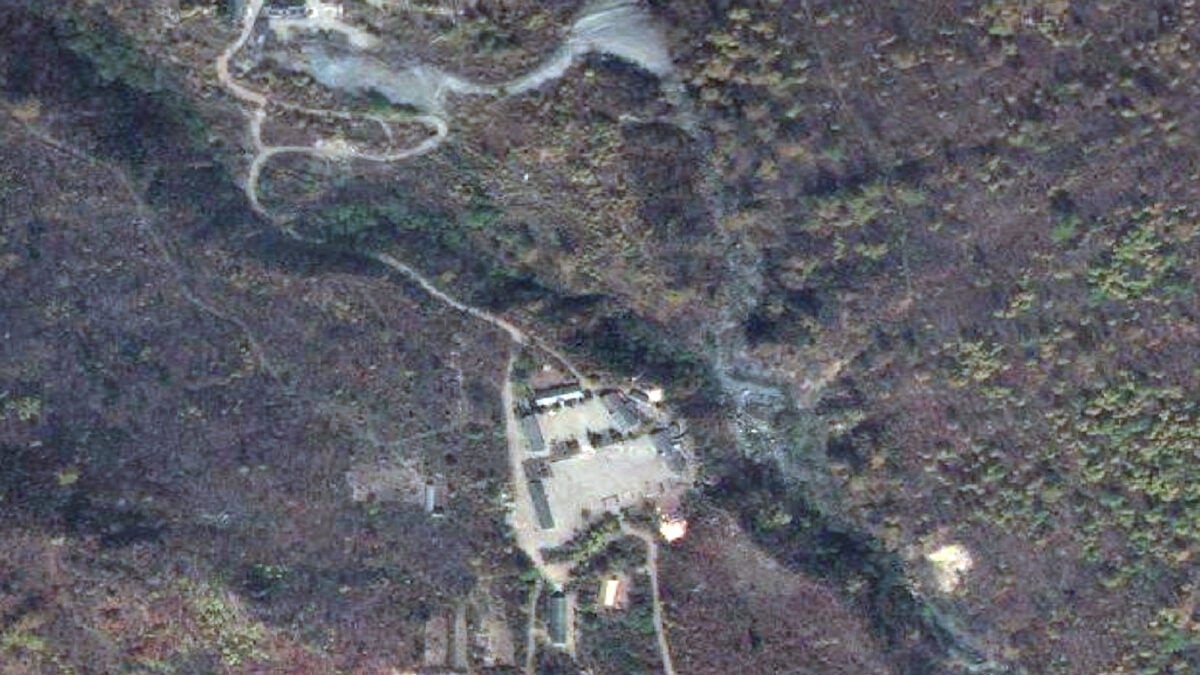
Scientists discovered that North Korea's largest nuclear test in 2017 triggered a chain reaction deep underground—1,399 earthquakes over the next eight years. Gizmodo reports the tremors struck an area around Mount Mantap that had no recorded earthquakes in over a century, suggesting the blast awakened ancient, dormant fault lines buried beneath stable continental crust.
The 2017 test, estimated at 100 to 250 kilotons, produced a magnitude 6.3 earthquake and likely collapsed underground tunnels. KEZI noted that seismic activity began three weeks later and kept climbing in both frequency and strength—defying the typical pattern where tremors fade quickly after an explosion.
A Century of Silence Broken by One Blast
The Mount Mantap region had zero recorded crustal earthquakes within 50 kilometers from 1904 through 2017. Then the September 2017 test changed everything. Gizmodo explains that researchers identified 1,399 previously undetected earthquakes clustered around two previously quiet fault zones—a dramatic reversal for an area long considered seismically inactive.
Weak Tremors, Delayed Timing, and Rising Intensity
The earthquakes didn't strike immediately. WAOW reports that persistent seismic activity began on September 23, 2017—roughly three weeks after the final test. Most aftershocks measured magnitude 2 to 3 and occurred at shallow depths, yet the troubling part is that both frequency and magnitude rose over time.
This delayed response contradicts what normally happens after nuclear blasts. Yahoo News confirms the seismic sequence was concentrated along ancient intraplate faults far from any active plate boundary—terrain that rarely produces earthquakes without human interference.
Why Stable Ground Can Hide Dangerous Cracks
The Punggye-ri site sits in stable continental crust, not near the active boundaries between tectonic plates that usually spawn earthquakes. Yahoo News notes that ancient faults lie buried and dormant beneath Mount Mantap. The massive 2017 explosion apparently punched hard enough to reawaken these sleeping ruptures—proof that human activity can leave permanent scars on Earth's structure.
Sentiment
Mostly NegativeNEGATIVENEUTRALPOSITIVE
Publishers
14
Articles
29
Reach
43
A
AnonymousAuthor