In-Flight Cockpit Attack Prevented
Injured Indian Pilot Defeats Co-Pilot Attack on Flydubai Flight to Tel Aviv
Anonymous
Key Points
1
The co-pilot was identified as Hamam al-Hammami. The UAE prosecutor general said he attacked Captain Machchhar with the cockpit crash axe and attempted to take control of the aircraft.
2
The cockpit door could be opened from inside with a twist-to-open mechanism, while entry from outside required a code; Machchhar said colleagues outside tried entering the code but the attacker prevented them.
3
Crash axes are carried in cockpits for emergencies, including cutting through panels or breaking windows.
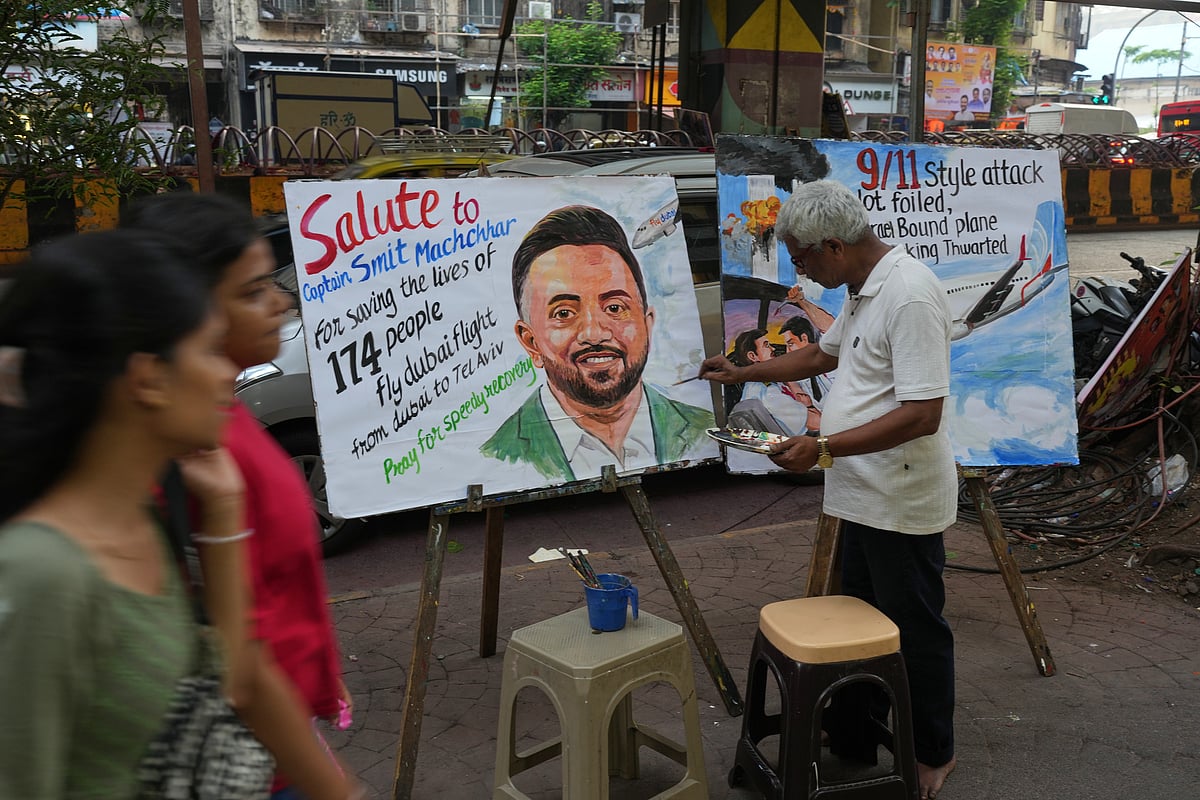
An Indian captain fought for his life aboard a Flydubai jet on September 30 when his Omani co-pilot attacked him with a cockpit crash axe mid-flight over Saudi airspace. Indian Express reported that Captain Smit Machchhar, despite severe injuries and blurred vision, managed to unlock the cockpit door from inside, allowing crew members and off-duty pilots to enter and subdue the attacker. The Boeing 737 MAX 8 carrying 174 passengers plunged 16,625 feet in just over 30 seconds before stabilizing and making an emergency landing in Tabuk, Saudi Arabia.
The UAE Prosecutor General classified the incident as an attempted terrorist attack, confirming that co-pilot Hamam al-Hammami, a 29-year-old Omani national, used the emergency crash axe as a weapon. Prime Minister Modi praised Machchhar's valor, saying it "helped save hundreds of lives and avert a great tragedy." Israeli Prime Minister Benjamin Netanyahu also commended the pilot and invited him to Israel, noting that al-Hammami had undergone extremist radicalization.
Attack Erupts Mid-Flight Over Saudi Airspace
Flight FZ1073 departed Dubai for Tel Aviv on September 30 with 180 occupants aboard. Wall Street Journal reported that al-Hammami stood to pray, then attacked Machchhar with the cockpit's emergency crash axe. Machchhar suffered deep lacerations and vision impairment but fought back.
The aircraft immediately entered a sharp descent, triggering a hijack alert code. New Indian Express reported that colleagues outside the cockpit attempted entering security codes, but al-Hammami blocked them. Machchhar unlocked the interior twist-mechanism door and crew members rushed in to overpower the attacker and regain control of the aircraft.
Red Flags Missed Across Multiple Nations
Al-Hammami was previously barred from flying by Omani authorities and Oman Air due to extremist concerns, Wall Street Journal revealed. He was later relegated to an administrative role but was subsequently hired by Flydubai. ABC News reported he was found with radical materials during early training, and online profiles contained extremist imagery linked to al-Qaeda figures.
Aviation experts highlighted systemic vetting failures between Gulf Cooperation Council nations. Associated Press noted that investigators are examining whether al-Hammami acted alone or had ties to foreign terrorist organizations. The incident exposed critical gaps in cross-border background checks and security clearance sharing.
Emergency Equipment Now Under Security Scrutiny
Cockpit crash axes are standard emergency gear stored inside flight decks to cut through panels or break windows during crashes. Aviation commentator Gaurav Taneja noted that pilots access them without passing security screening. The incident has triggered calls to re-evaluate ax placement and accessibility in commercial aircraft worldwide.
The Boeing 737 MAX 8 suffered severe structural damage during the dive, with over-speed forces ripping off a section of the rudder. Six people were injured but no deaths were reported. Machchhar is recovering in the UAE, where India's ambassador confirmed he receives good medical care and diplomatic support.
India, Israel, and Saudi Arabia Coordinate Response
The multi-national response highlighted unusual diplomatic cooperation. Indian Prime Minister Modi spoke with Machchhar on October 2 via video call while the pilot recovered in a Saudi hospital. Israeli Prime Minister Netanyahu publicly praised him as a hero and extended a formal invitation to visit Israel.
Passengers—mostly Israeli citizens—safely reached their destination after the emergency landing. The incident underscores complex geopolitical dynamics: an Indian captain protecting Israeli passengers on an Emirati aircraft, landing in Saudi Arabia, all while coordinating an anti-terror response. IBTimes coverage highlighted how the heroic intervention transcended national boundaries.
Sentiment
Mostly NegativeNEGATIVENEUTRALPOSITIVE
Publishers
29
Articles
37
Reach
66
A
AnonymousAuthor


