Embraer Maintenance Renewal
Japan Airlines Extends Maintenance Support for Thirty-Two Regional E-Jets
Anonymous
Key Points
1
The E-Jets are operated by J-Air, Japan Airlines’ wholly owned regional subsidiary. J-Air’s E170s are configured with 76 seats, while its E190s have 95 seats, including 15 in Class J and 80 in economy.
2
JAL’s E-Jet relationship with Embraer dates back to the introduction of the E170, which entered service with J-Air in 2009; the E190 joined the fleet in 2016, and J-Air received its 14th E190 in 2018.
3
JAL Engineering executive Yuta Kawaguchi said the renewal would reinforce the airline’s commitment to high-quality components and “the absolute safety of our flight operations.”
4
Embraer said its Asia-Pacific support network includes personnel near customer bases, a regional distribution center holding more than $120 million in inventory, E1 and E2 simulators, and authorized service centers.
5
JAL had originally intended Mitsubishi’s SpaceJet to become the centerpiece of J-Air’s future fleet and signed a letter of intent for 32 Mitsubishi Regional Jets in 2014; the program’s collapse increased the significance of the carrier’s next regional-aircraft decision.
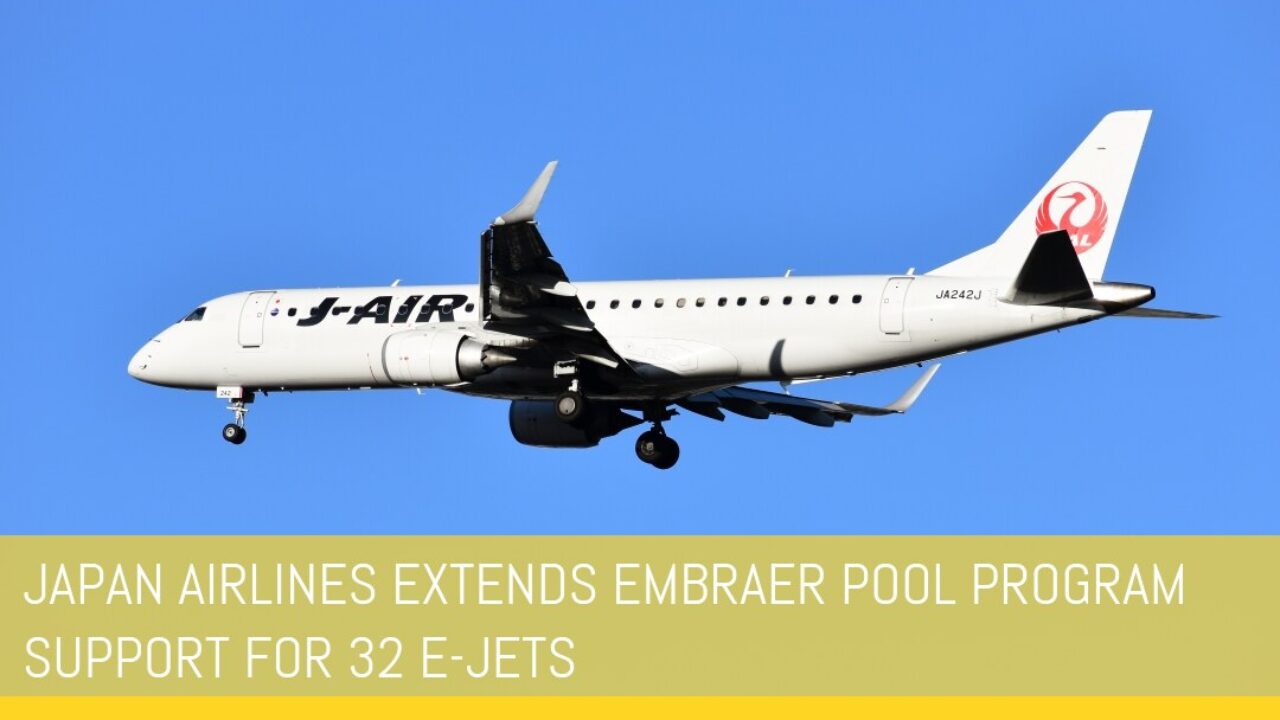
Japan Airlines has renewed its long-term maintenance agreement with Embraer, securing support for 32 E-Jets operated by its regional subsidiary J-Air. Asianaviation reports the multi-year deal covers 18 E170s and 14 E190s under Embraer's Pool Program, which stocks spare parts near JAL's operations to reduce flight delays. The fleet has maintained a 99.8% average service reliability rate over six months.
The renewal underscores JAL's continued commitment to its aging regional fleet as it evaluates roughly 40 replacement jets. MarketScreener notes the airline is considering the Embraer E2 and Airbus A220, with some E170s nearing the end of their useful life after entering service in 2009.
How the Pool Program Keeps J-Air Flying
Under the Pool Program, Embraer pre-positions repairable components near JAL's maintenance hubs. Asianaviation explains this speeds access to critical parts when aircraft need repairs. The strategy cuts operational disruptions and keeps planes in the air longer. Embraer's Asia-Pacific network includes a regional distribution center holding more than $120 million in spare-parts inventory.
A Fleet Built Over 15 Years of Regional Service
J-Air's E-Jet partnership began in 2009 when the E170 entered service with 76-seat configurations. The larger E190—configured with 95 seats, including 15 premium Class J seats—joined the fleet in 2016. MarketScreener reports J-Air completed its E190 acquisition by 2018, building a mixed fleet that has proven reliable for regional routes across Japan.
Why JAL Must Choose a New Regional Jet Soon
JAL faces pressure to replace roughly 40 regional aircraft as its oldest E170s age out. The decision matters because JAL previously bet on Mitsubishi's SpaceJet, signing a letter of intent for 32 regional jets in 2014. That program collapsed, leaving JAL without a planned successor. MarketScreener notes the E2 and A220 are now the leading contenders to shape J-Air's fleet for the next decade.
Safety and Reliability Drive the Partnership Forward
JAL Engineering executive Yuta Kawaguchi emphasized that the renewal reinforces the airline's commitment to "high-quality components" and "the absolute safety of our flight operations." MarketScreener reports Embraer backs this pledge with on-site personnel, approved service centers, and both E1 and E2 flight simulators across the Asia-Pacific region. The 99.8% reliability rate proves the system works.
Sentiment
Mostly PositiveNEGATIVENEUTRALPOSITIVE
Publishers
12
Articles
44
Reach
56
A
AnonymousAuthor


