Amazon Quick-Commerce Expansion
Amazon plans a $3 billion quick-commerce push in India to challenge local rivals
Anonymous
Key Points
1
Amazon is focusing Amazon Now on frequently reordered daily essentials and is not selling iPhones through the service, with a source saying that products unlikely to be reordered do not fit its quick-commerce model.
2
A source defended Amazon’s timing in the market by saying it wanted to get the operating model right first—for example, by installing a cold-storage room in each store rather than relying only on a refrigerator.
3
The expansion plan reportedly targets about 1,300 Amazon Now locations by April 2027, giving a more specific deadline for the warehouse rollout.
4
Bernstein warned that groceries alone may not cover quick-commerce costs because order values are low, making the ability to sell higher-value non-grocery products important to the business model.
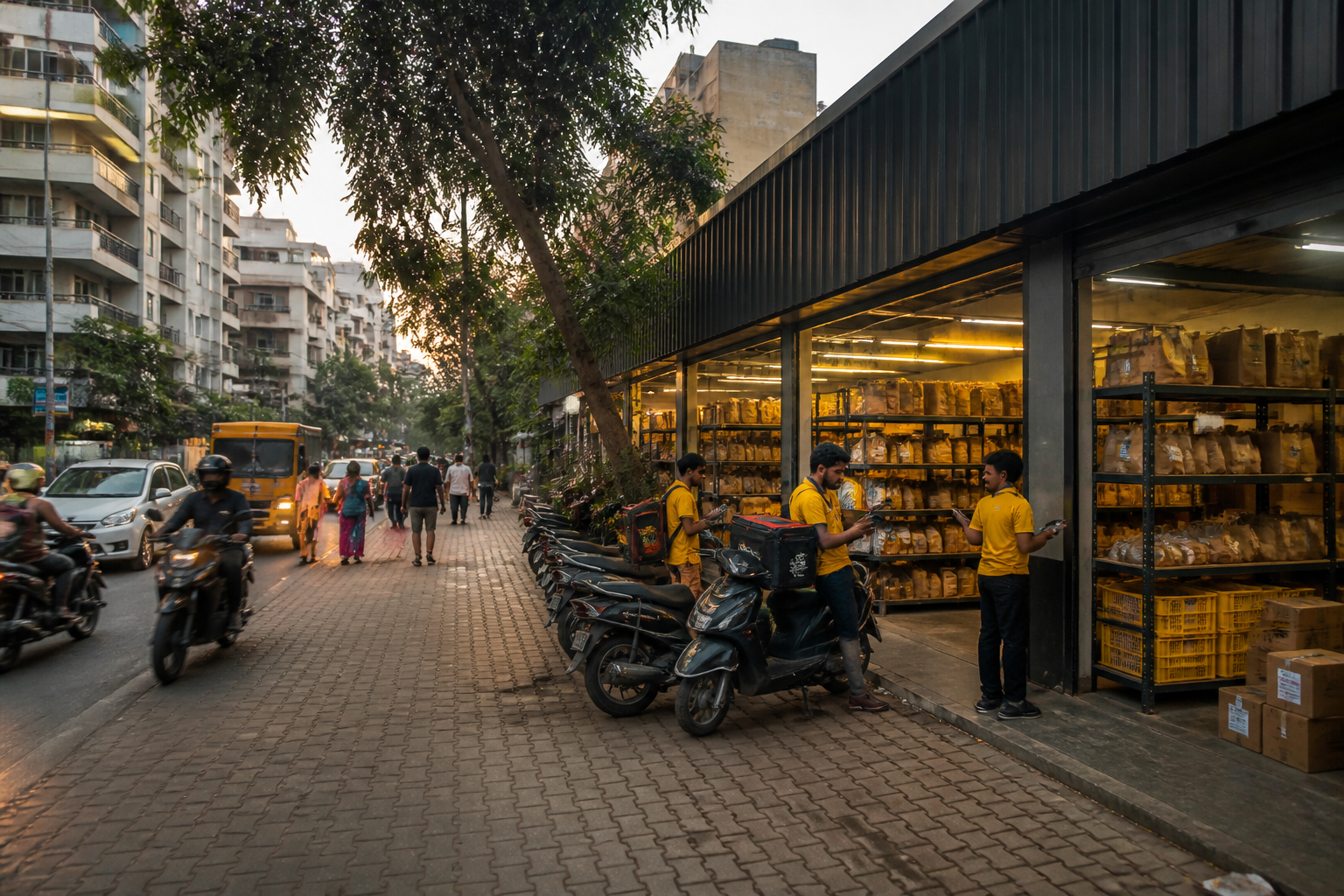
Amazon is betting $3 billion to dominate India's red-hot quick-commerce market by 2030, with $1 billion spent by the end of 2027. Economic Times reports the e-commerce giant plans to nearly double its Amazon Now neighborhood warehouse network from 750 to about 1,300 locations. But Amazon faces a steep climb: it holds just 6.2% market share while Blinkit, Swiggy, and Zepto control 77% of a $19 billion market expected to hit $41 billion within six years.
Amazon Now has crossed $1 billion in annualized gross sales over the past three months, Yahoo Finance reports. The service focuses tightly on daily essentials—not luxury items like iPhones—because repeat orders drive the quick-commerce model. Amazon has not officially confirmed the investment figures.
Why Amazon Delayed Its India Quick-Commerce Entry
Amazon deliberately took time to perfect its operating model before scaling up. Urban Acres notes the company installed cold-storage rooms in each warehouse location instead of relying only on refrigerators—a costly but essential move for perishable goods. This deliberate pace contrasts sharply with the aggressive expansion of rivals already entrenched in the market.
The Challenge: Groceries Alone Won't Pay the Bills
Quick-commerce is expensive to operate. Order values stay low when customers buy only groceries and daily essentials. Analytics Insight reports that Bernstein analysts warned groceries alone cannot cover the high costs of warehouse networks and fast delivery. The key to profitability lies in selling higher-value items—like cosmetics or electronics—alongside groceries to boost average order size.
Amazon Now Targets 1,300 Locations by April 2027
The expansion roadmap is aggressive. Republic World reports Amazon plans to reach roughly 1,300 Amazon Now warehouse locations by April 2027, giving a specific deadline for rollout across India's dense urban areas. Investment will also flow into inventory systems, demand forecasting software, and product selection algorithms to compete on speed and variety.
India Quick-Commerce Market Worth $19 Billion Today
The addressable opportunity is enormous. India's quick-commerce sector is already a $19 billion business and is projected to double to $41 billion by 2030. Yahoo Finance notes this massive growth potential explains why Amazon and other global retailers are pouring billions into the space despite tight margins today. Winners in this market stand to capture enormous value in the coming decade.
Sentiment
Mostly NegativeNEGATIVENEUTRALPOSITIVE
Publishers
16
Articles
121
Reach
137
A
AnonymousAuthor


