Emergency Flight Diversion
British Airways Flight to Chicago Declares Emergency and Returns to London
Anonymous
Key Points
1
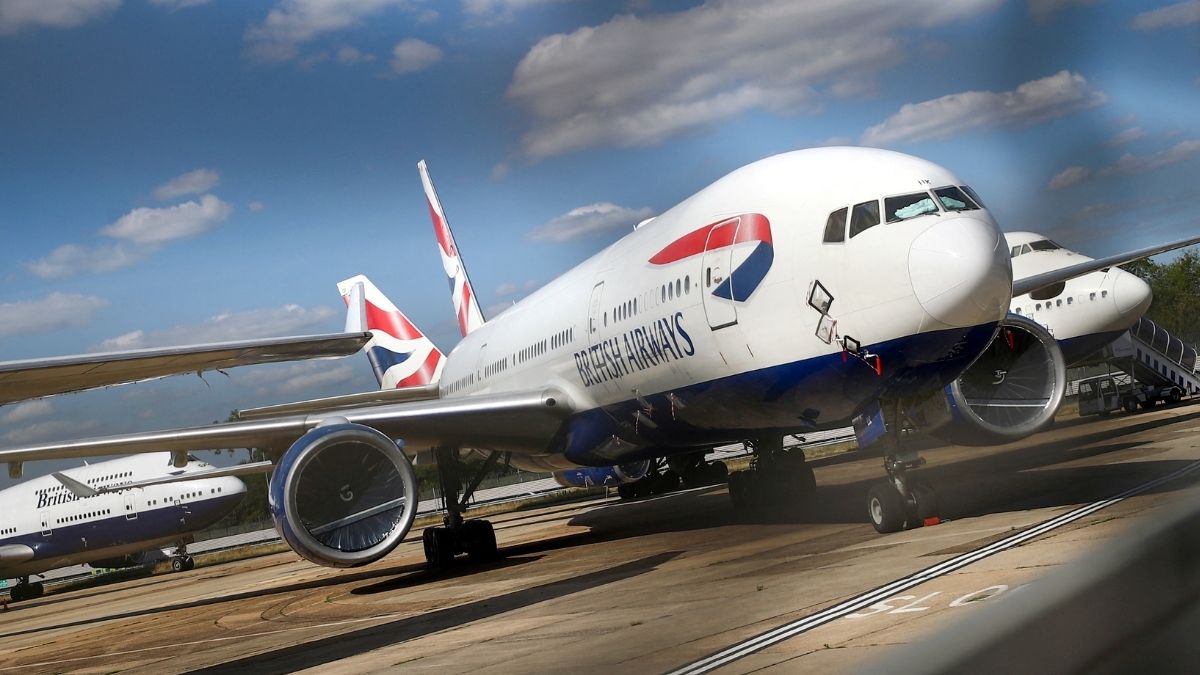
The aircraft was identified as a Boeing 777-200ER registered as G-VIIA.
2
BA295 departed Heathrow's Terminal 5 at about 11:50 a.m. local time and was roughly an hour into its scheduled eight-hour-40-minute journey when it began descending.
3
Squawk 7700 signals a general emergency to air traffic control, but does not specify the nature of the problem; it alerts controllers that the crew needs assistance and a clear path.
4
NDTV noted the incident came days after a flydubai flight bound for Tel Aviv diverted to Tabuk after transmitting an emergency squawk code.
British Airways Flight BA295 declared an emergency over Ireland on Wednesday and diverted back to London Heathrow after a rapid descent from 37,000 feet to 9,000 feet. Live Mint reported the Boeing 777-200ER transmitted squawk 7700, the standard emergency code that alerts air traffic control a crew needs urgent assistance. The cause of the emergency remains unknown, and British Airways has not disclosed further details about the incident.
The aircraft, registered as G-VIIA, departed Heathrow's Terminal 5 at approximately 11:50 a.m. local time on what was supposed to be an eight-hour-40-minute transatlantic flight. The Economic Times noted the steep 28,000-foot descent occurred roughly one hour into the journey. The diversion follows a similar incident days earlier when a flydubai flight bound for Tel Aviv also declared an emergency over the Middle East.
What Squawk 7700 Means for Pilots and Controllers
When an aircraft transmits squawk 7700, it tells air traffic control that the crew faces a serious problem. Hindustan Times explained the code does not specify what the issue is — mechanical failure, medical emergency, hydraulic loss, or something else entirely. Instead, it signals urgency. Controllers then clear other traffic from the area and give the crew priority routing and landing slots.
The rapid descent from 37,000 feet to 9,000 feet happened over Irish airspace, forcing the pilot to cut the cruise altitude by nearly 75 percent in a short timeframe. Such descents suggest the crew faced a pressing reason to lose altitude quickly. Financial Express confirmed the aircraft turned toward Heathrow and abandoned the Chicago route entirely.
A Growing Trend of Mid-Flight Emergencies
The BA295 incident is the latest in a string of unplanned diversions. Live Mint noted the emergency comes just days after a flydubai flight headed for Tel Aviv also squawked 7700 and diverted to Tabuk, Saudi Arabia. Both events involved long-range aircraft making sudden altitude changes and emergency declarations over sensitive airspace.
The timing and nature of these incidents have drawn attention from aviation safety watchers. Rapid descents can occur due to cabin pressurization loss, engine problems, or structural concerns. Telangana Today reported BA295's diversion happened without advance warning to passengers or public disclosure of the emergency trigger.
British Airways Remains Silent on the Cause
As of the latest reports, British Airways has not issued a detailed statement explaining why BA295 declared an emergency. Hindustan Times confirmed the aircraft successfully landed back at Heathrow, and no injuries were reported. The airline typically withholds technical details about emergencies pending investigation.
Investigators will now examine the aircraft's systems, flight data recorders, and crew statements to determine what triggered the emergency descent. The Economic Times noted the 777-200ER is a widely used, mature aircraft with a strong safety record, suggesting the incident was likely an isolated technical or operational event rather than a design flaw.
Sentiment
Mostly NegativeNEGATIVENEUTRALPOSITIVE
Publishers
37
Articles
51
Reach
88
A
AnonymousAuthor


