Gates Proposes Global Human Reserved Zones and Taxes
Gates Proposes Global Human Reserved Zones and Taxes
Anonymous
Key Points
1
Gates argues that at most 40% of jobs could be reserved for humans under his most aggressive version of the Human Reserved framework, implying the majority of work could be automated.
2
He envisions a phased-in rollout, suggesting AI should be introduced into some occupations over years or decades rather than replacing workers instantly.
3
The plan would rely on a tax-and-disincentive approach to automation, including taxes on AI usage and robots to counteract the existing tax structure that favors automation; he describes this tax reform as greater than anything in his lifetime.
4
Gates has urged urgent action by governments and tech firms on AI risks, noting that insiders privately fear publicly voicing concerns because it could jeopardize capital-raising for the next trillion-dollar round.
5
The Human Reserved concept uses a nature-reserve analogy and explicitly names childcare and jury service as clearly human tasks, while acknowledging education and healthcare would involve selective preservation rather than blanket exclusion.
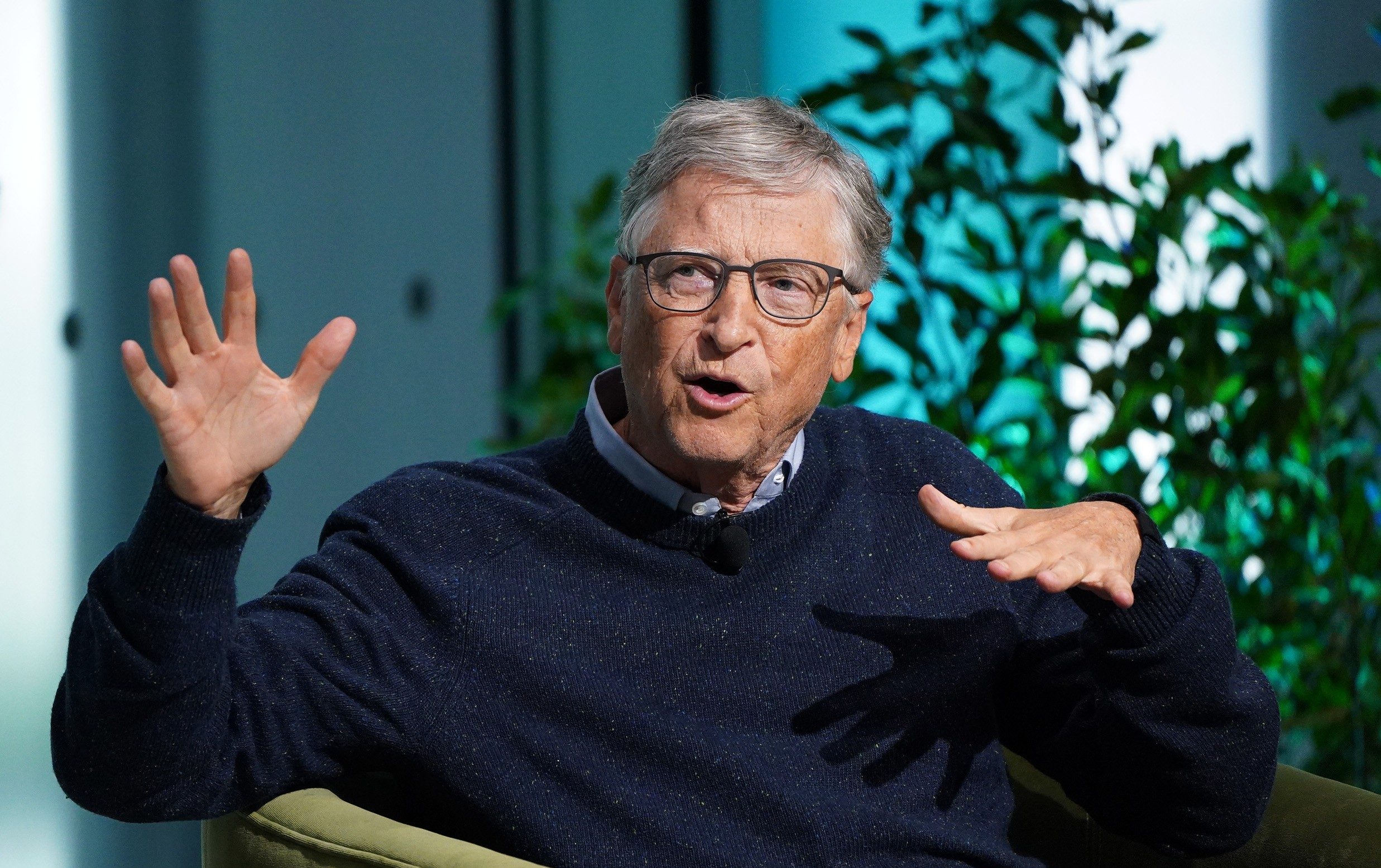
Bill Gates is proposing a sweeping overhaul to protect human jobs from AI replacement. Under his "Human Reserved" framework, up to 40% of all jobs would be permanently locked for humans only, while new taxes on AI usage and robots would discourage employers from automating away workers Yahoo Finance. Gates argues the plan is urgent because AI could displace massive portions of the workforce across nearly every sector, with some roles impossible to retrain for.
The proposal combines two main tools: permanent human-only zones in childcare and jury service, plus selective AI augmentation in healthcare and education rather than full replacement AOL. Gates also describes a tax overhaul greater than anything in his lifetime, coupled with retraining and social support programs to cushion worker displacement during a gradual, phased rollout over years or decades.
Which Jobs Would Be Off-Limits to AI
Gates names childcare and jury service as clear examples of roles that should remain permanently human. These tasks require judgment, emotional connection, and human accountability that AI cannot replicate Yahoo Finance. Education and healthcare would not be fully barred from AI, but rather would allow selective augmentation—machines could assist with grading or data analysis while humans handle teaching and patient care.
The framework works in two modes. Some roles stay human forever. Others get temporary protection for workers nearing retirement who would struggle to retrain Yahoo Finance. This two-tier system avoids the shock of instant job loss while giving older workers a gradual runway to retirement.
How AI and Robot Taxes Would Reshape Labor Markets
Today's tax code favors automation. Companies can deduct equipment costs and avoid payroll taxes by replacing workers with robots Yahoo Finance. Gates wants to flip the incentive structure with taxes on AI usage and robotics to make automation more expensive than hiring humans. The revenue would fund retraining programs and social support for displaced workers.
Gates calls this tax shift greater than any reform in his lifetime, signaling its radical scope Yahoo Finance. By making automation costlier, employers would think twice before replacing workers. The plan assumes governments can use tax policy to slow AI adoption just enough to let labor markets adjust and workers find new roles.
A Gradual Rollout to Avoid Economic Shock
Rather than allowing instant mass automation, Gates argues for a phased approach stretched over years or decades. Some occupations would see AI introduced slowly, giving workers time to retrain or retire Yahoo Finance. This contrasts with a nightmare scenario where entire sectors vanish overnight, leaving millions jobless with no transition plan.
Gates has privately urged tech leaders and governments to act fast, noting that many AI insiders fear speaking up publicly because raising concerns could jeopardize capital-raising for the next trillion-dollar funding round Yahoo Finance. He frames the need for urgent policy action as going well beyond narrow national-security worries—it is about preventing labor-market chaos.
The Reality That Most Work Could Be Automated
Gates's proposal to reserve 40% of jobs for humans implicitly means 60% or more of work could be automated Yahoo Finance. This includes high-skill roles like programming, medicine, and law alongside warehouse and retail work. The scale is staggering and suggests no sector is truly safe from AI disruption.
His Human Reserved concept borrows the nature-reserve analogy—preserve pockets of the natural world in a developed landscape Yahoo Finance. Applied to labor, it suggests that even with the most aggressive protections, the majority of economic activity could shift to machine work. Gates is essentially asking: How do we manage a world where humans do a minority of the labor?
Sentiment
Mostly NegativeNEGATIVENEUTRALPOSITIVE
Publishers
16
Articles
34
Reach
50
A
AnonymousAuthor


