Arizona Voucher Debate
Arizona Superintendent Candidates Clash Over Voucher Oversight and School Funding Policies
Anonymous
Key Points
1
Arizona’s ESA program had more than 100,000 enrolled students by the end of the 2025–26 school year, with families able to use public education dollars for private-school or homeschooling expenses.
2
Ruiz has advocated fully funding full-day kindergarten, a specific education-funding priority not detailed in the debate summary.
3
Yee proposed restructuring the ESA program to operate more like a health savings account and criticized incumbent Superintendent Tom Horne’s management of the program as chaotic.
4
Yee’s campaign accused Ruiz of violating Arizona law by using public-school buildings, staff and students to produce campaign material and filed a complaint with the state attorney general.
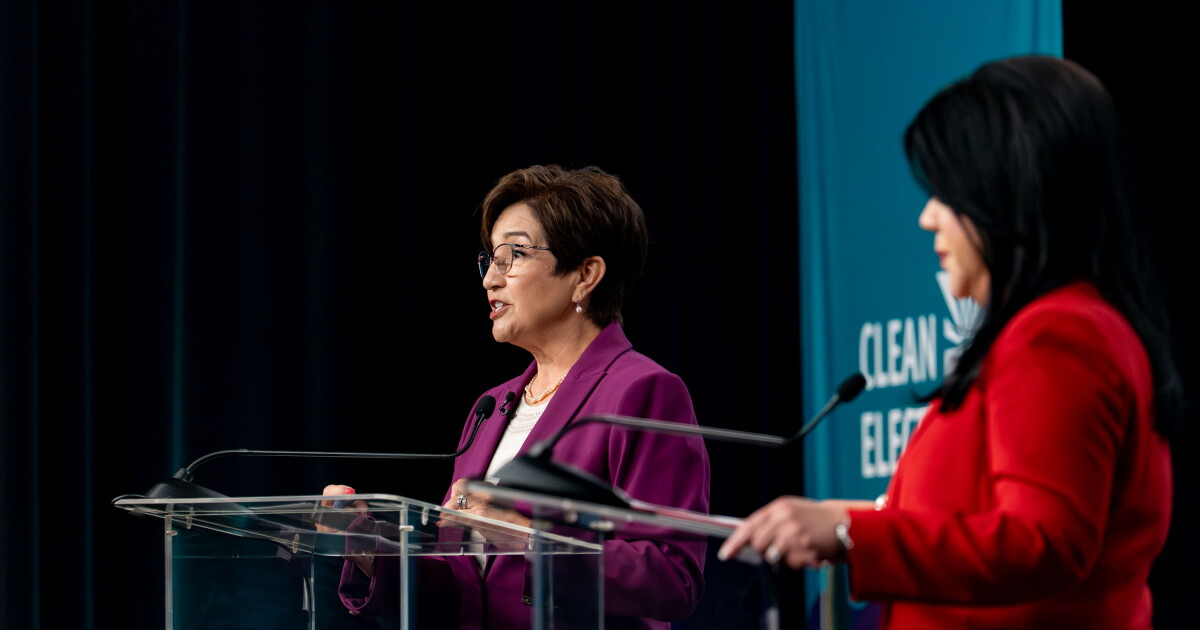
Arizona's Republican and Democratic candidates for superintendent of public instruction clashed over the state's $650 million annual voucher program in a debate centered on school choice versus oversight KJZZ. Kimberly Yee, the Republican treasurer, defended Empowerment Scholarship Accounts (ESAs) that let families use public money for private school and homeschooling, while Democrat Teresa Leyba Ruiz called for strict audits and an end to automatic approval of expenses under $2,000 KTAR.
Both candidates said teacher pay must rise and ESA oversight needs strengthening. But they offered sharply different plans: Yee proposed automating purchase verification to catch fraud faster, while Ruiz cited missing audits on the voucher spending as a reason to halt the program's expansion Tucson.com.
Over $650 Million in Voucher Spending Lacks Oversight
Ruiz pointed to a state audit showing that roughly $650 million in annual ESA spending goes unaudited Tucson.com. She argued that more than $1 billion in voucher funding over recent years has pulled money away from public schools, leaving classrooms underfunded Tucson.com. Ruiz said automatic approval of small purchases hides waste and called for every transaction to require review.
Yee countered that the program's error rate stands closer to 2 percent, not the high rates Ruiz suggested KTAR. She raised privacy concerns, arguing that stricter oversight could force private and homeschooled families to report academic progress to the state, infringing on parental choice KTAR.
Yee's Health-Savings Model vs. Ruiz's Audit Push
Yee proposed restructuring ESAs to work like health savings accounts, with automated systems flagging unusual purchases before they happen KTAR. She also criticized Superintendent Tom Horne's management of the program as chaotic and promised cleaner operations KTAR. Yee maintained that school choice—letting families pick private schools—improves education without abandoning public systems.
Ruiz supported testing to measure whether private-school students are actually learning AZFamily. She said she favors alternatives to public schools but did not use ESA funds for her own children's private schooling AZFamily. She framed audits as protecting both taxpayers and the families relying on vouchers.
Program Enrollment Tops 100,000 as Teacher Shortages Loom
Arizona's ESA program enrolled more than 100,000 students by the end of the 2025–26 school year, making it one of the nation's largest education voucher systems KJZZ. Both candidates acknowledged that teacher shortages plague Arizona schools and said pay must rise to attract educators to the state KTAR. Ruiz also pushed for fully funding full-day kindergarten as a budget priority KTAR.
The debate also touched on artificial intelligence in classrooms and alleged misuse of public-school resources by political campaigns Tucson.com. Yee's campaign filed a complaint claiming Ruiz violated Arizona law by using school buildings and staff to make campaign materials Tucson.com.
Sentiment
Mostly NegativeNEGATIVENEUTRALPOSITIVE
Publishers
14
Articles
30
Reach
44
Topics
A
AnonymousAuthor


