Erdogan Urges Abolition of Security Council Veto
Erdogan Urges Abolition of Security Council Veto
Anonymous
Key Points
1
Erdogan described reform as requiring a “concrete roadmap” centered on abolishing the veto privilege, rather than merely debating the issue in principle.
2
The five permanent Security Council members currently hold veto power over substantive resolutions, allowing any one of them to block such measures.
3
Erdogan linked the need for reform to the emergence of new centers of economic, political and technological power, highlighting the growing importance of Asia and the need for stronger African representation in international affairs.
4
He argued that the reformed system should be “more effective, fair and accountable,” with broader participation and responsibility in global decision-making rather than authority concentrated among a small group of states.
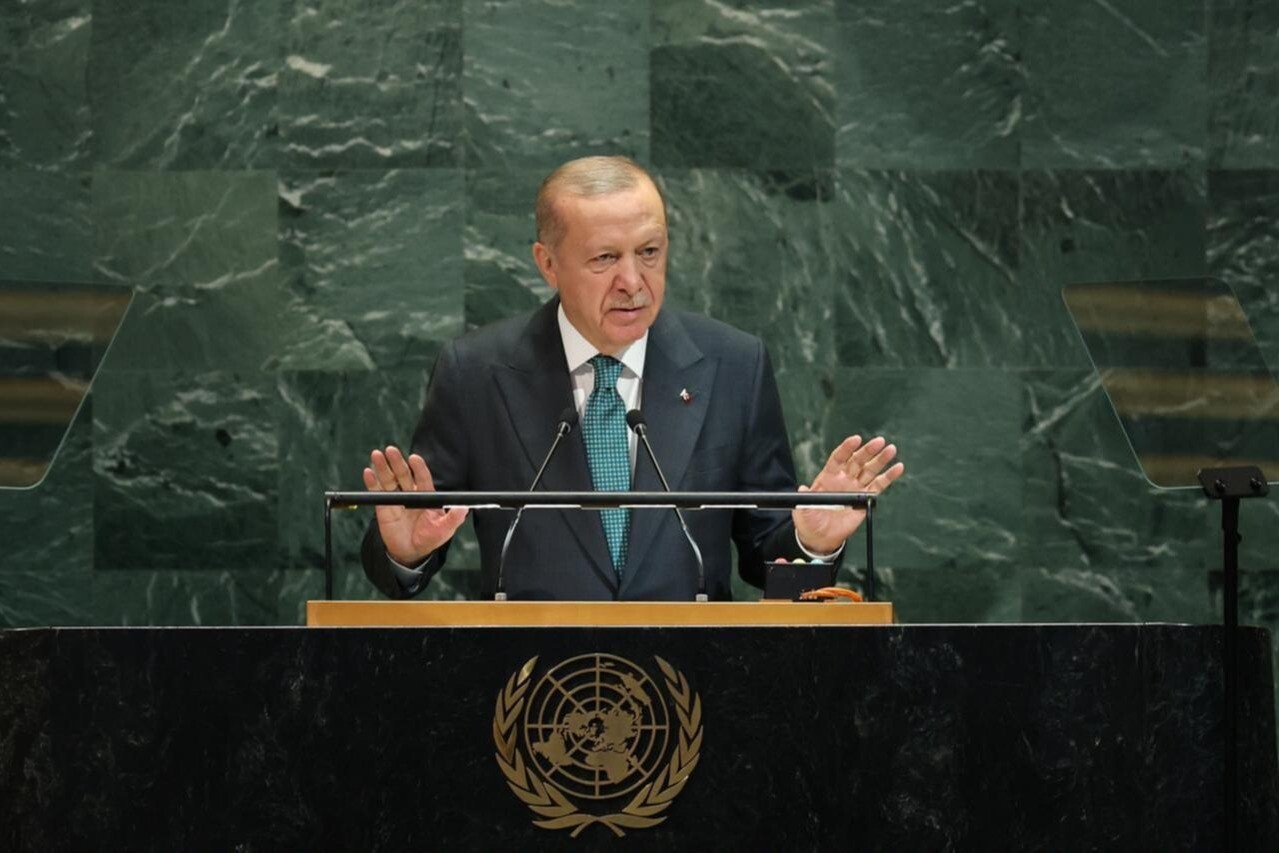
Turkish President Recep Tayyip Erdogan called for sweeping reform of the United Nations Security Council, demanding the abolition of veto power held by its five permanent members: China, France, Russia, the United Kingdom, and the United States. Bloomberg published his opinion piece arguing that wars, pandemics, and supply-chain disruptions have exposed the flaws of a system built on post-World War II power structures that no longer reflect global reality.
Rather than simply adding more permanent members, Erdogan proposed eliminating permanent membership altogether. Under his model, countries would be elected by the General Assembly for fixed, rotating terms and need majority support to return. He stressed the reform requires a "concrete roadmap" and repeated Türkiye's motto: "the world is bigger than five." TRT World reported his call for stronger representation for Africa, Asia, and Latin America.
Five Nations Currently Block Global Decisions
The five permanent Security Council members wield extraordinary power. Daily Sabah noted that each can veto any substantive resolution, giving them the ability to block action on conflicts, humanitarian crises, and other threats. This veto authority has remained unchanged since the UN's founding in 1945, even as global economic and political power has shifted dramatically.
Post-War Power Structure No Longer Fits Today
Erdogan argues the current system reflects 1945 realities, not 2024 global dynamics. Armenpress reported his contention that new centers of economic, political, and technological power—particularly across Asia—demand representation. The concentration of authority among five nations prevents the system from responding effectively to modern crises like pandemics and energy shocks.
A System That Is Fair and Truly Accountable
Erdogan's proposal envisions a Security Council that is "more effective, fair and accountable." SANA reported that his plan would distribute decision-making power more broadly across the General Assembly membership. Rather than authority concentrated among a few states, Erdogan wants rotating, elected seats ensuring responsibility is shared and no single nation can unilaterally block international action.
Why Erdogan Is Pushing Reform Now
Turkey has long championed UN reform. MCI Group noted Erdogan's timing coincides with the 81st UN General Assembly in New York, where global leaders convene to debate world issues. His renewed push reflects frustration that past reform discussions remained purely theoretical. Erdogan wants concrete action, not endless debate, to reshape how the world makes collective decisions.
Sentiment
Mostly NegativeNEGATIVENEUTRALPOSITIVE
Publishers
15
Articles
20
Reach
35
Topics
A
AnonymousAuthor


