Gandhi's Modern Relevance
Revisiting Gandhi’s Timeless Principles on Truth, Conscience, and Modern Digital Ethics
Anonymous
Key Points
1
Gandhi described himself as “a dull person” who took longer than others to understand some things, but argued that “the development of the qualities of the heart knows no bounds”—a distinction the article applies to contemporary debates about AI and intelligence.
2
Gandhi’s response to the 1922 Chauri Chaura incident, when he suspended the Non-Cooperation Movement, is cited as an example of the discipline and moral courage he believed nonviolent resistance required.
3
Historian Rizwan Qadri said Imam Bawazir led the satyagraha at Dharasana when the Dandi March began in 1930, extending his work with Gandhi beyond their shared life at Sabarmati Ashram.
4
The article on khadi notes that Gandhi saw spinning as a way to provide supplementary income to agricultural households and bring women into the national economy.
Gandhi Jayanti celebrations this week prompted scholars and commentators to dust off the Mahatma's ideas for modern crises. American Bazaar Online noted that Gandhi described himself as "a dull person" who learned slowly, yet believed "the development of the qualities of the heart knows no bounds"—a teaching now applied to debates about artificial intelligence and human wisdom. His ethics of nonviolence, self-rule, and concern for the poorest offer a counterweight to today's digital hostility and polarization.
Gandhi's legacy extends beyond philosophy to practical economics. Economic Times reported that his promotion of khadi—hand-spun cloth—was never merely symbolic. It served as supplementary income for farming families and drew women into India's economy during the independence struggle.
Why Gandhi's Moral Politics Still Matter
In an age of polarized debate and digital rage, Insights on India argues that Gandhi's ethical framework offers an alternative. His insistence that intelligence be guided by truth, humility, and conscience challenges the assumption that raw intellect alone solves problems. Nonviolent resistance, civic duty, and economic self-reliance become tools for evaluating both democracy and technological change.
Khadi: Symbol and Economic Strategy
Gandhi's charkha was far more than a flag. Economic Times explained that he saw hand-spinning as a way to give supplementary income to agricultural households—especially women—while resisting colonial trade. The fabric became a political weapon, an economic idea, and a path for ordinary Indians to participate in their nation's freedom.
The Imam Who Stood Beside Gandhi
DT Next profiled Imam Bawazir, whom Gandhi called his "sahodar"—brother or sibling. The two men met in South Africa when Gandhi's movement was young. Historian Rizwan Qadri noted that Bawazir led the satyagraha at Dharasana salt works when the Dandi March began in 1930, extending interfaith work that deepened during their shared life at Sabarmati Ashram.
How Gandhi Shaped His Public Image
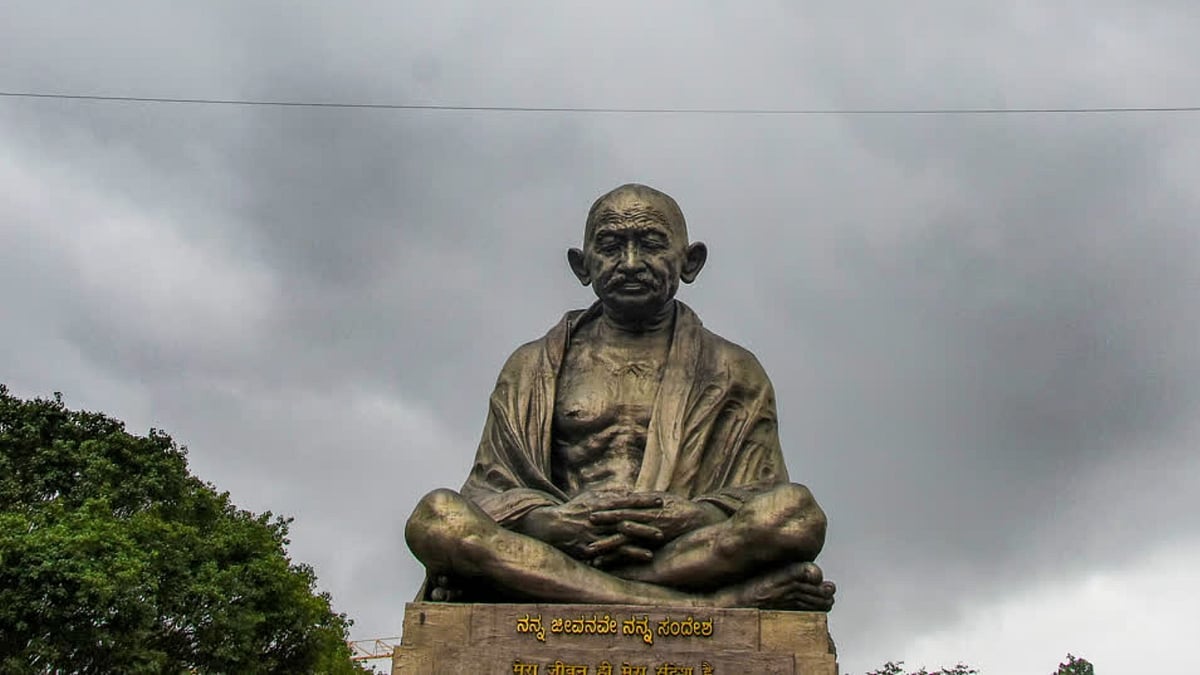
Gandhi's choice of dress, symbols, and conduct were deliberate acts of connection. Every public gesture—from his spinning wheel to his simple robes—was designed to speak to ordinary Indians. This careful self-presentation helped make him not a distant leader, but a figure woven into the fabric of the independence struggle itself.
Sentiment
Mostly NegativeNEGATIVENEUTRALPOSITIVE
Publishers
27
Articles
31
Reach
58
Topics
A
AnonymousAuthor


