India Green Energy Approval
India Officially Approves Major Green Energy Initiative to Expand Renewable Sector
Anonymous
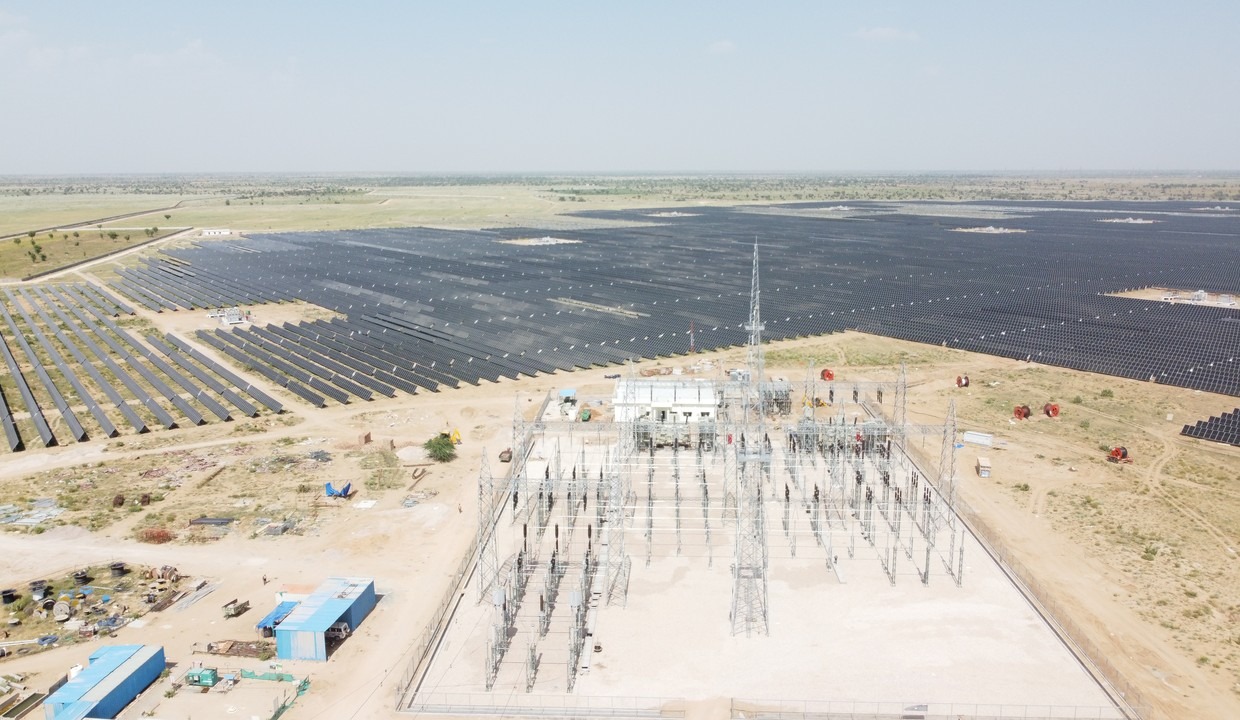
India's government approved a massive ₹1.86 lakh crore ($19.4 billion) Green Energy Corridor Phase-III scheme on September 30, 2026, to upgrade power grids and expand battery storage nationwide. Power Technology reported the Union Cabinet-backed initiative aims to evacuate 135 Gigawatts of renewable energy by 2032–33, solving a critical bottleneck where nearly 9% of India's clean power currently sits unused due to grid congestion.
The scheme allocates ₹50,000 crore for 50 Gigawatt-hours of battery storage — a first-of-its-kind commitment that will stabilize grids during peak evening demand when solar output drops. Energy Monitor confirmed the intra-state transmission networks will help India reach 500 GW of non-fossil capacity by 2030 and accelerate its clean energy transition.
A Grid Choking on Clean Power
India's rapid renewable expansion created a hidden crisis. Millennium Post noted that roughly 21 GW of installed clean capacity — nearly 9% of the total — currently relies on temporary grid connections. During peak solar hours, operators curtail power to prevent congestion, forcing developers to lose revenue and deterring new investment.
Phase-III targets this problem head-on. News Today Net reported the scheme focuses on intra-state transmission networks where local distribution nodes bottleneck power from remote renewable zones like Ladakh and Rajasthan. Previous corridor phases tackled inter-state high-voltage lines but ignored last-mile grid weaknesses.
Battery Storage Becomes India's Grid Backbone
The ₹50,000 crore battery allocation represents a watershed moment. Business Upturn emphasized that 50 Gigawatt-hours of storage will smooth the gap between daytime solar surges and evening demand peaks. Grid operators gain breathing room to absorb renewable variability without shutting down clean generators.
This pairing of transmission and storage is deliberate. Without batteries, upgrading grids alone still leaves operators struggling during solar-heavy afternoons. The combination creates a genuinely flexible national grid capable of absorbing 135 GW of renewable power by FY 2032–33.
What This Means for Indian Electricity Bills
The government's subsidy of ₹54,082 crore directly reduces transmission costs baked into retail power tariffs. State governments and consumers see lower wheeling charges — the fees utilities pay to move power across networks. Rural and suburban grids, often hit hardest by congestion, gain faster, more reliable service.
Job creation spans manufacturing, construction, and supply chains for transformers, switchgear, and battery cells. The seven-year rollout (2026–2033) keeps domestic industries busy while India positions itself as a global clean energy leader capable of absorbing 900 GW of renewables by 2035.
Sentiment
Mostly PositiveNEGATIVENEUTRALPOSITIVE
Publishers
25
Articles
47
Reach
72
A
AnonymousAuthor


