India Solar Expansion
India Rooftop Solar Programme Expands as 900,000 Households Benefit from Green Energy
Anonymous
Key Points
1
Kerala’s rapid growth has been linked to regulatory changes that waived technical-feasibility checks and automatically allowed load enhancements of up to 10 kW. Applications and central subsidy disbursements are handled online, with eligible payments generally released within about 15 days of a redemption request.
2
Kerala’s rooftop systems were supplying about 22% of the state’s daytime electricity demand by October 2024. Households consume part of the electricity they generate, while surplus power is exported to the grid through net metering.
3
South Haryana’s rollout has a substantial processing backlog: of 101,845 applications, 61,813 connections had been released, leaving more than 40,000 applications at different stages. Beneficiaries had received ₹380.8 crore in subsidies, averaging about ₹72,300 per recipient.
4
Adoption within South Haryana is uneven between utility zones. Hisar accounts for 36,291 installations and 119.41 MW—more than half of the region’s capacity and 66% of its target achievement—while the Delhi zone has 26,164 installations, 102.49 MW and 38% target achievement.
5
Community rooftop systems are being used to power lifts, common-area lighting, water pumps, security systems and sewage-treatment plants. The central assistance is ₹18,000 per kW for eligible resident welfare associations and group-housing projects, rising to ₹19,800 per kW in designated special-category states and Union territories.
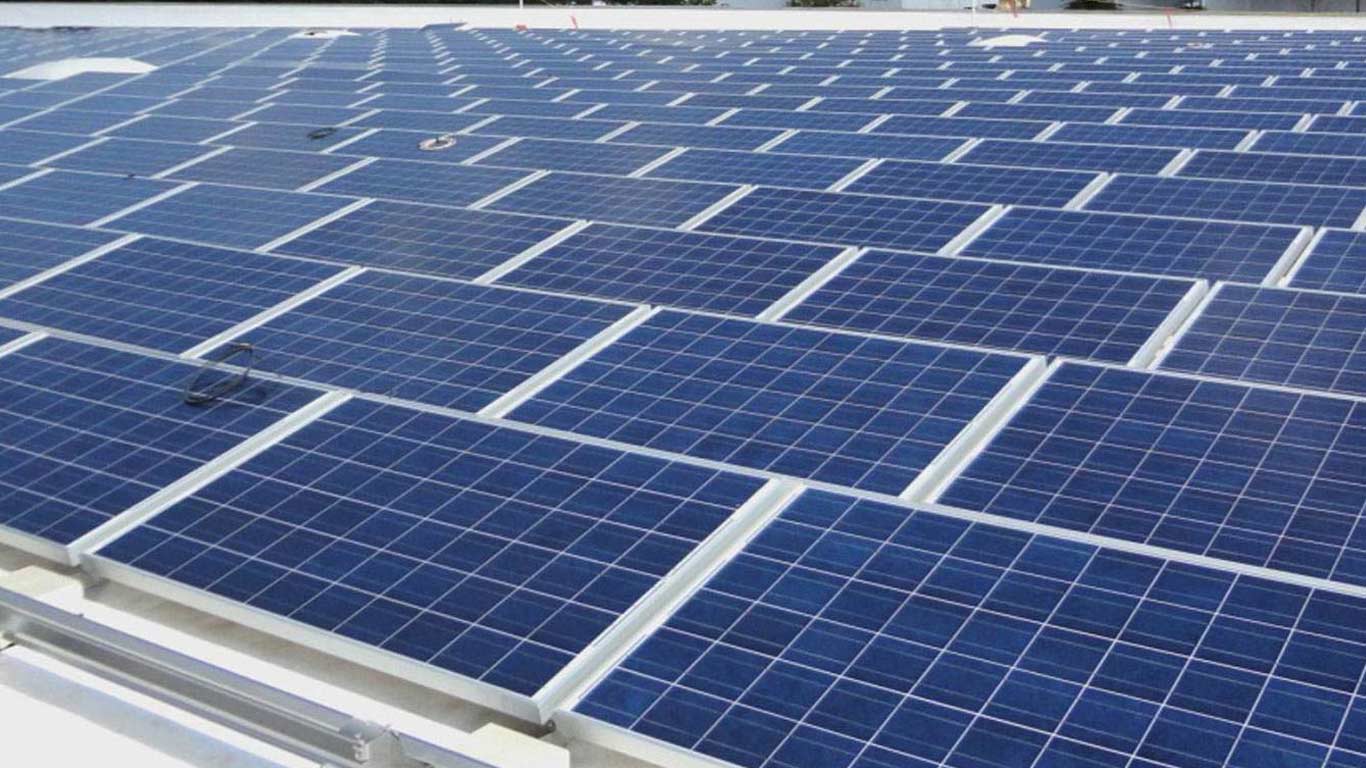
India's rooftop solar programme has powered 900,000 households through community installations, marking rapid progress toward a goal of solarizing 10 million homes by 2027. MNRE data shows over 19,000 housing societies have installed 278 MW of shared solar capacity, with individual rooftop systems exceeding 4.7 million installations nationwide as of September 2026. Kerala leads adoption with 200,000-plus systems generating roughly 22% of the state's daytime electricity demand, while South Haryana has faced substantial processing delays despite releasing 62,455 connections totaling 221.9 MW.
The PM Surya Ghar scheme, launched in February 2024 with a ₹75,021 crore budget, has streamlined approvals by waiving technical checks and disbursing subsidies within 15 days. However, roughly 60% of installed capacity relies on central subsidies expiring in 2027, and India's estimated rooftop potential of 132 GW far exceeds the 17 GW currently deployed. Uneven regional adoption—with Andhra Pradesh reporting six times more installations than Telangana—highlights how financing, grid readiness, and policy support remain critical barriers to sustained growth.
Kerala's Rapid Growth Reshapes State Power Supply
Kerala transformed rooftop solar adoption after October 2024 by eliminating technical-feasibility checks and automatically allowing load increases up to 10 kW. MNRE reports the state surpassed 200,000 installations delivering roughly 1,000 MW of capacity. By that same month, rooftop systems were supplying 22% of Kerala's daytime electricity demand. Online application processing and automatic load enhancement reduced approval friction to near-zero, with subsidy payments released within 15 days of verification.
Households consume their own solar power and export surplus to the grid via net metering. This dual arrangement cuts individual electricity bills while feeding clean power into state networks during peak demand hours. The model proves that regulatory streamlining—not subsidies alone—drives adoption. Kerala's success has prompted other states to study similar approval simplifications, though wider replication remains slow.
South Haryana Struggles With 40,000 Pending Applications
South Haryana's rooftop rollout shows the flip side of India's uneven implementation. Of 101,845 applications submitted, only 61,813 connections were released as of mid-2026, leaving over 40,000 stuck in processing queues. The 62,455 live systems generate 221.9 MW and have unlocked ₹380.8 crore in subsidies—averaging ₹72,300 per household. Monthly disbursement rates have improved but still trail Kerala's pace, slowing adoption momentum.
Geography matters. Hisar zone accounts for 36,291 installations and 119.41 MW—hitting 66% of its regional target—while the Delhi zone has just 26,164 systems at 102.49 MW, achieving only 38% of its goal. Data-entry errors and consumer-detail mismatches plague the national portal, frustrating vendors and installers. Backlogs reveal that fast disbursals alone cannot overcome operational friction in grid coordination and DISCOM capacity constraints.
Community Solar Powers 900,000 Homes at Shared Cost
Housing societies and resident welfare associations are using rooftop solar to run lifts, common-area lights, water pumps, security systems, and sewage treatment. Over 19,000 complexes have installed 278 MW, benefiting roughly 900,000 residents through lower shared electricity bills. Central assistance reaches ₹18,000 per kW, rising to ₹19,800 per kW in special-category states. For a typical 50-apartment building, this can cut monthly maintenance costs by 20–40%, making the economics appealing even without individual rooftop systems.
Community solar sidesteps individual financing and rooftop-space constraints. Residents benefit without purchasing equipment or securing loans. Indian Solar Manufacturers Association estimates India's rooftop potential at 132 GW—nearly 8 times current installed capacity. Community models bridge the gap for urban renters and flat-dwellers who cannot install private systems, multiplying scheme reach beyond single-family homes.
Subsidy Dependency and Regional Disparities Threaten Future Growth
About 60% of PM Surya Ghar capacity sits in states where rooftop solar remains unaffordable without subsidies. Andhra Pradesh leads with nearly six times the adoption of Telangana, driven partly by state incentives and lower financing rates. Gujarat and Maharashtra follow nationally, but slower-adopting regions lag due to grid constraints, low consumer awareness, and DISCOM resistance. When central subsidies end in March 2027, commercial loan rates of 10–14% will determine whether growth continues or stalls.
Financial Express reports India's total solar capacity reached 168 GW by August 2026—a 60-fold jump from 2.8 GW in 2014. Rooftop remains a fraction of that mix. For sustained expansion, India must lower financing costs, upgrade distribution infrastructure, integrate battery storage, and accelerate DISCOM readiness. Bangladesh's competing push for 4,000 MW of rooftop solar within a year signals regional competition, though analysts warn it requires over $2 billion in capital and bankable utility contracts—hurdles both nations face.
Sentiment
Mostly PositiveNEGATIVENEUTRALPOSITIVE
Publishers
26
Articles
11
Reach
37
Topics
A
AnonymousAuthor


